
Why go
This short history gives a useful map for visiting the city. Start with Fustat’s legacy in Old Cairo, then look north to the Fatimid city around al-Muizz Street. The Giza pyramids belong to a much earlier Egyptian landscape across the river.
The full story
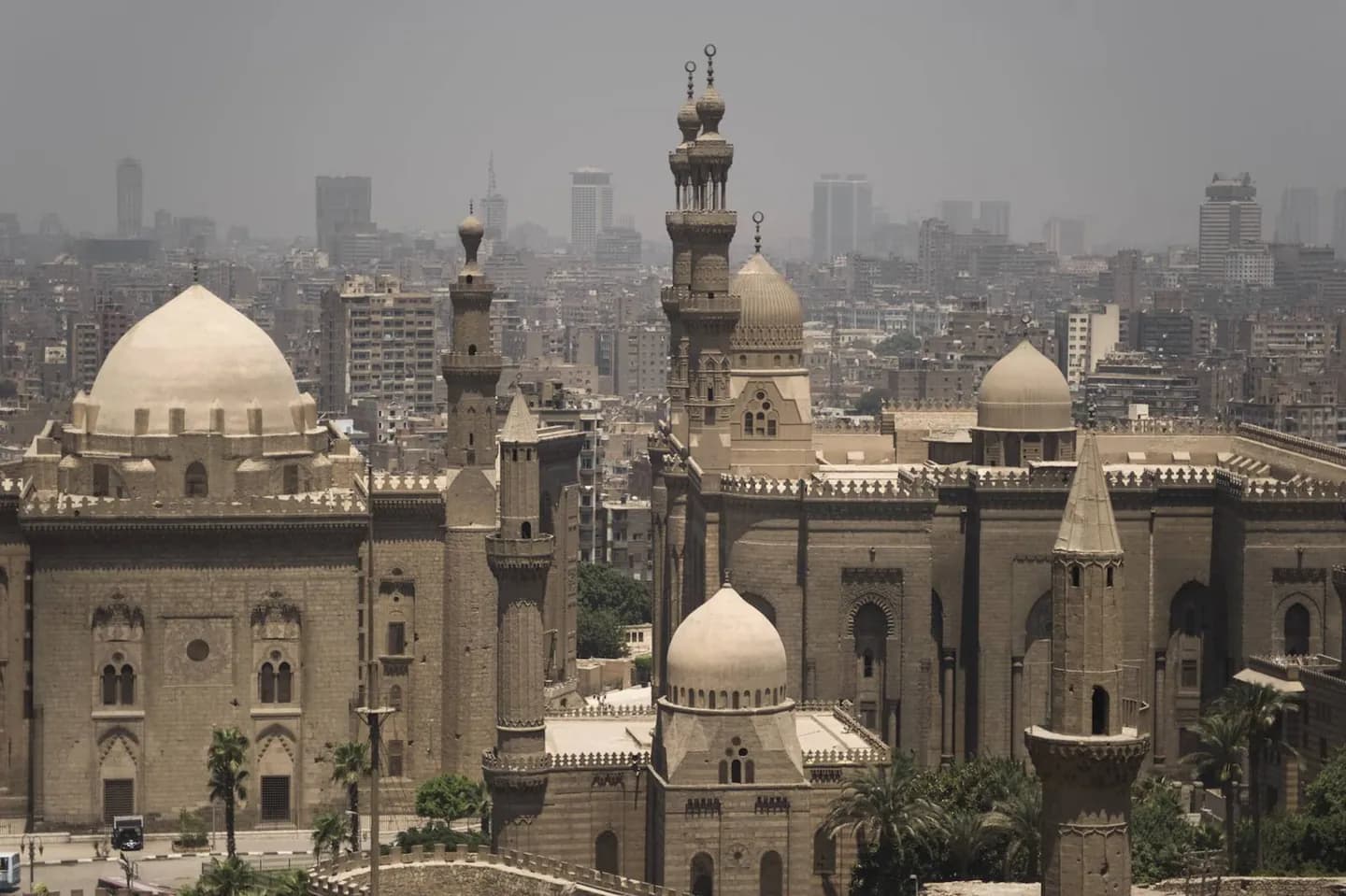
The site of modern Cairo sits near older centers of Egyptian power, but the city’s present form began after the Arab conquest of Egypt. Fustat became an early capital in what visitors now call Old Cairo. The Mosque of Amr ibn al-As and nearby religious precinct give that southern area its historical depth. Centuries later, the Fatimids founded al-Qahira to the north. Its name became Cairo in English, and the area around al-Muizz Street still helps visitors trace the later city through gates, mosques, and streets. The pyramids at Giza are older by many centuries and stand beyond this urban sequence. Egyptians also call Cairo Masr, the Arabic name for Egypt, a reminder of the capital’s central place in national life. When visiting, read these locations as separate chapters: the pharaonic landscape in Giza, early Fustat in Old Cairo, and the Fatimid city farther north.
Useful to know
- Compare Old Cairo and al-Muizz Street on separate walks to see the city’s early layers clearly.