
Why go
Saqqara shows more than one kind of ancient Egyptian burial. The Step Pyramid anchors a royal complex, while smaller pyramids and decorated private tombs show how the cemetery developed over time. It gives a different perspective from Giza’s three famous pyramids.
What to look for
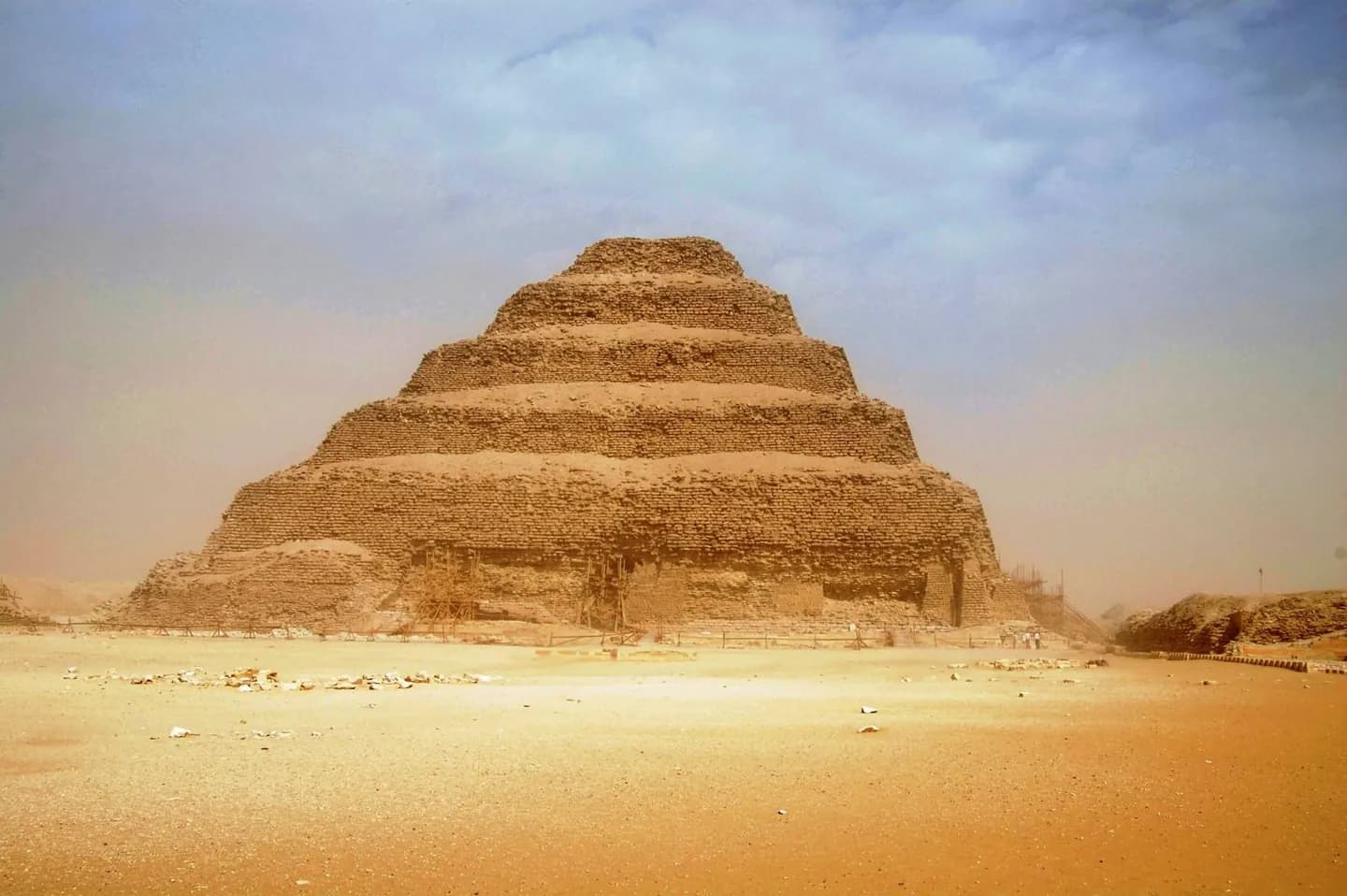
- Djoser’s Step Pyramid rises in tiers rather than smooth sides.
- The tomb of Mereruka adds a private burial to the royal complexes.
- The Pyramid of Unas and Pyramid of Teti extend the site beyond Djoser’s monument.
The full story
Saqqara served as the burial ground for Memphis, an ancient Egyptian capital south of modern Cairo. Djoser’s Step Pyramid is its most immediately recognizable monument. Its stacked form makes the transition from earlier low tomb types to the later pyramid tradition visible on the ground. The wider necropolis includes royal pyramids and private tombs, so the visit need not end at the main complex. The Pyramid of Unas, the Pyramid of Teti, and the tomb of Mereruka offer a way to compare different kinds of burial within one area. Saqqara also remained important long after the earliest pyramids were built, which helps explain the variety of monuments across the site. Giza presents a compact image of royal pyramids and the Sphinx; Saqqara gives a broader view of how an Egyptian cemetery changed over time. Plan around a selected group of monuments rather than trying to cover the entire landscape.
Useful to know
- Set aside a separate Saqqara excursion instead of adding it to a full Giza Plateau day.
- Choose a few tombs and pyramids in advance; the archaeological area is extensive.
- Check current access for individual tombs and chambers before relying on an interior visit.