
Why go
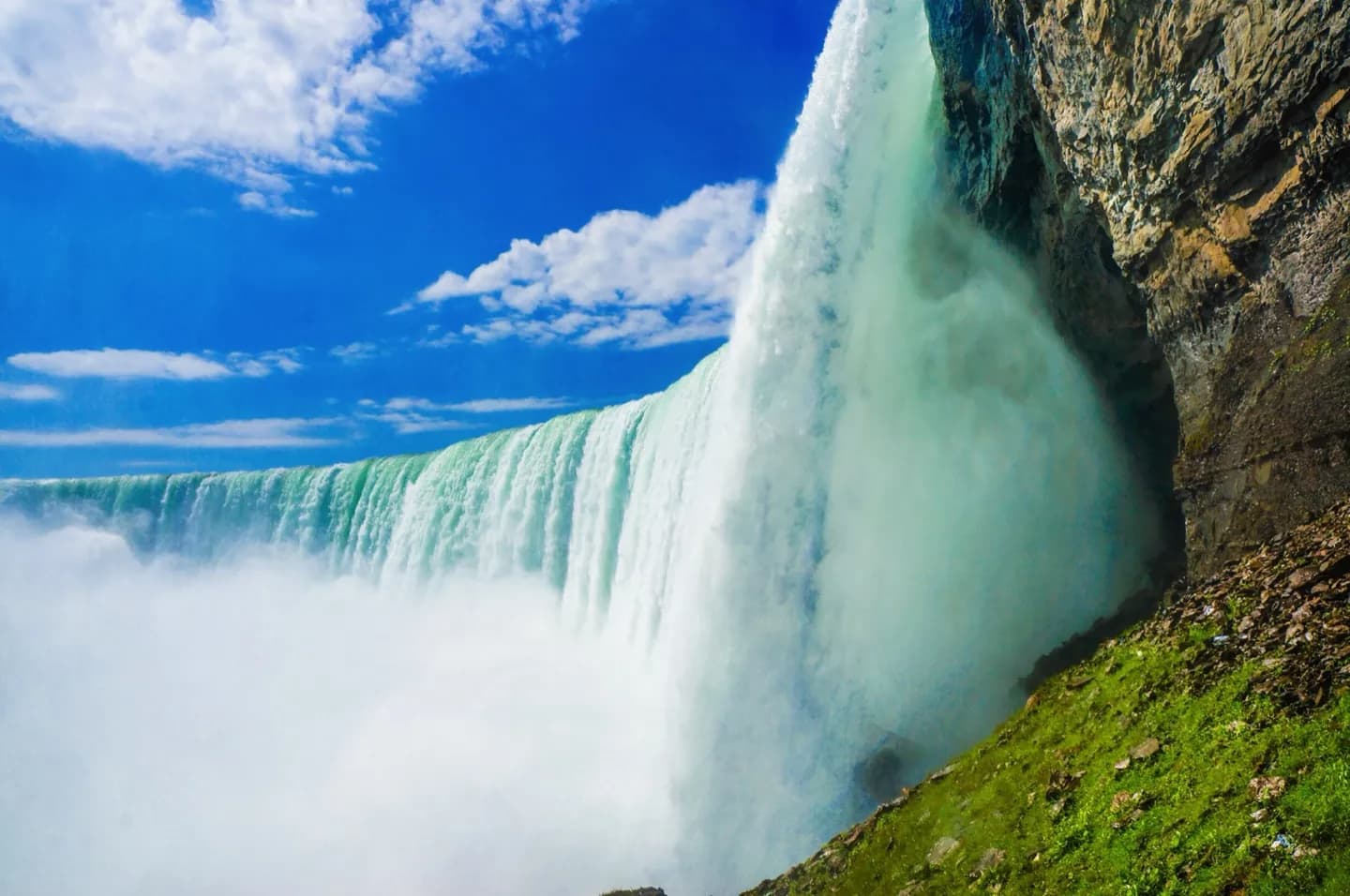
The scale comes from the river's width and force, not just the drop. Follow the Canadian viewpoints to compare the curved Horseshoe Falls with the straighter American Falls and smaller Bridal Veil Falls, then look downstream toward the Niagara Gorge that the river carved.
What to look for
- Horseshoe Falls has a curved rim and throws up heavy mist.
- American Falls and the smaller Bridal Veil Falls lie across the border.
- The Niagara Gorge extends downstream from the falls.
The full story
The Niagara River carries water from Lake Erie toward Lake Ontario. At the falls it crosses the Niagara Escarpment, a hard rock edge that the river has cut back over thousands of years. That process formed the gorge downstream. The three falls are separated by islands: Goat Island divides Horseshoe Falls from the American side, while Luna Island divides American Falls from Bridal Veil Falls. Seeing the river as a moving landscape helps explain why the viewpoints give such different impressions. The water has also long been used for hydroelectric power, making the area a place where tourism, industry and conservation have had to coexist. The Canadian and United States cities share the attraction, but the falls themselves remain a single cross-border natural system.
Useful to know
- Walk more than one viewpoint to see how the shape of Horseshoe Falls changes with the angle.
- Expect spray near the brink and allow for wet, exposed conditions outdoors.