
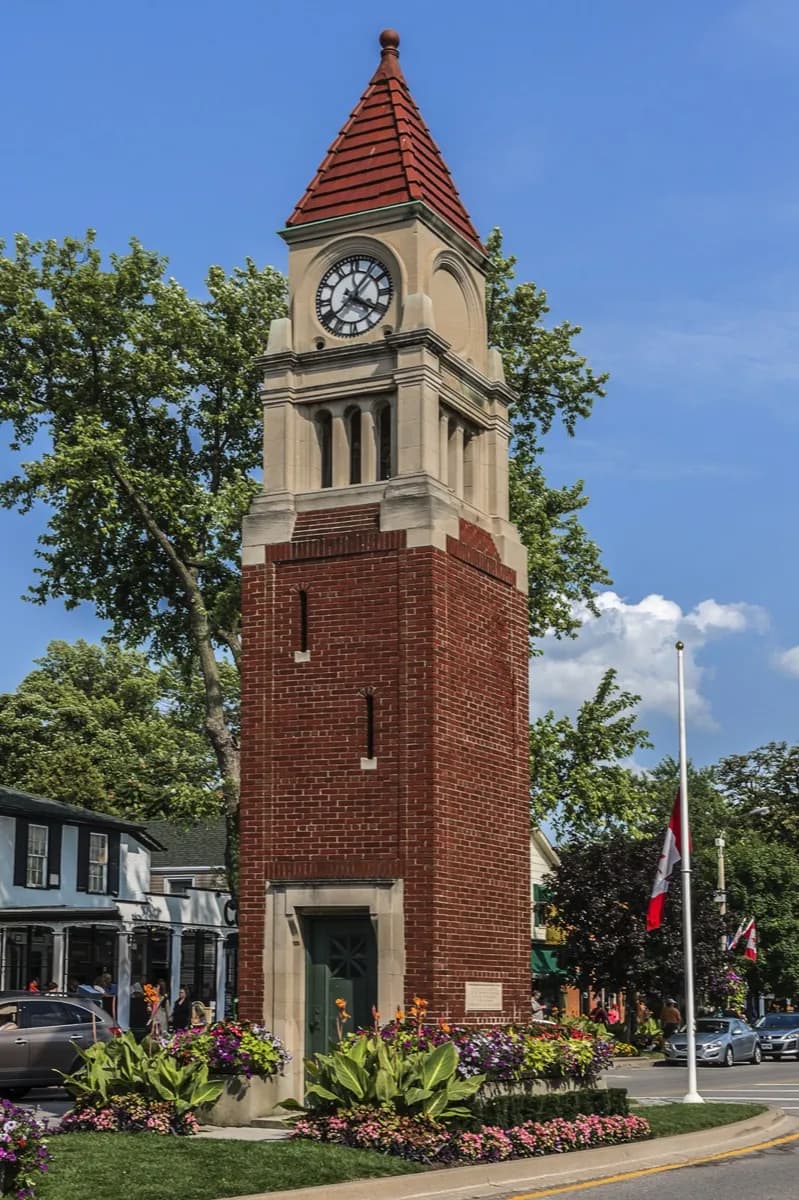
Why go
Walk Queen Street and the surrounding blocks to see the town rebuilt after the War of 1812, then visit Fort George to understand why this border location mattered. The streetscape and military sites tell a connected story that a quick stop at the falls cannot.
What to look for
- Queen Street and King Street show the townscape rebuilt after the War of 1812.
- Fort George anchors the town’s War of 1812 sites.
- The Niagara River meets Lake Ontario at the edge of town.
The full story
The town was called Newark when it became the first capital of Upper Canada in 1792. Its position near the United States made it strategically important and exposed during the War of 1812. American forces captured the town after fighting at Fort George, then burned it as they withdrew. Much of the centre visitors see today reflects the rebuilding that followed. The concentration of military landmarks extends beyond the fort to Navy Hall and Butler's Barracks. These sites explain why a compact lakeside town carries so many plaques and historic buildings. Niagara-on-the-Lake was also a place of refuge for Black people escaping slavery in the United States, part of the broader story of the Underground Railroad in Upper Canada. A walk through the centre makes more sense when read as a town shaped by border conflict, rebuilding and migration.
Useful to know
- Give the historic centre time on foot before visiting Fort George; the fort adds context to the rebuilt streets.
- Combine the town with Niagara Falls as two distinct visits rather than expecting the same experience.