
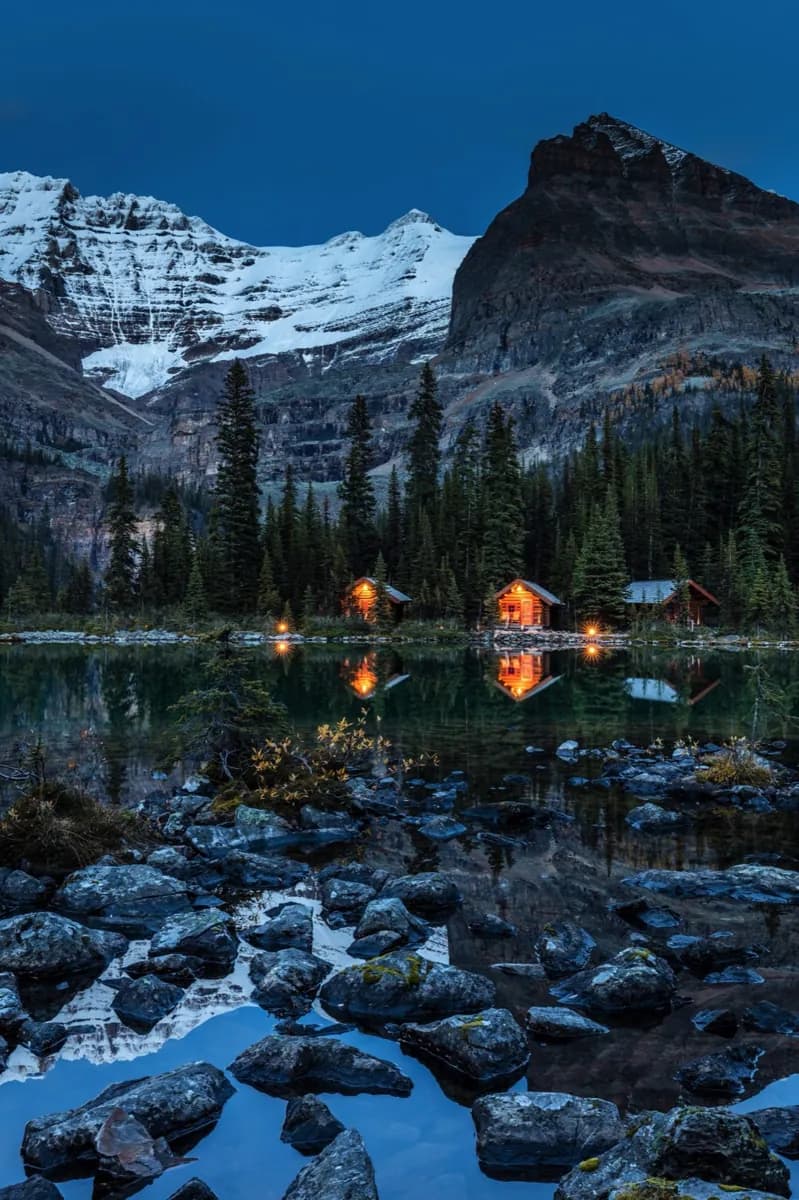
Why go
Its setting links several kinds of trip. Mount Revelstoke National Park rises beside town, Rogers Pass and Glacier National Park lie to the east, and Revelstoke Mountain Resort draws winter visitors. The railway museum adds context to why a settlement grew at this mountain crossing.
What to look for
- The Columbia River valley lies between the Selkirk and Monashee mountains.
- The railway museum connects the town to the history of the mountain passes.
- Mount Revelstoke National Park rises beside town.
The full story
Revelstoke grew when the Canadian Pacific Railway pushed through the Columbia Mountains in the 1880s. The railway route through Rogers Pass made the valley a working transport corridor, and mining also shaped the early settlement. The city later took the name of Lord Revelstoke, whose banking house helped finance completion of the railway. Road access expanded with the Trans-Canada Highway, while winter sports became another reason to come. The historic transport story is still useful to a visitor: the river valley, rail line and highway all negotiate the same steep mountain geography. A stop at the railway museum puts that landscape into context before a drive toward Rogers Pass or an outing in Mount Revelstoke National Park. The Columbia River remains the spine of that corridor.
Useful to know
- Use town as a base and give the national park or ski mountain its own outing.
- Check mountain road and trail conditions before travelling through Rogers Pass or planning a high-elevation visit.