
Why go
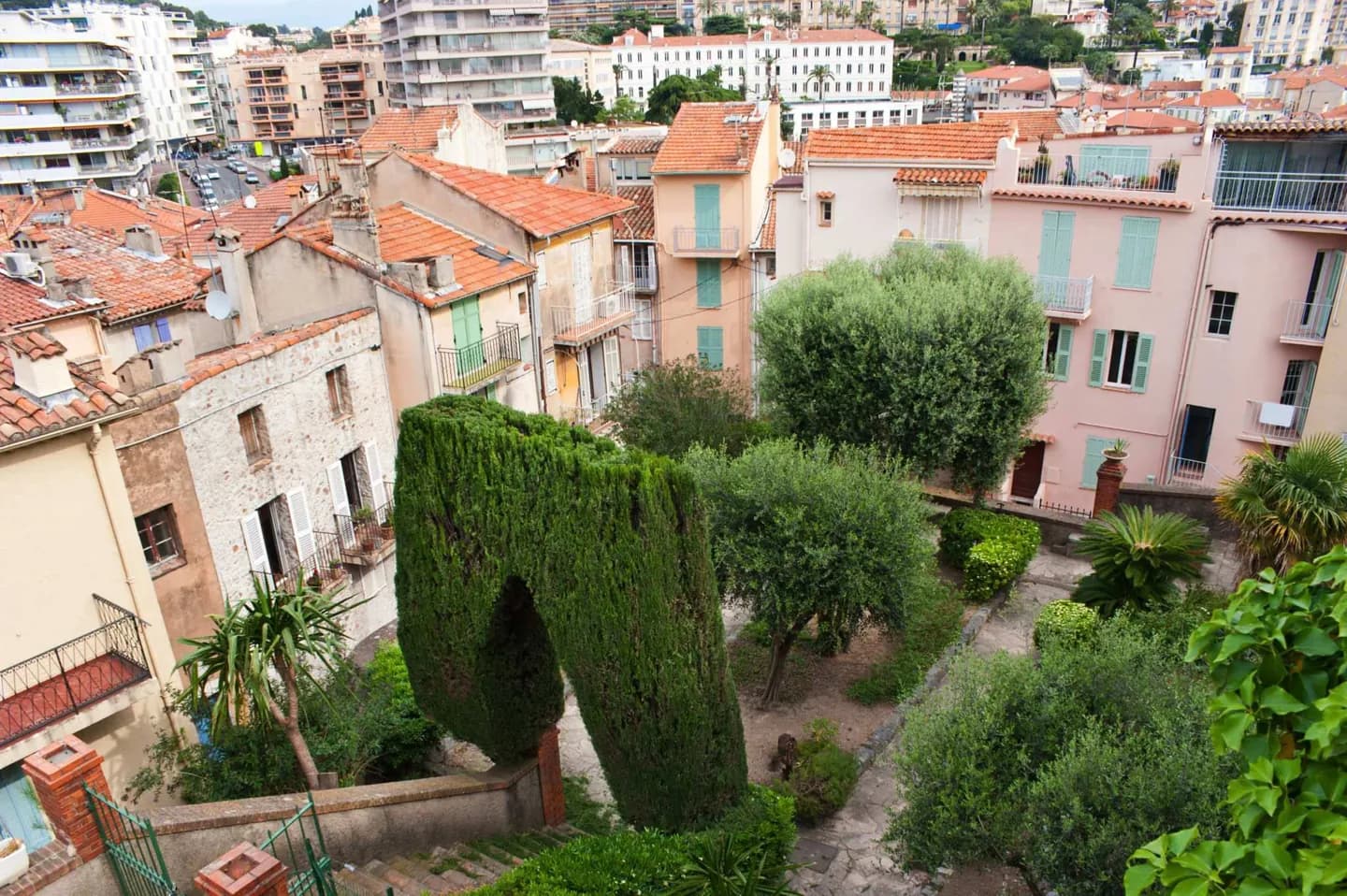
Use the view from Le Suquet to orient yourself before exploring the bay. The Croisette shows Cannes as a seaside resort, while the old hill preserves a different street pattern and a former castle site. Offshore, the two Lérins Islands extend that contrast into wooded and monastic landscapes.
The full story
The Croisette follows the shore beneath palms, with beaches and hotels facing the bay. From Le Suquet, the older town looks down across this broad waterfront. On the hill, the former castle's fortified tower and chapel became the setting for a museum. The climb gives you a useful overview of how the compact old quarter and the resort frontage fit together. Cannes also grew through villas built for 19th-century winter residents. Their designs borrowed from different European styles and reflected their owners' means. Lord Brougham's Villa Eléonore-Louise was among the early examples. These residences tell a quieter part of the resort story than the Croisette hotels, though they should be viewed as architectural context rather than assumed public attractions. The Lérins Islands add another layer to the scene. Île Sainte-Marguerite is wooded and has the fort associated with the prisoner known as the Man in the Iron Mask. On Île Saint-Honorat, an abbey and older monastic remains give the smaller island a different character. The prisoner's identity remains uncertain; the island's fort is more useful to understand as a real historic site than as proof of any one theory.