
Why go
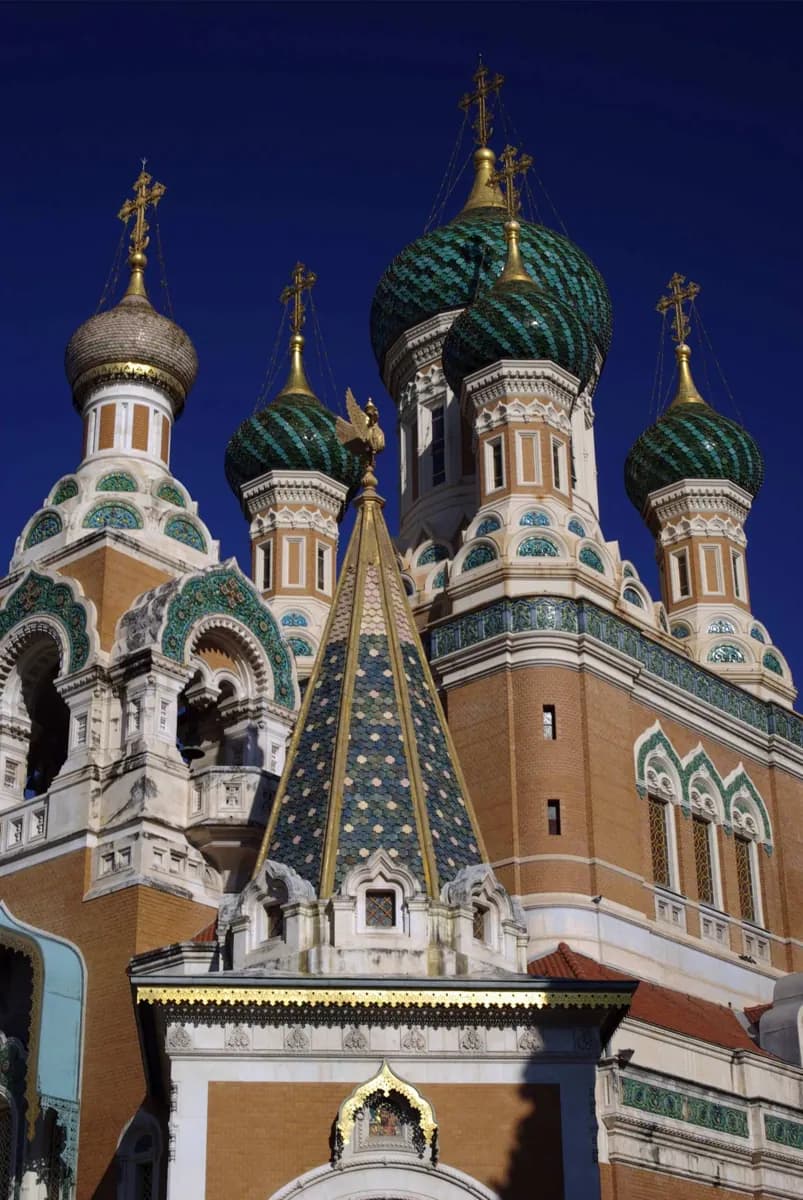
The cathedral introduces a different religious and architectural tradition to a Nice visit. From outside, its Russian Orthodox forms stand apart from the city’s Baroque churches; inside, icons, frescoes and carved woodwork shape the worship space. Check visiting access before arriving, since services can take priority over sightseeing.
What to look for
- The exterior has distinctive Russian Orthodox forms.
- Icons, frescoes and carved woodwork fill the interior.
- The iconostasis separates the sanctuary from the nave.
The full story
The cathedral opened in 1912 with support from Tsar Nicholas II. It remains a visible reminder that Nice attracted Russian visitors before the First World War. That history makes its form easier to read in context: the painted domes and Russian Orthodox features are part of the city’s wider resort-era story, not an isolated architectural curiosity. Inside, the icons, frescoes and carved woodwork support a living place of worship. The iconostasis marks the separation between nave and sanctuary, so the arrangement of the interior matters as much as its decoration. Approach the visit with both roles in mind. The building speaks to a past connection between Nice and Russia, while services and sacraments continue to shape access today. Its setting adds a distinct chapter to a city often introduced only through the seafront and Old Nice.
Useful to know
- Check visiting access before coming; services and sacraments can close the cathedral to tourists.
- The Tsarevich Chapel is available only on a guided tour.
Your next visit
Estimated · Declared scenario and planning estimates; no live opening, weather, queue or booking service.
Outdoor visit · 30–45 min
World planning estimate; admission, opening, visit duration and access need checking.