
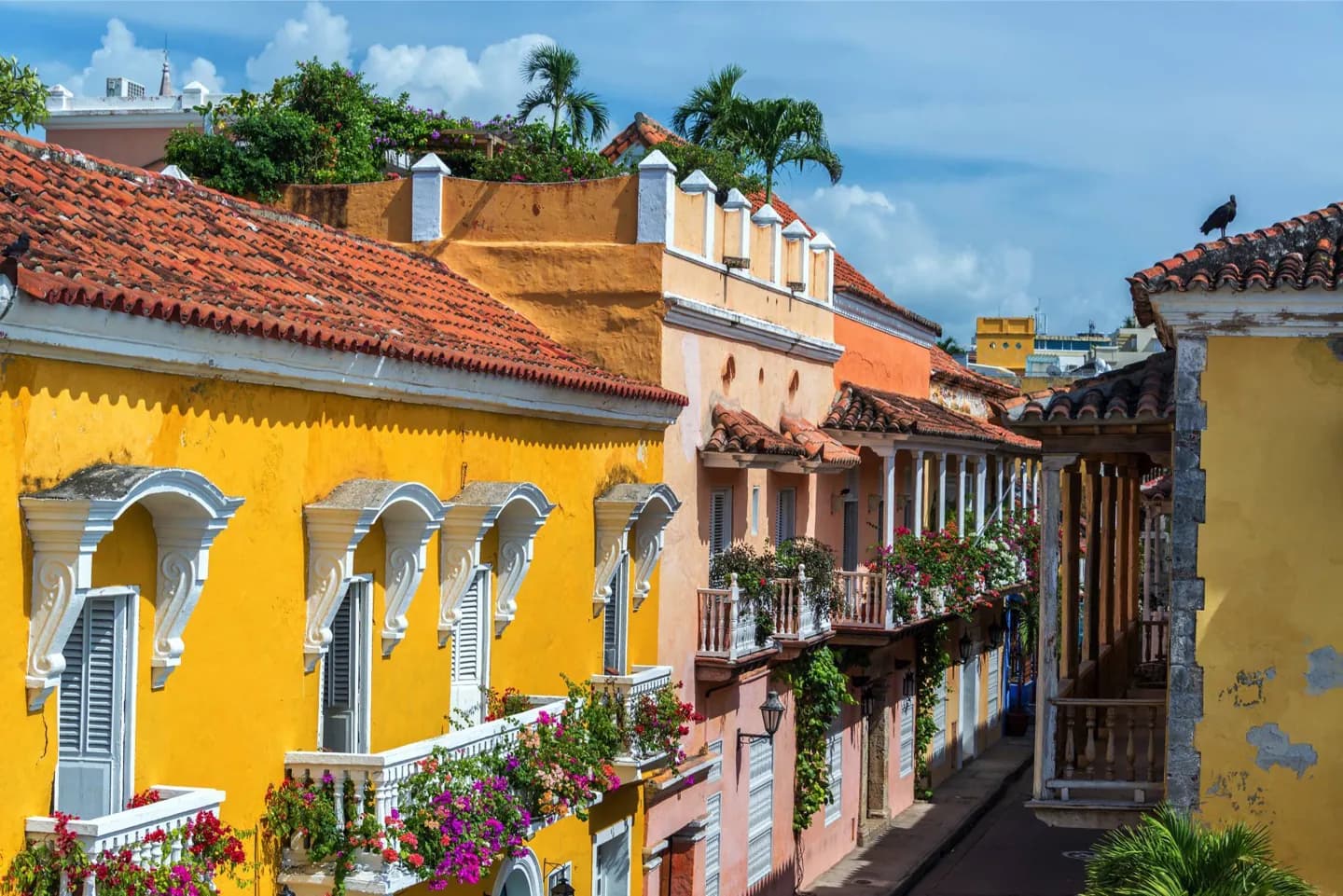
Why go
Read the old town as a port shaped by trade, colonial power and repeated attacks. The Clock Gate, surviving walls and Castillo de San Felipe de Barajas are parts of that defensive story, while the Palace of the Inquisition points to a different side of colonial rule. The contrasts give a walk through the center more depth than its façades alone.
The full story
Communities lived around Cartagena Bay long before the Spanish city was founded in 1533. The region's early archaeological record includes Puerto Hormiga pottery, while later Indigenous groups occupied the bay, nearby islands and mainland. Cartagena then became a major Spanish colonial port. Its position and wealth drew attacks, including Francis Drake's assault in the sixteenth century. Spain invested heavily in walls and forts to protect the city and its maritime routes. Those defenses remain unusually legible today: the gate controls entry into the old center, the walls follow its edge, and Castillo de San Felipe de Barajas guards the approach from higher ground. They are evidence of the resources and labor committed to holding the port, not just a picturesque border around the streets. Cartagena's walled city and fortress were inscribed as a UNESCO World Heritage Site in 1984.