
Why go
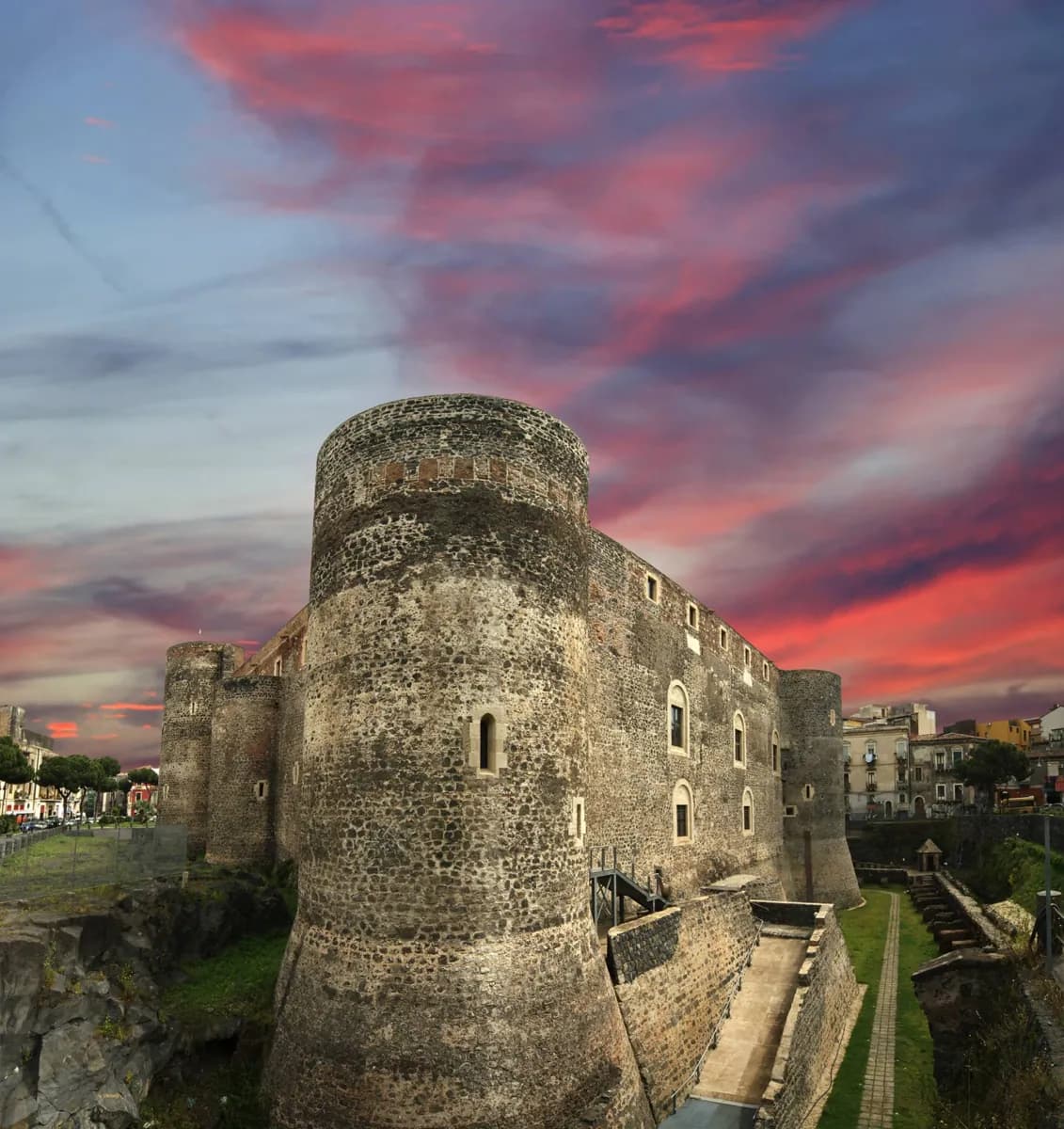
Castello Ursino gives a concrete point of entry into the era of Frederick II, while the university recalls Catania’s later role as a centre of learning. The 1669 lava flow and 1693 earthquake then explain why so much of the visible centre belongs to a coordinated Baroque rebuilding.
The full story
After Byzantine and Islamic rule, Catania passed to the Normans in the eleventh century. Under Frederick II, Castello Ursino became a strong architectural statement of royal power. The city later gained importance under Aragonese rule, and in 1434 a university was founded here, the oldest in Sicily. Those institutions help locate a long period that can otherwise disappear behind the Baroque streets. The early modern city then faced two events that changed its physical form. Etna’s 1669 lava flow damaged the surroundings and altered the coast and port area. The earthquake of 1693 devastated the city, leading to rebuilding on a scale that still defines the historic centre. Looking at Castello Ursino before walking through Piazza del Duomo makes the shift legible: one structure speaks to medieval authority, while the squares and facades show the city’s later response to catastrophe.
Useful to know
- Compare Castello Ursino with Piazza del Duomo to see the shift from medieval fortification to Baroque rebuilding.