
Why go
Read the harbor as the setting for South Carolina’s secession crisis, the bombardment of Fort Sumter, a Union blockade, and wartime damage within the city. The 1861 fire and the H. L. Hunley story add scale and detail, but the cause of secession belongs at the center of any visit.
The full story
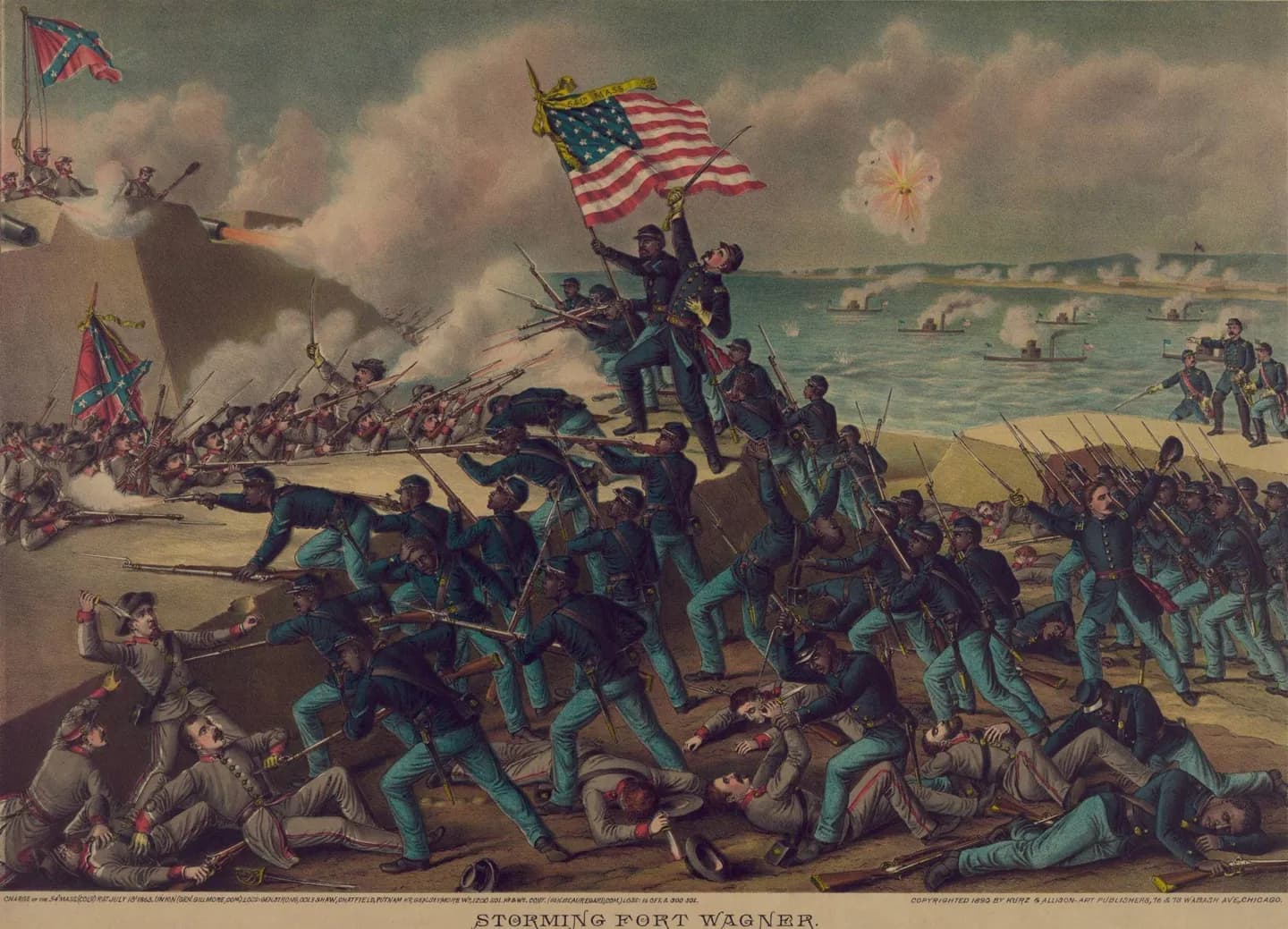
South Carolina voted to leave the Union in December 1860, and its declaration made the defense of slavery explicit. Charleston Harbor then became the focus of confrontation with federal forces. Citadel cadets fired on a vessel attempting to resupply Fort Sumter; the bombardment of the fort in April 1861 brought the war into the open. The harbor’s forts and approaches were repeatedly contested as Union forces tried to close the Confederate port. In December 1861, a large fire destroyed hundreds of Charleston buildings, adding to the damage of war. The Confederate submarine H. L. Hunley sank the USS Housatonic in 1864 and was itself lost on the return. Charleston remained under Confederate control until the final months of the conflict. Seeing the harbor, fort, and city together helps separate these events: a political choice rooted in slavery, military struggle over a port, and a civilian city marked by fire and prolonged war.
Useful to know
- Begin with the city’s secession history before visiting Fort Sumter so the harbor events have their cause and sequence.
- Allow separate time for the fort and the downtown streets affected by the war.