
Why go
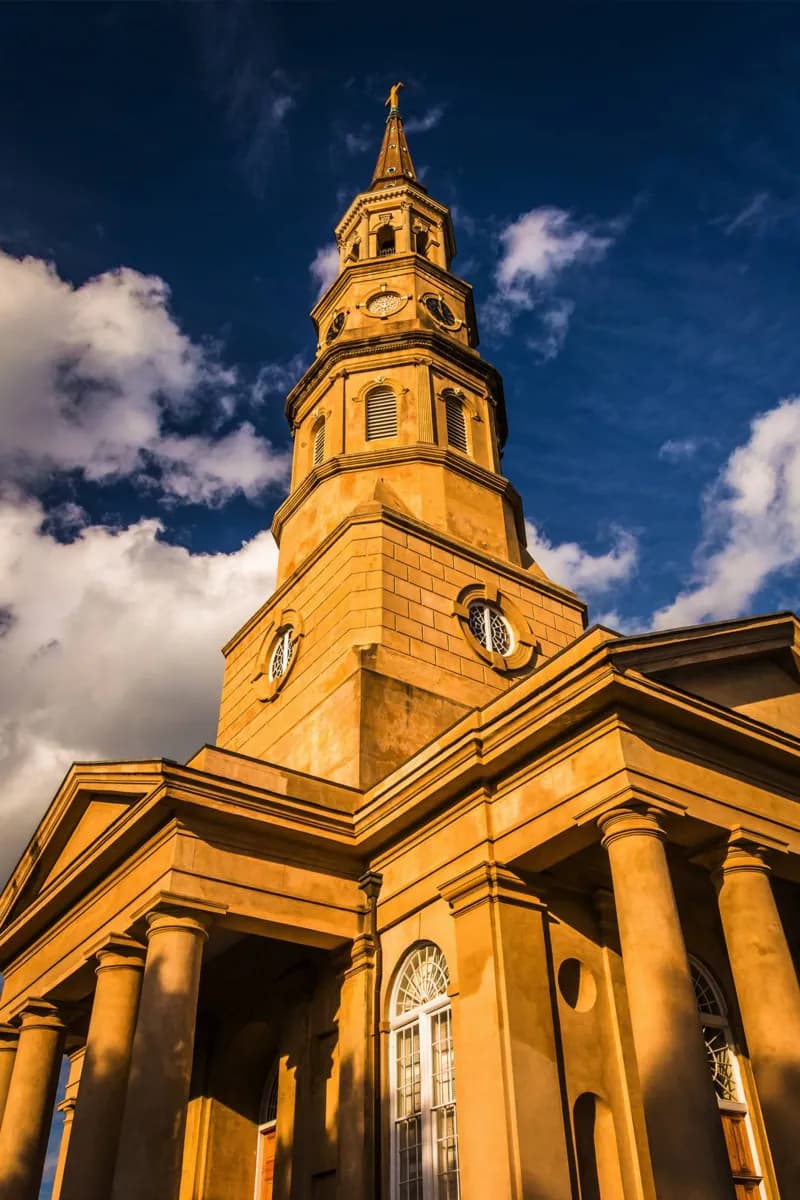
Compare the prominent church skyline with named communities: French Huguenots, Kahal Kadosh Beth Elohim, Saint Mary of the Annunciation, and Emanuel AME. Their histories show how faith shaped Charleston’s streets and institutions, while exposing the limits of colonial claims to religious tolerance.
The full story
Charleston’s low skyline and many church steeples helped give it the nickname “Holy City.” Anglican institutions held an important place in the colonial town, and French Huguenot refugees also settled here. The city’s Jewish history is long: Kahal Kadosh Beth Elohim was founded in 1749 by Sephardic Jews from London. Saint Mary of the Annunciation reflects the growth of Catholic life, and Charleston became the seat of a Roman Catholic diocese in 1820. Emanuel African Methodist Episcopal Church represents a different and essential history of Black religious organization in the South. These places should not be folded into a simple tale of universal tolerance. Colonial South Carolina allowed several Protestant groups and Jewish worship but excluded Catholics, while racial inequality governed daily life and religious communities. A walk among the steeples can therefore become a way to ask who was able to gather, worship, and build institutions at each point in the city’s history. Check access before entering an active house of worship; its primary role is still religious.
Useful to know
- View the steeples from public streets, and check each congregation’s visitor access before going inside.
- Include Emanuel AME alongside colonial churches and synagogues for a fuller account of the city’s religious history.