
Why go
Use the harbor and old streets as a map of power and exchange, rather than a backdrop of attractive houses. The move to Oyster Point, growth of port commerce, and lives of enslaved and free Black residents explain the city’s architecture and institutions. Fort Sumter then places Charleston in the national crisis over slavery.
The full story
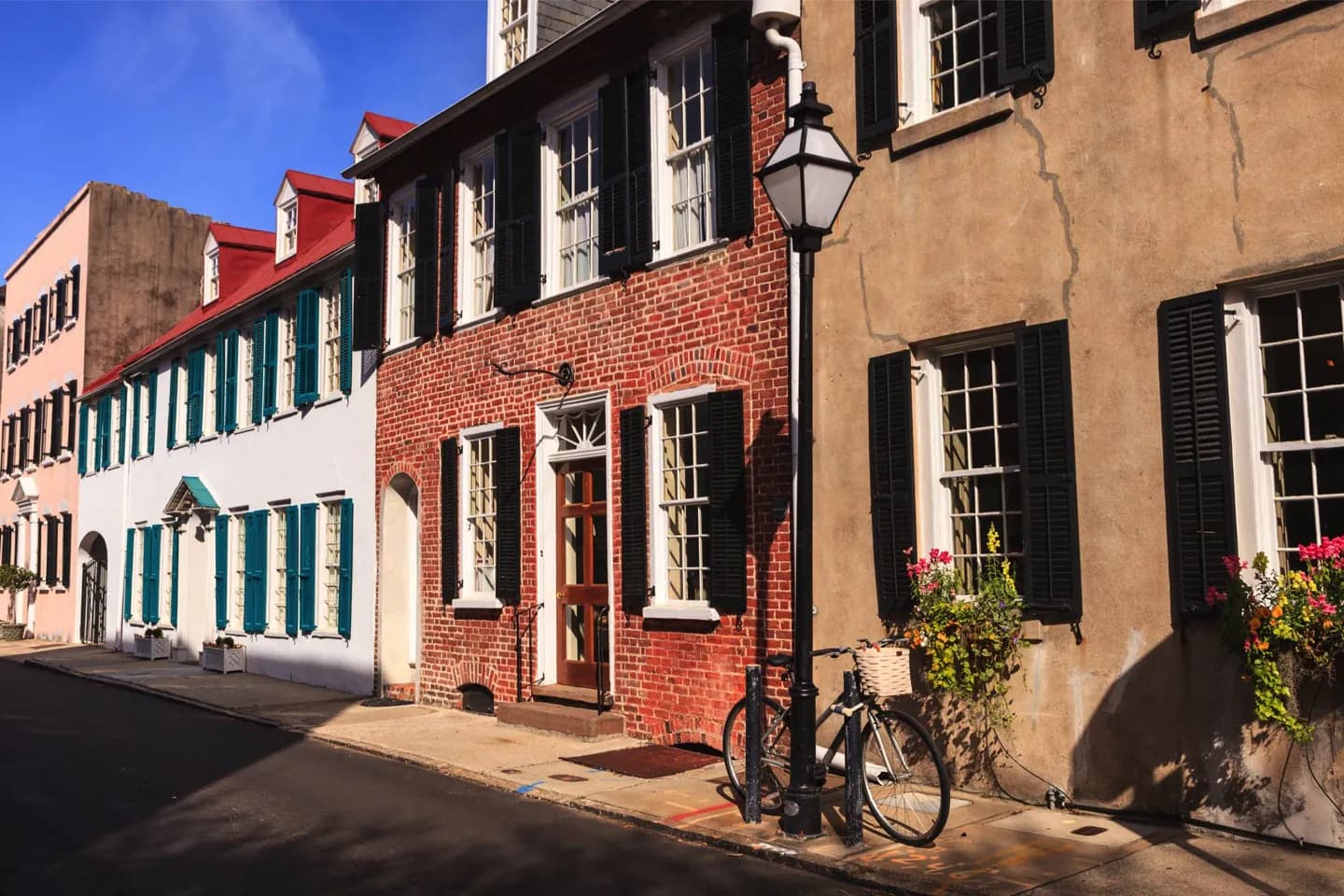
English colonists founded Charles Town in 1670 on the west bank of the Ashley River. They moved it to the peninsula between the Ashley and Cooper in 1680, where the natural harbor supported a growing port. Trade enriched merchants and planters, but that wealth depended heavily on slavery. The city also held a substantial community of free people of color, whose lives and opportunities were still shaped by racial law and inequality. French Huguenot, Jewish, German, and other communities formed institutions here, while the colonial elite established theaters, societies, and a college. In 1860 South Carolina seceded to defend slavery, and the harbor became the opening battlefield of the Civil War. Black residents fought for political power during Reconstruction; violence against them followed. This longer history helps connect Charleston’s houses, churches, waterfront, and cultural landmarks to the people who built and used them. It also cautions against treating the historic center as a single, harmonious colonial story.
Useful to know
- Pair the historic center with a site focused on African American history to understand the port beyond its merchant houses.
- Use Fort Sumter as a separate chapter of the city’s longer history, rather than the beginning of the story.