
Why go
This lower building reveals how the same ballcourt structure presented different imagery to the court and to the exterior. The carved figures, unusual signs and traces of paint make it a useful counterpoint to the upper temple’s jaguar façade. The modern red highlighting is part of that visible history.
What to look for
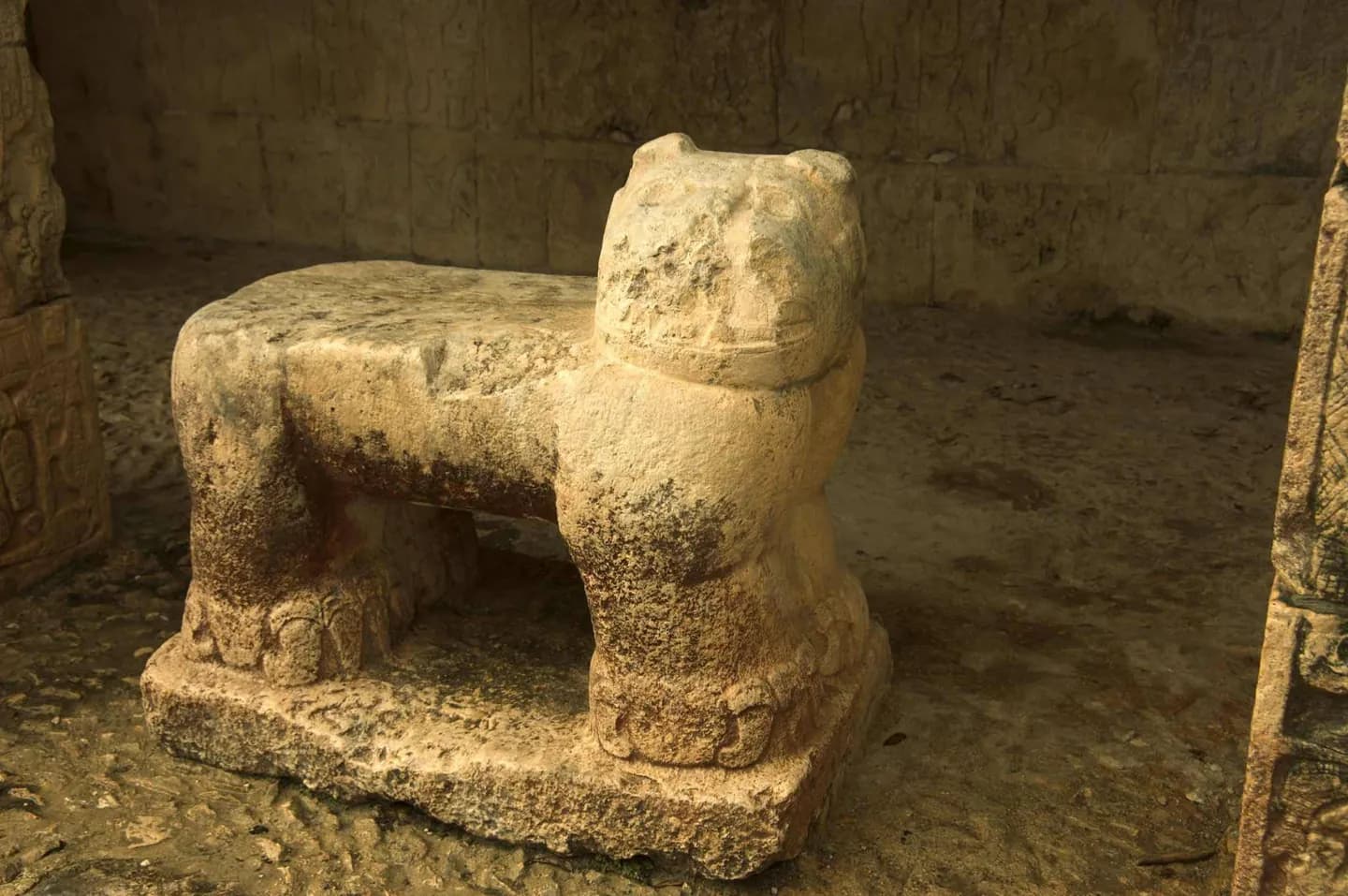
- Two pillars divide the entrance into three openings.
- A jaguar-shaped throne stands in the central opening.
- Relief bands cover the walls, with traces of earlier color in the corners.
The full story
The Lower Temple of the Jaguars occupies the outer face of the base supporting the upper temple. Its doorway has two pillars and three openings, with a jaguar throne at the center. Low reliefs cover the chamber walls in registers that were originally painted. Surviving color is most apparent in corners; the red background used to make the figures clearer was added in modern times by archaeologist Erosa Peniche. The scenes appear to feature richly dressed individuals accompanied by signs that do not follow the usual Maya hieroglyphic system. The façade combines an upper wall organized in horizontal bands associated with Puuc architecture and a sloping lower wall recalling forms of central Mexico. Parts of the front vault and façade were reconstructed. These details make the lower chamber a distinct monument, even though it belongs to the same larger ballcourt structure as the Jaguar Temple above.
Useful to know
- Compare the lower chamber with the upper Jaguar Temple on the same ballcourt wall.
- Look at the reliefs as a mix of surviving carving and later restoration, including modern red highlighting.