
Why go
The material process gives context to both painted codices and carved inscriptions. A scribe shown with an inkpot at Copán and writing equipment found at Aguateca make the craft tangible, even though these examples come from other Maya cities. These details suggest the preparation behind a seemingly effortless painted line.
The full story
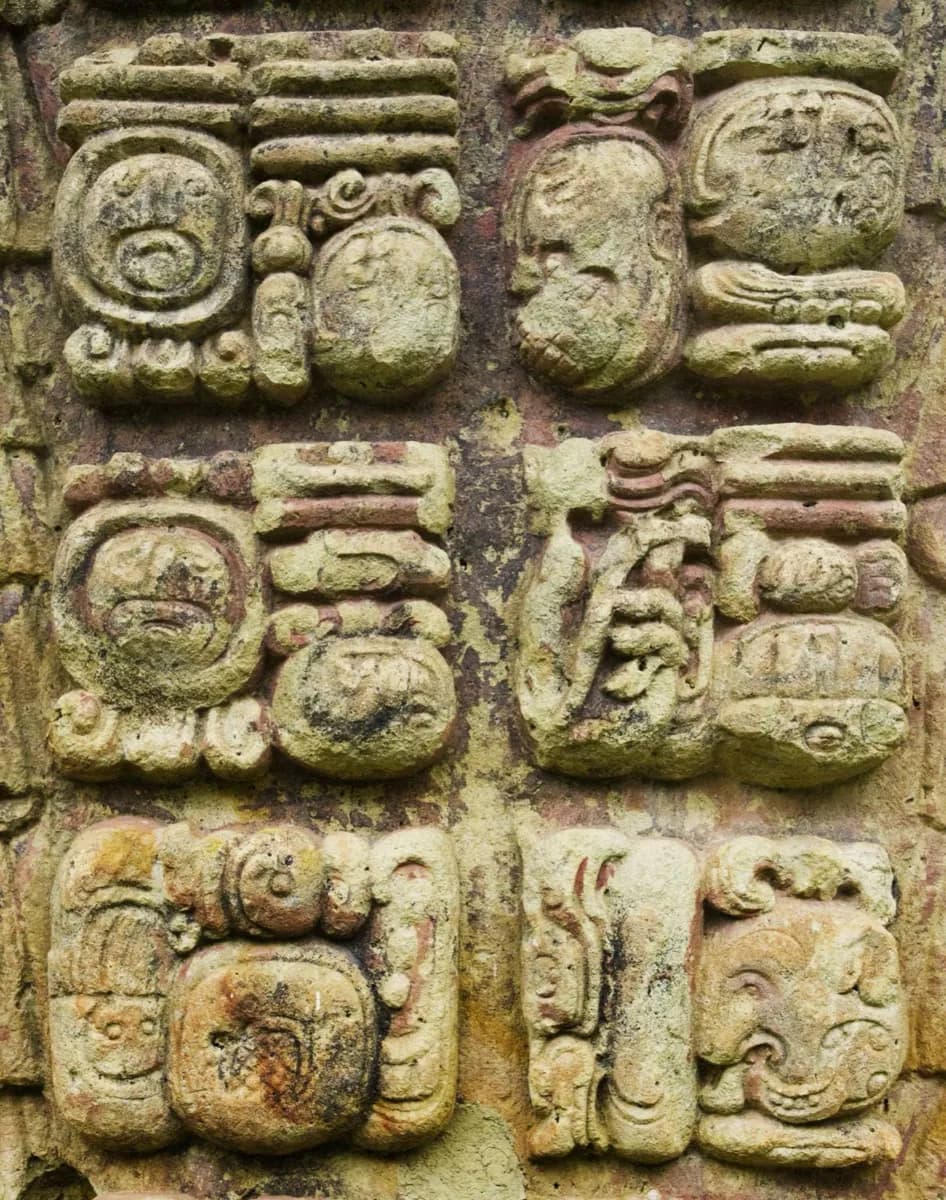
No surviving brush or pen clearly establishes every instrument Maya scribes used. Fine strokes in Postclassic codices suggest brushes with flexible hair tips, but that conclusion comes from the marks left on paper rather than from preserved tools. A Classic-period sculpture at Copán depicts a scribe carrying a conch-shell inkpot. At Aguateca, excavations in elite residences recovered palettes and mortars and pestles associated with preparing pigments and writing materials. These objects connect the finished text to a chain of work: pigment had to be ground and mixed, held in a container, then applied to paper, plaster or another surface. Stone inscriptions required a different final technique, yet they belonged to the same culture of composed texts and trained makers. The contrast is useful at Chichen Itza, where durable carvings dominate what a visitor sees. Much of the writing once held in books or painted interiors was more vulnerable to decay and loss. The surviving stone is a selective record of a broader scribal practice.