
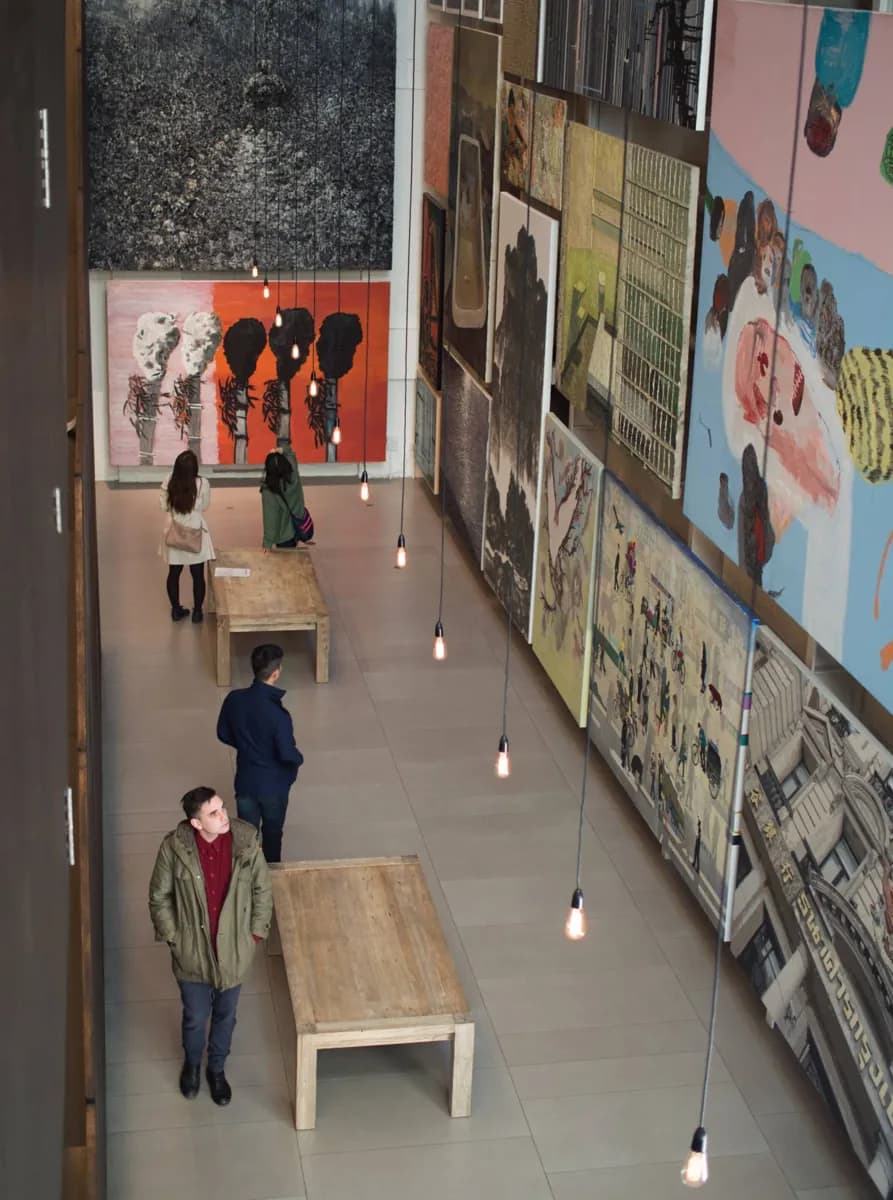
Why go
A museum and a live performance reveal different parts of the story. Porcelain rewards close attention to form and surface; a shan shui landscape builds an imagined journey through mountains and water. Papercutting and opera show how images and stories also live outside formal painting galleries.
The full story
Start with what the maker asks you to do. A porcelain vessel invites you to inspect its shape, glaze and painted detail at close range. A shan shui painting asks your eye to travel among peaks, water and empty space; it does not work like a single fixed photographic view. These differences make a museum visit more rewarding than a quick scan for famous objects. The picture changes again outside the gallery. Papercutting uses a small, portable surface, while opera brings costume, movement, music and story together in time. Courtly and folk forms have both contributed to China's artistic record, and neither stands for the whole country. If you have time for only one cultural stop, decide whether you want to study objects slowly or watch an art form unfold. If you can do both, compare how the same themes shift across material and performance.