
Why go
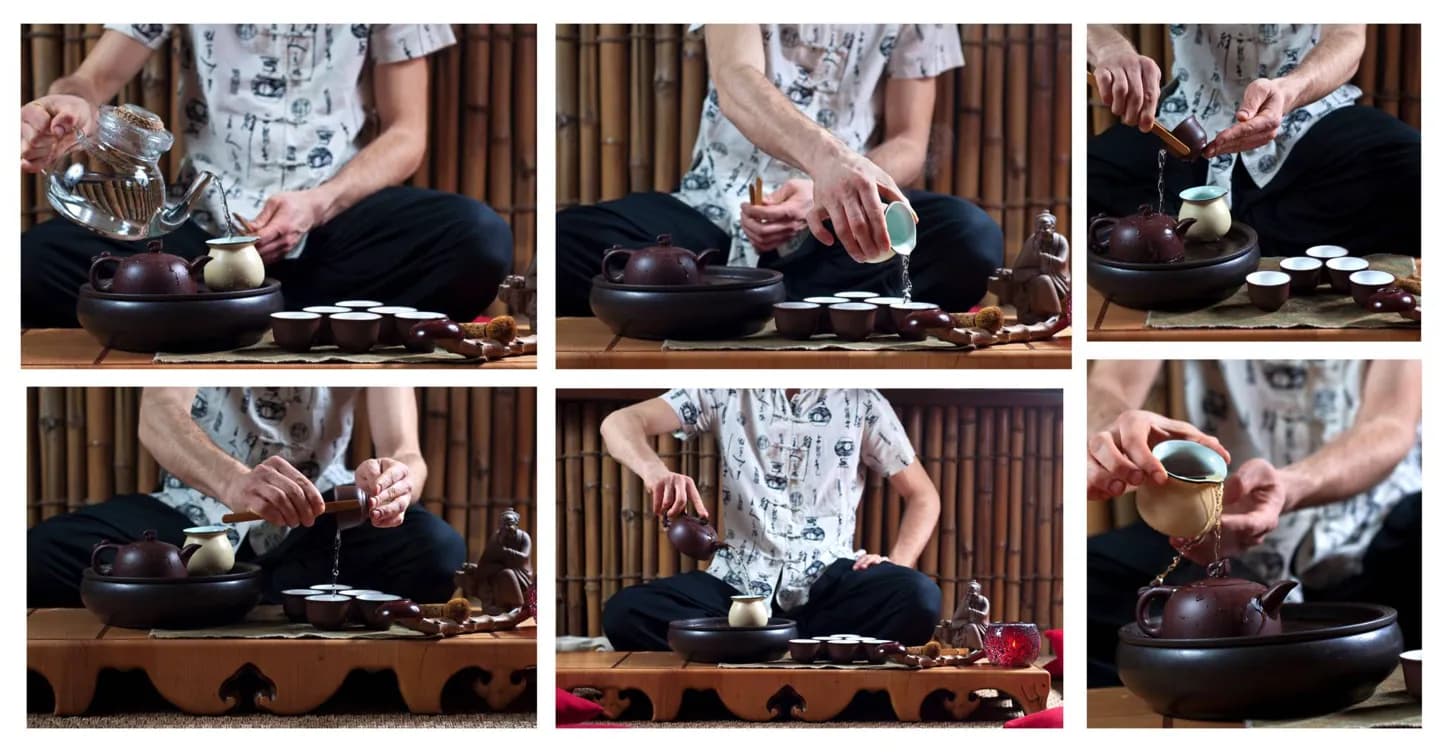
A ceremony is worth watching for the sequence as well as the drink. The small pot or cups, the way water meets the leaves and the repeated pours show how flavor changes. Practices vary by region and occasion, so look for the method being used rather than expecting one fixed script.
The full story
Ceremonial tea turns ordinary preparation into a deliberate sequence of warming vessels, adding leaves, pouring water and serving. The broad term “Chinese tea ceremony” covers more than one style. Gongfu cha is particularly associated with Minnan and Chaoshan traditions, where small teaware makes it easier to taste a series of infusions. The source describes small Yixing teapots as one possible vessel, with tools and steps changing by region. Oolong is often used, while some brewers choose pu’er or other teas. The point for a visitor is to notice how the same leaves behave across pours, not to count a prescribed number of steps. A casual session with a host and a formal demonstration may share equipment but feel very different. Ask what tea is being prepared and let the brewer’s order guide your attention.