
Why go
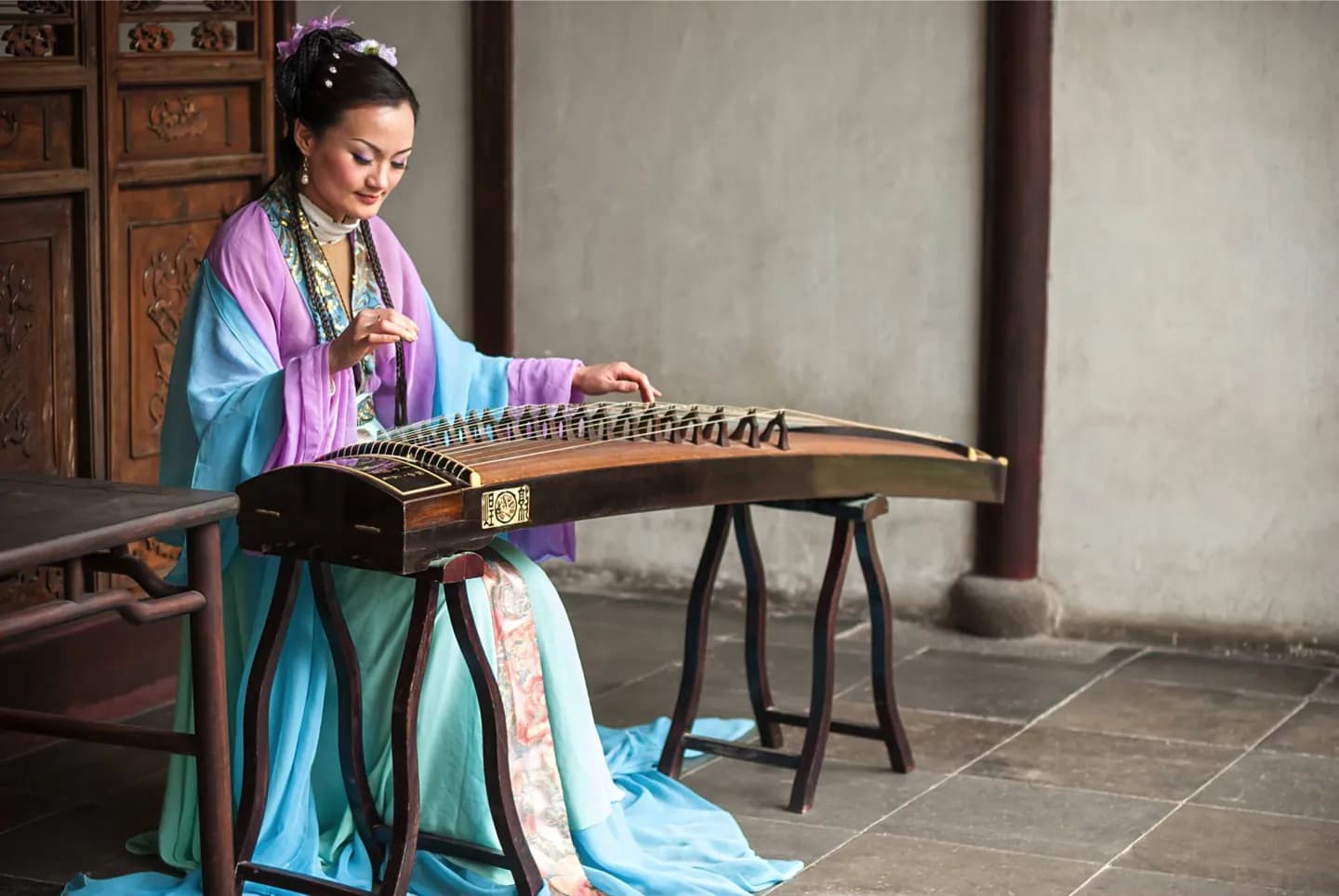
A performance becomes easier to follow when you know which tradition is on stage. Ritual music associated with the Zhou court joined sound and movement, while later instrumental writing gave the guqin a distinct place. Listen for plucked strings, bowed tone, reeds and breath rather than expecting one national sound.
The full story
Music and dance have long appeared together in Chinese ritual and performance. Accounts of Zhou court music describe an ordered setting in which movement had meaning alongside sound. That is a different experience from listening closely to a single instrument, such as the guqin, whose music also has a long written tradition. The instruments themselves give you an entry point. The guzheng and pipa are plucked but sound and look different; the erhu is bowed, the sheng uses reeds, and the xiao is a vertical flute. A program built around instruments will reward listening for texture and phrasing. An opera or dance program asks you to follow costume, gesture and story as well. Before choosing a show, check its stated form and repertoire. The label “traditional music” alone tells you too little about what the evening will feel like.