
Why go
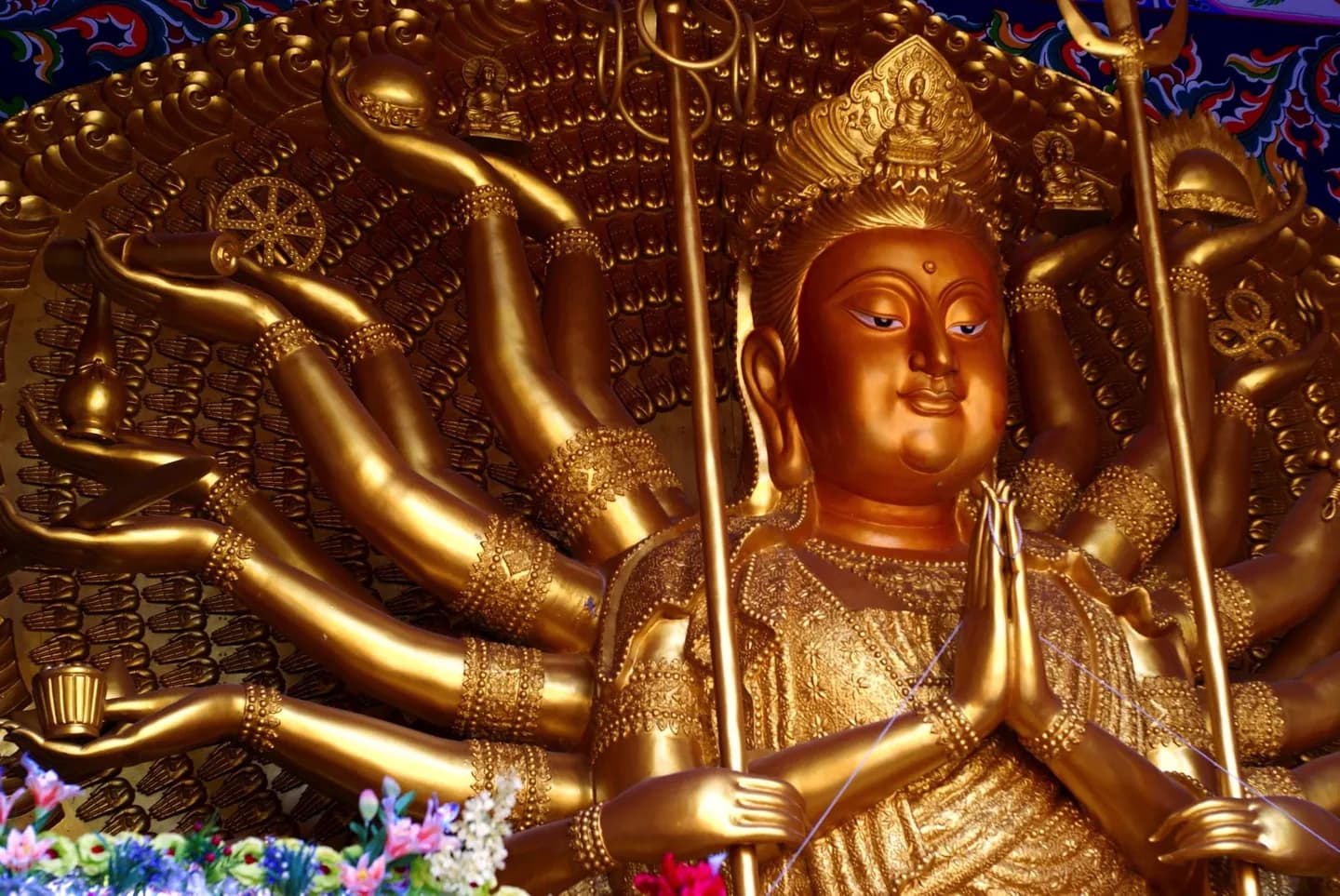
Look for whom a space honors. Guanyin, the Buddha, the Jade Emperor and local protective figures carry different meanings; guardian lions and door gods frame an entrance differently from an image on an altar. That careful reading helps at temples across China.
The full story
Religious life in China has drawn on several traditions over a long period. Early ideas of a high power appear in references to Shang Di and, later, to Heaven in Zhou political thought. Buddhist, Daoist and local practices developed their own texts, images and rituals while also influencing one another. A temple may therefore contain more than one kind of figure or practice. Begin with the hall rather than a label for the whole site. Guanyin is a Buddhist figure of compassion; the Jade Emperor belongs to a different religious world. Door gods and guardian lions mark thresholds and protection, but their presence does not tell you what happens at the main altar. Read the names and signs provided on site, and follow the conduct expected there. The point is to notice the particular community and dedication of a place, rather than flattening China's religious landscape into one system.