
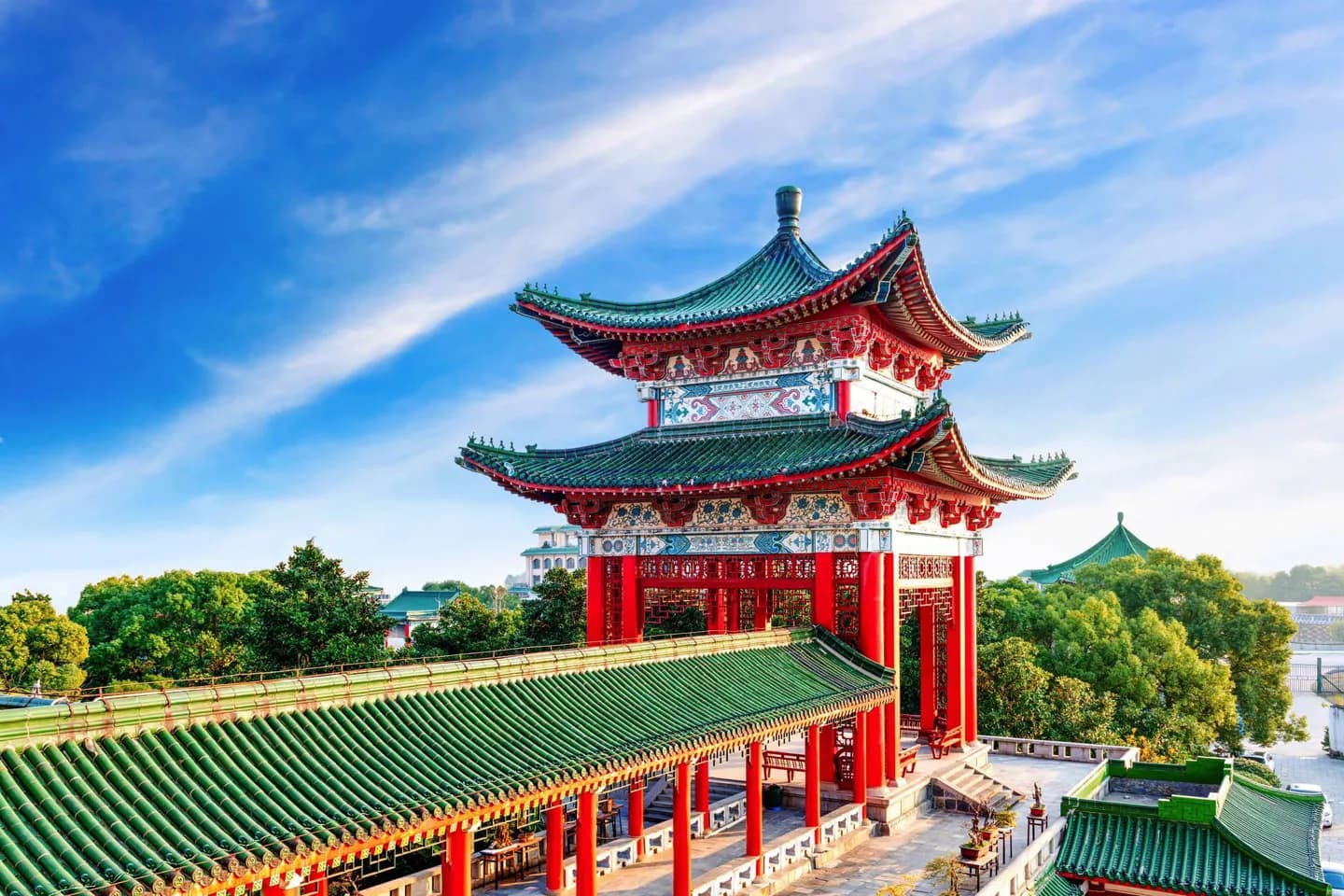
Why go
Look at the sequence of spaces as well as the buildings. In Beijing's Forbidden City, symmetry and successive courts express ceremony and rank. In a garden, turns, openings and framed views can matter more than a single grand facade. That contrast gives you a useful way to read both monumental and intimate places.
The full story
At the Forbidden City, begin with the plan. Gates lead through a series of courtyards to large halls, and the central axis makes the order visible before you enter a room. The broad roofs and low, spreading composition emphasize the group of buildings rather than one tall tower. Pause at a threshold and look back: the next space often changes how the previous one feels. A garden asks for a different pace. Walls, paths and openings can hide a view, then frame it from a new angle. Rocks, water and planting work with architecture rather than serving as decoration around it. Ideas associated with feng shui also shaped some choices of position and orientation, though no single rule explains every building. Compare the formal court with a winding garden path and the range of Chinese design becomes much clearer.