
Why go
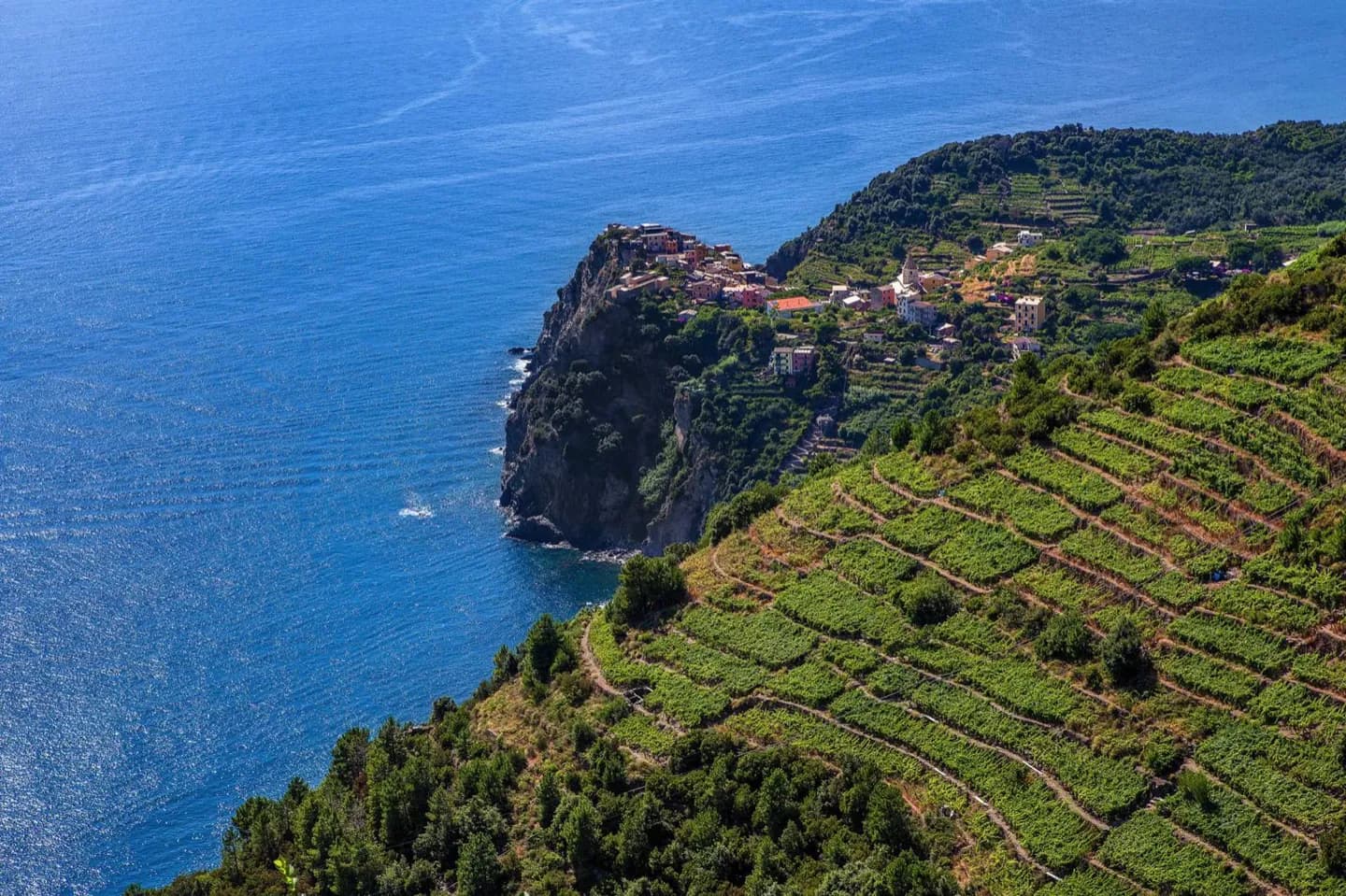
Look at the vineyard strips above Manarola and the olive groves along the coastal hills. Local white wine and Sciacchetrà come from this difficult growing terrain; olive oil, citrus preserves and honey reflect other ways residents have used the limited land. Tourism now shares the economy with those older agricultural traditions.
What to look for
- Dry stone walls retain soil for vines on slopes above the sea.
- Olive trees and citrus add different crops to the terraced landscape.
- Honey production draws on the area's varied flowering plants.
The full story
The steep coast left little open ground for agriculture. Residents answered by building terraces, one narrow level above another, and supporting them with dry stone walls. The result is both a practical farming system and the pattern visitors see rising behind the villages. Grapevines have been central to that system, supplying dry Cinque Terre white wine and the sweet wine Sciacchetrà. Olive trees add oil to the local table, and citrus, including lemons, has supported preserves and liqueurs. Beekeeping adds honey from different flowering plants. These products explain why the landscape contains more than vineyards, even when grape terraces dominate the view. Modern tourism has changed how people earn a living, but the cultivated slopes remain a visible record of the work required to settle this coast. When walking near a vineyard, notice the size of the plots and the stone walls needed to keep each one in place.