
Why go
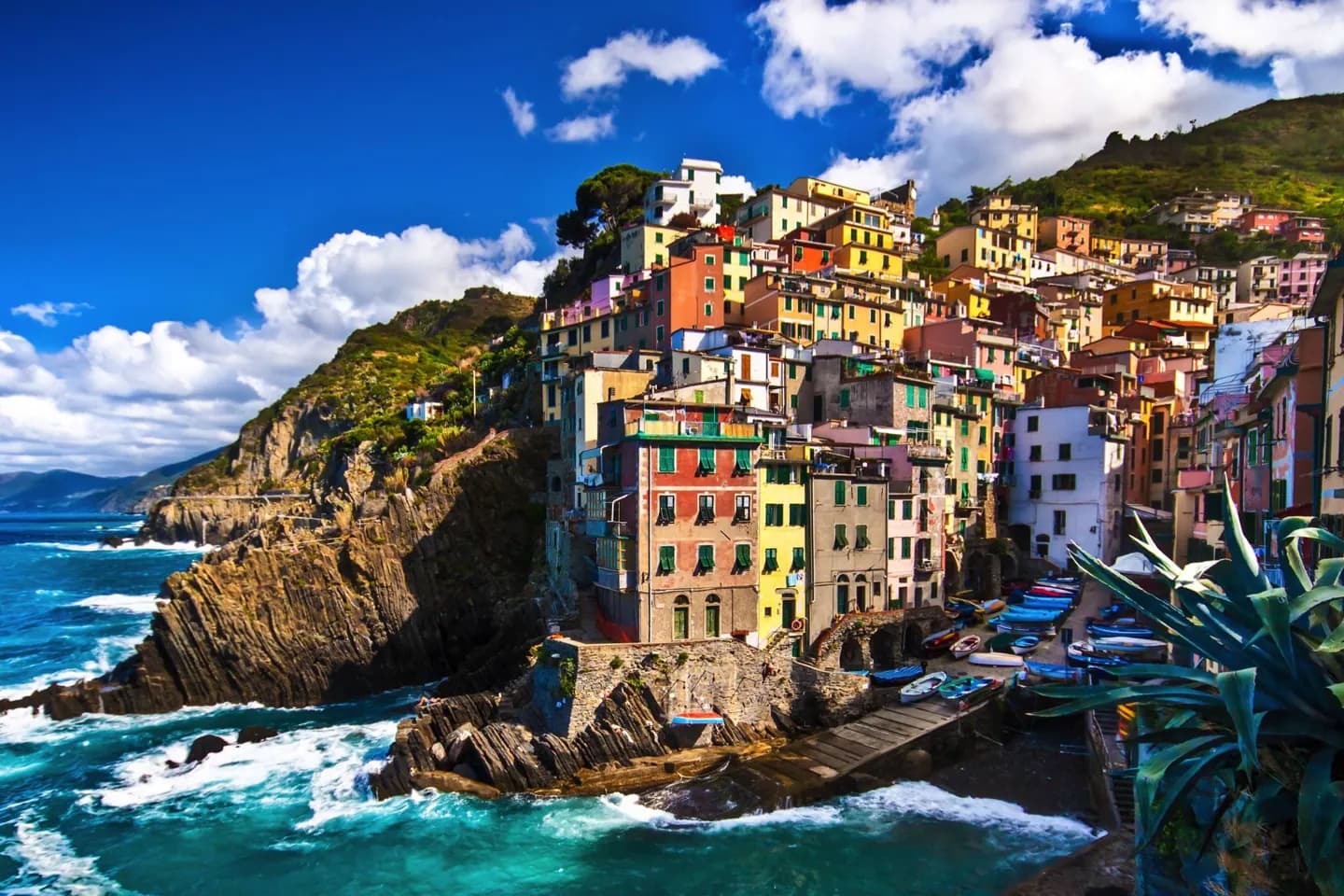
Start with the geography: Monterosso al Mare, Vernazza, Corniglia, Manarola and Riomaggiore sit close along the railway, yet each meets the sea differently. The national park and UNESCO landscape include the slopes around them, where generations built terraces for vines and olives. Seeing both village streets and cultivated hills explains the destination better than either alone.
The full story
The five settlements occupy a narrow band between the Ligurian Sea and steep inland ridges. Houses cluster where the land allows, while paths, rail tunnels and terraces connect places that look close on a map but can feel far apart on foot. Monterosso al Mare has a broad waterfront and an older center. Vernazza gathers around a harbor. Corniglia stands on a headland above the water, so arriving by train still leaves a climb into the village. Manarola and Riomaggiore descend toward small rocky harbors. The surrounding hillsides are part of the experience. Dry stone walls hold strips of earth where people have long grown grapes and olives. The cultivated slopes, villages and coast form the protected landscape recognized by the national park and UNESCO. In 2011 severe flooding damaged Vernazza and Monterosso; that history also makes the terrain and weather feel less like a scenic backdrop and more like forces that shape daily life here.
Useful to know
- Pair a waterfront village with Corniglia to see how the coast changes above sea level.
- Check current train and trail information before linking several villages in one day.