
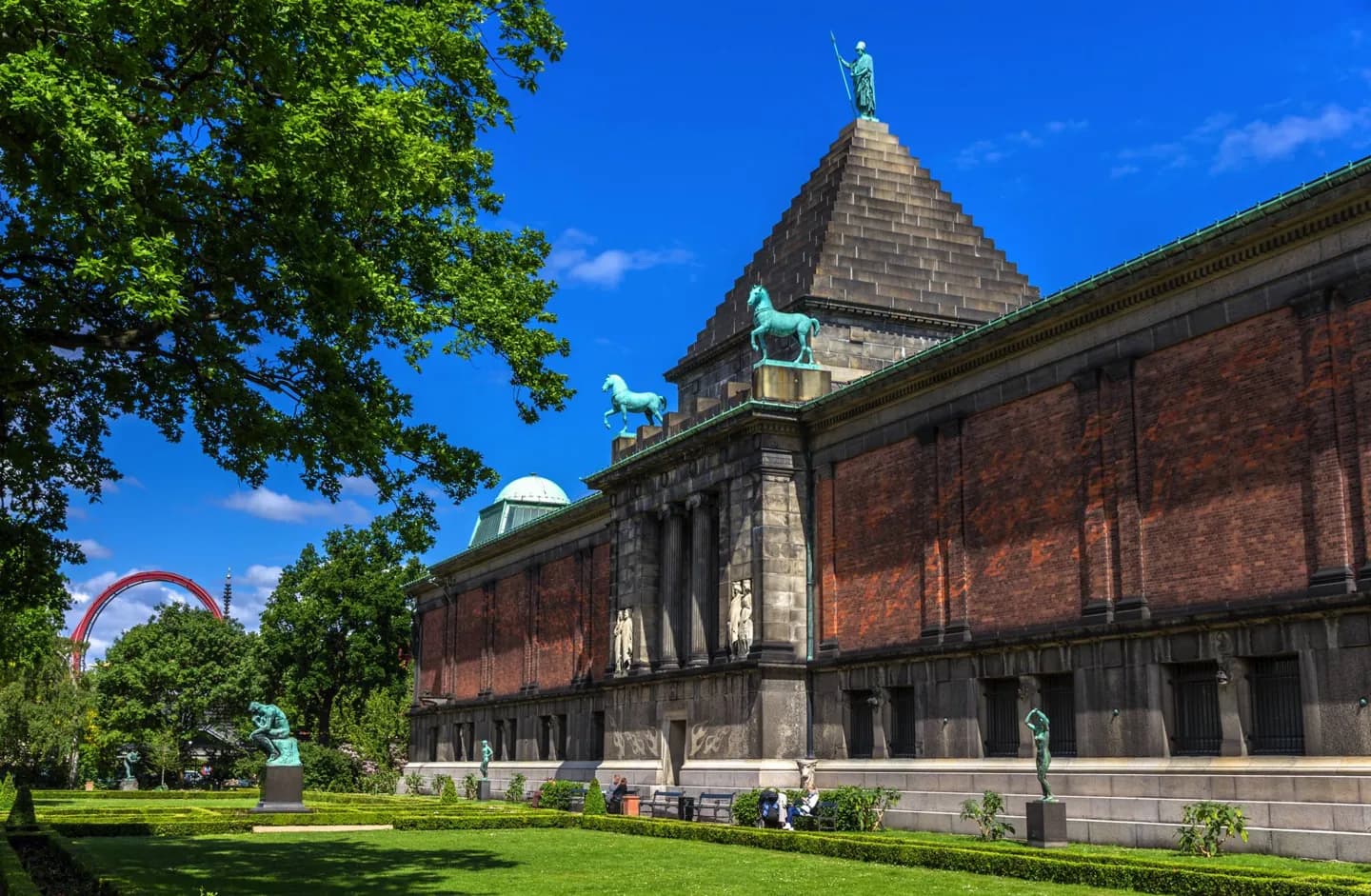
Why go
Trelleborg near Slagelse shows the geometry of a Viking ring fort, while medieval cathedrals show how brick became a defining material where building stone was scarce. Kronborg and other royal projects then reveal the influence of European Renaissance design on Danish power and ceremony.
The full story
Archaeological remains at Trelleborg and Fyrkat give a sense of Viking planning and timber construction. In the Middle Ages, Romanesque and Gothic churches spread across the country. Brick became especially important for large religious buildings, fortifications and castles, producing a different texture from stone architecture farther south. Half-timbered houses remained common in ordinary towns and villages. Royal building later drew on Dutch, Flemish and French ideas, most visibly in Renaissance castles and fortifications associated with Frederik II and Christian IV. Baroque and neoclassical styles followed, then nineteenth-century historicism and National Romanticism. Twentieth-century Danish architects worked increasingly with functional forms and design for everyday use. A good architectural day need not cover every era: compare the mass of a medieval brick church with the ordered façades of a royal building, then notice how a modern public space handles light and movement.