
Why go
The term helps explain why a shared meal or relaxed evening matters in Danish descriptions of everyday life. At Christmas, food, candles, songs and gathering around the tree give that social idea recognisable forms; summer gatherings show that the idea is not seasonal.
The full story
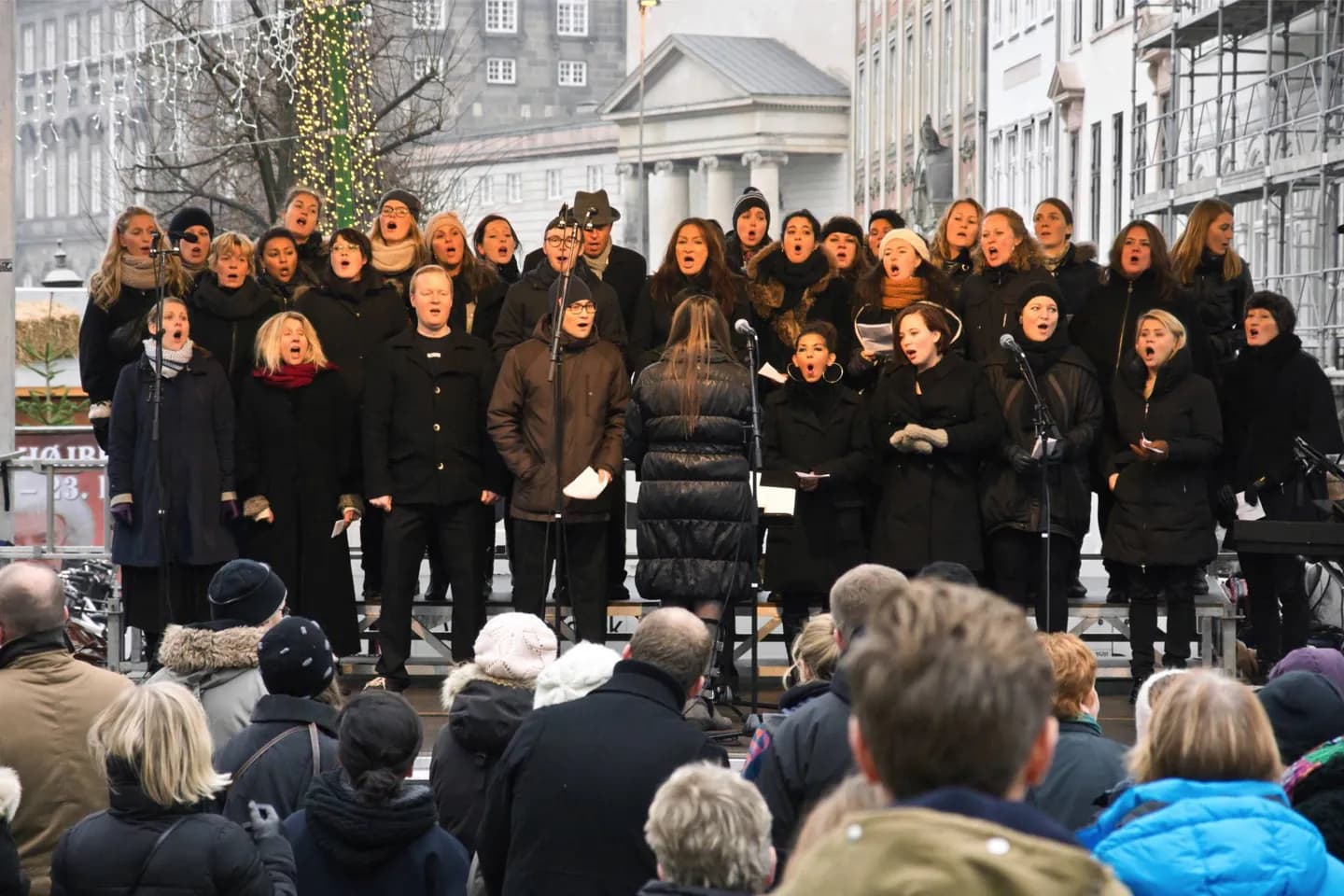
Hygge is often translated as cosiness, but it is more useful to think of the comfortable time people make together. The older account gives both a winter evening with loved ones and an outdoor summer meal as examples. It is therefore not limited to candles, cold weather or a particular style of room. Christmas offers a specific setting for the idea. In Denmark, Christmas Eve is the main family celebration. A traditional dinner may include roast duck, goose or pork with potatoes, red cabbage and gravy. Risalamande, a cold rice dessert served with cherry sauce, can hide a whole almond whose finder receives a small prize. Singing and circling the Christmas tree before exchanging presents are also part of the described custom. These are family traditions, so they are better understood as cultural context than as a promised public spectacle. If visiting in winter, the term hygge can help you read the emphasis on shared food and time together; in summer, the same idea can apply to an unhurried meal outdoors.