
Why go
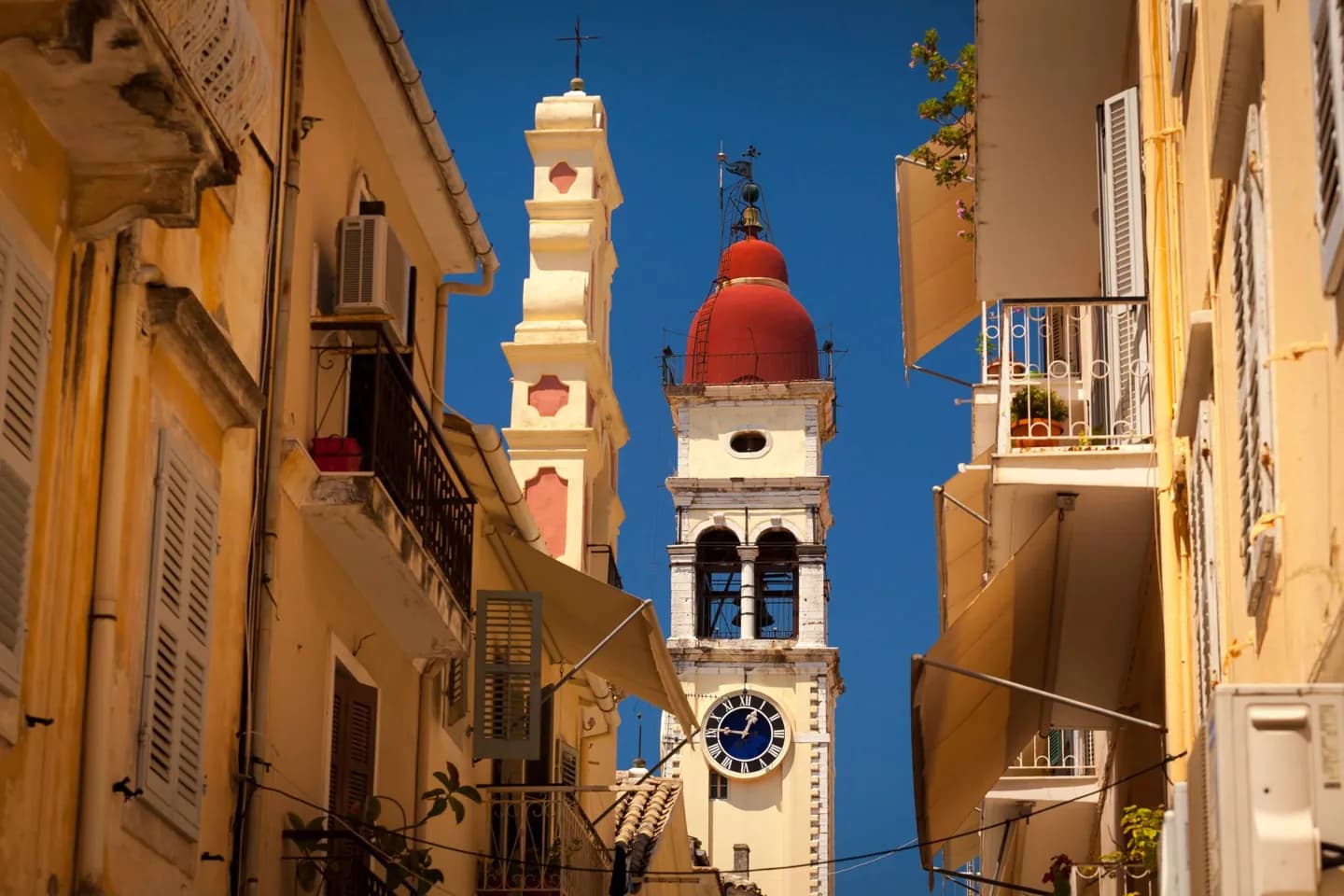
The Old Town makes Corfu's long Venetian period legible at street level. Narrow side lanes and arcaded buildings contrast with Spianada's open space, while St Spyridon Church adds a living religious landmark to the walk between the fortresses. The changing street widths make the fortified plan easier to sense on foot.
What to look for
- Narrow side streets preserve the dense Venetian-influenced plan.
- Arches and arcades shape the ground floors of older buildings.
- St Spyridon Church is tied to the island's patron saint.
The full story
Corfu Old Town grew within a defensive setting formed by the Old and New Fortresses. Venetian rule left a strong mark on its street pattern and buildings: small lanes turn between closely packed facades, and arches create covered edges at ground level. The town's UNESCO listing recognizes this historic urban ensemble, not a single monument. A walk is therefore most rewarding when it moves between different scales: enclosed side streets, church fronts and the broad Spianada beside the Old Fortress. St Spyridon Church is especially important to local religious life because it houses the relics of the island's patron saint. The cathedral is another church named in the older account. The nearby islet of Pontikonisi belongs to a different geographic visit and should not be confused with the Old Town. Keep time for unhurried turns through the lanes, then decide which building or collection deserves a longer stop.
Useful to know
- Explore the lanes on foot, then use Spianada to orient yourself beside the Old Fortress.
- Allow separate time for fortress interiors or museums rather than treating them as part of a quick street walk.