
Why go
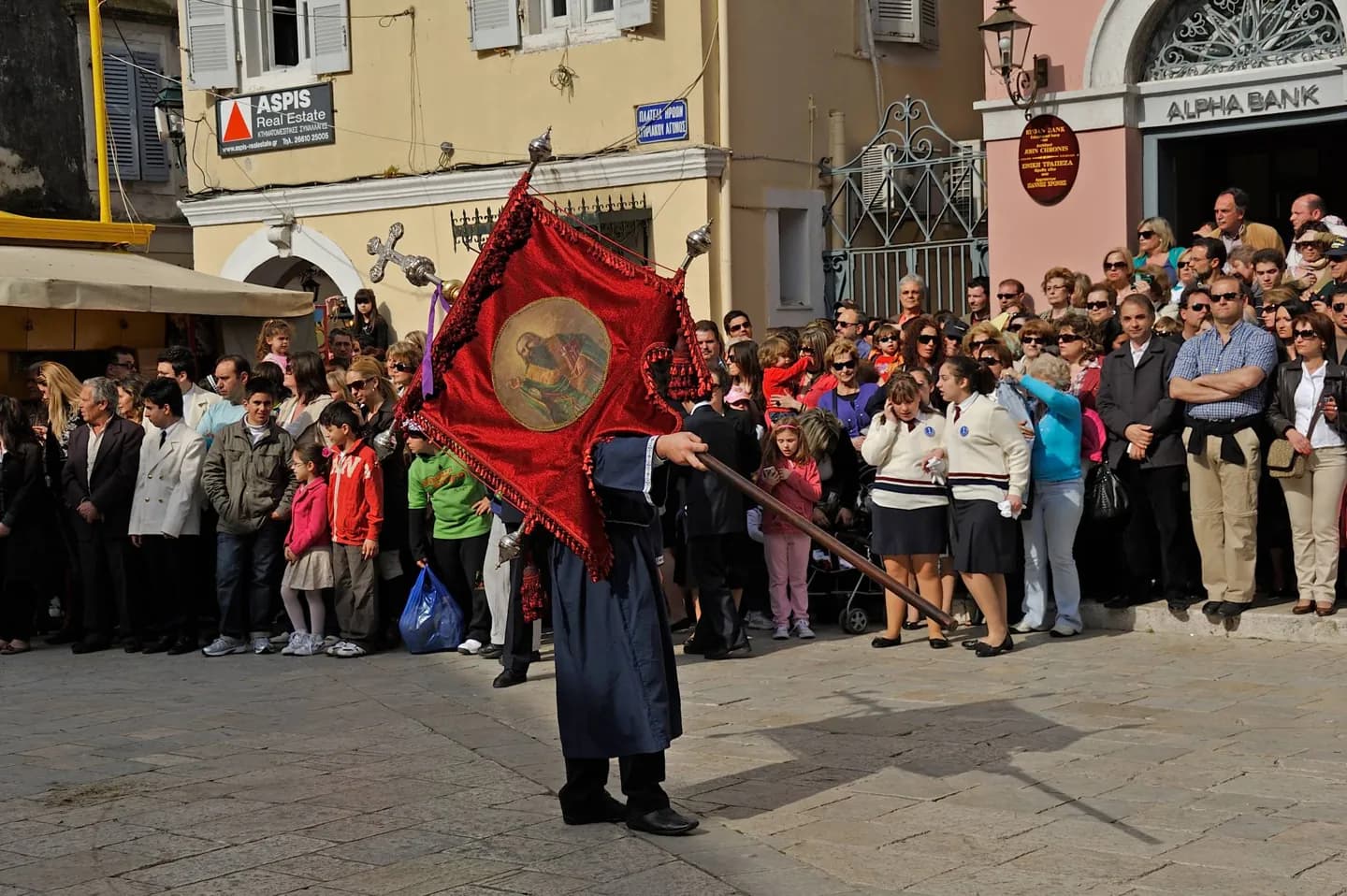
These events explain why the Old Town's streets and squares are more than architectural sights. During Holy Week, philharmonic bands accompany processions; on Holy Saturday, the pot-throwing custom briefly fills streets with noise and broken pottery. Carnival adds another tradition, while processions honour the island's patron saint at several points in the year.
The full story
Corfu's Easter observances bring music and religious ritual into public space. In Holy Week, bands in uniform accompany processions through Corfu city. On Holy Saturday, the custom of throwing water-filled pots from windows creates a brief, loud spectacle. Its exact origin is uncertain, so the event is best understood as a living local practice rather than assigned a firm ancient pedigree. Saint Spyridon, the island's patron, is also honoured through processions of his relics in the Old Town. Local tradition credits him with protecting Corfu from famine, plague and a siege, but these are devotional beliefs rather than proof of supernatural events. Carnival has its own rhythm: a parade ends with the burning of an effigy representing the season. Taken together, these traditions show how Corfu uses the streets for collective observance. A visitor who knows the difference between a religious procession and a festive spectacle can approach each with suitable attention.
Useful to know
- Check the current local calendar and procession route before planning a festival visit.
- During Holy Saturday pot throwing, watch from a safe position away from windows and falling pottery.