
Why go
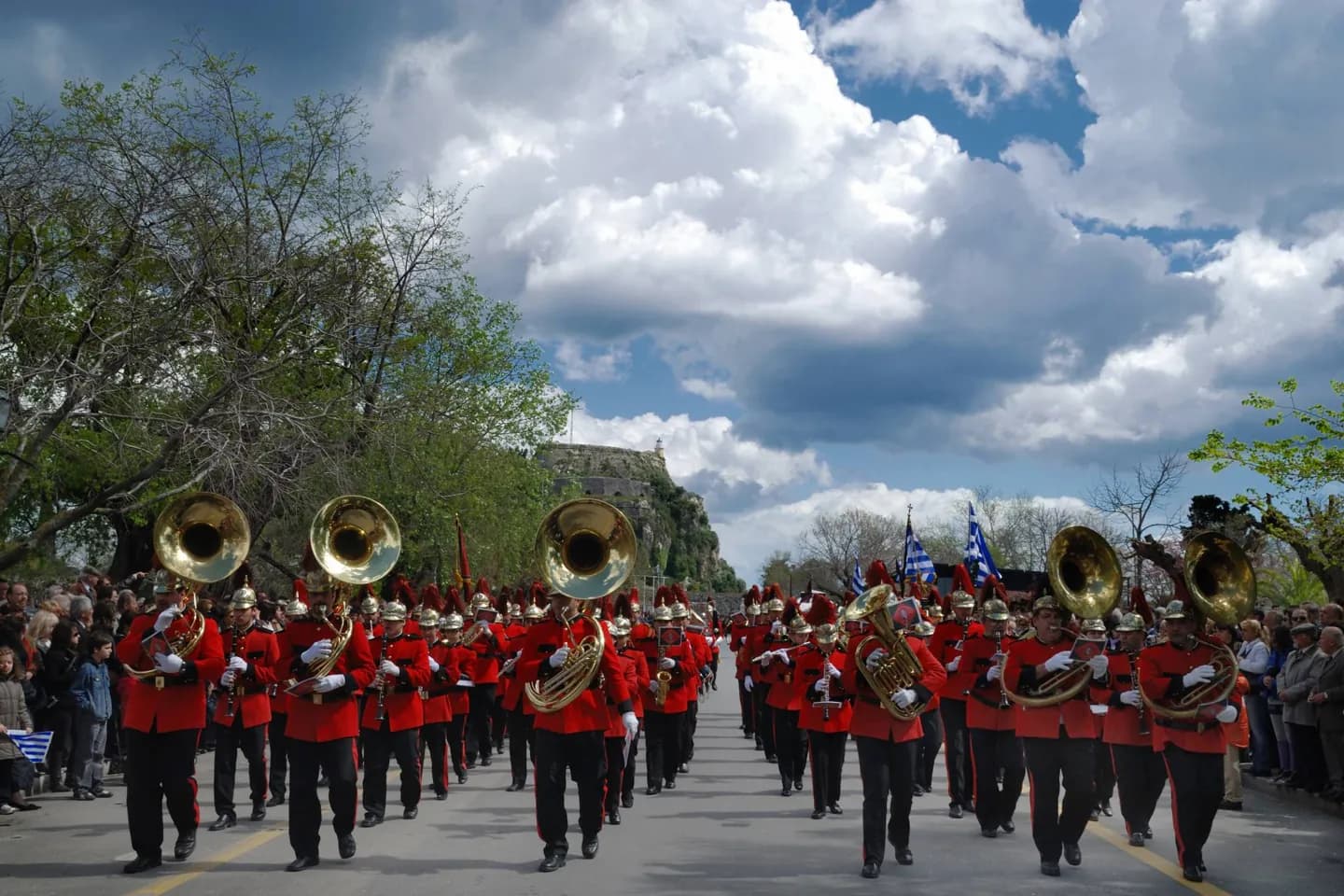
The collection gives faces and objects to a tradition that otherwise passes by in a procession. The society began in 1840 as a music teaching institution, not simply a marching band. Its museum traces that wider role, making it a strong companion to a Spianada concert or a Holy Week event.
What to look for
- Scores and instruments connect the wind band's repertory with its public performances.
- Documents and artefacts trace how the society developed from its founding in 1840.
- The museum's thematic displays show music teaching alongside the society's band activities.
The full story
Founded in 1840, the Philharmonic Society of Corfu set out to teach music on the model of a European academy. Its first artistic director, Nikolaos Halikiopoulos Mantzaros, led it until his death in 1872. Teaching included theory, composition, voice and instruments, with access extending beyond social class. The wind band's public role later became so prominent that many people came to equate the society with the band alone. Its museum restores the wider picture through thematic displays of the institution's activities and history. Scores and instruments show what musicians studied and played; documents and artefacts place the performances in a longer civic story. The society's orchestra also appeared at Corfu's Municipal Theatre, a building destroyed in 1943. Read together, these histories explain why the island's bands carry more than ceremonial colour. They come from a lasting network of instruction, ensembles and public events.
Useful to know
- Check the society's current museum access information before going.
- Pair the museum with the Spianada to connect the displays with the city's public music setting.