
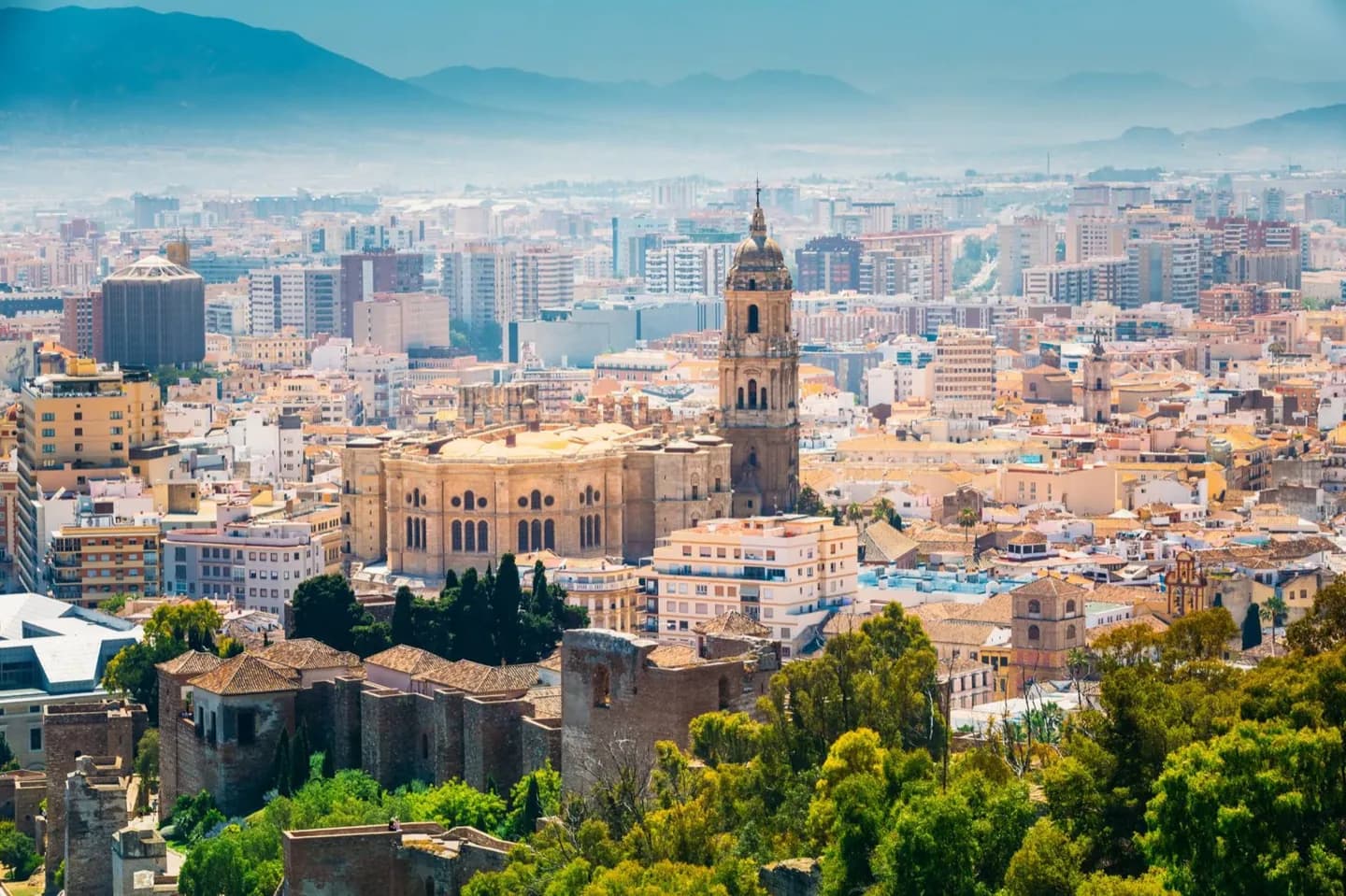
Why go
The Roman Theatre, Alcazaba and Gibralfaro make Málaga's long history legible in a compact part of the city. The cathedral and streets around Plaza de la Constitución show how the centre changed after the Christian conquest, while the harbour provides a clear sense of the city's coastal setting. The higher fortress adds a broader view but requires more climbing.
What to look for
- The Roman Theatre sits below the Alcazaba, making two eras visible in one stop.
- Gibralfaro rises above the lower fortress and the port.
- The old centre runs south toward the harbour, with the Guadalmedina to its west.
The full story
Málaga grew where a natural harbour met routes into the interior. Phoenician Malaka developed as a trading settlement; the Roman city left a theatre and a record of Mediterranean commerce. Under Muslim rule, the Alcazaba guarded the lower hill and Gibralfaro strengthened the summit above it. After the Christian conquest, new streets, churches and the cathedral reshaped the inherited urban plan. The port remained central to trade, and nineteenth-century industry and civic building added another layer. The contrast is easiest to read while moving from the Roman Theatre up toward the fortifications, then back through the streets to the harbour. The city's history is spread across a walkable core, but its hillside landmarks make the full sequence more demanding than a flat waterfront stroll.
Useful to know
- Start around the Roman Theatre and Alcazaba, then decide whether to add the steeper climb to Gibralfaro.
- Pair the historic centre with the port promenade for a city-and-sea walk.