
Why go
The Alcazaba's defended terraces and Gibralfaro's higher position show how the city protected both its port and its rulers. Looking down toward the harbour explains why trade mattered to Mālaqa, particularly when it became a maritime gateway for the Nasrid kingdom.
The full story
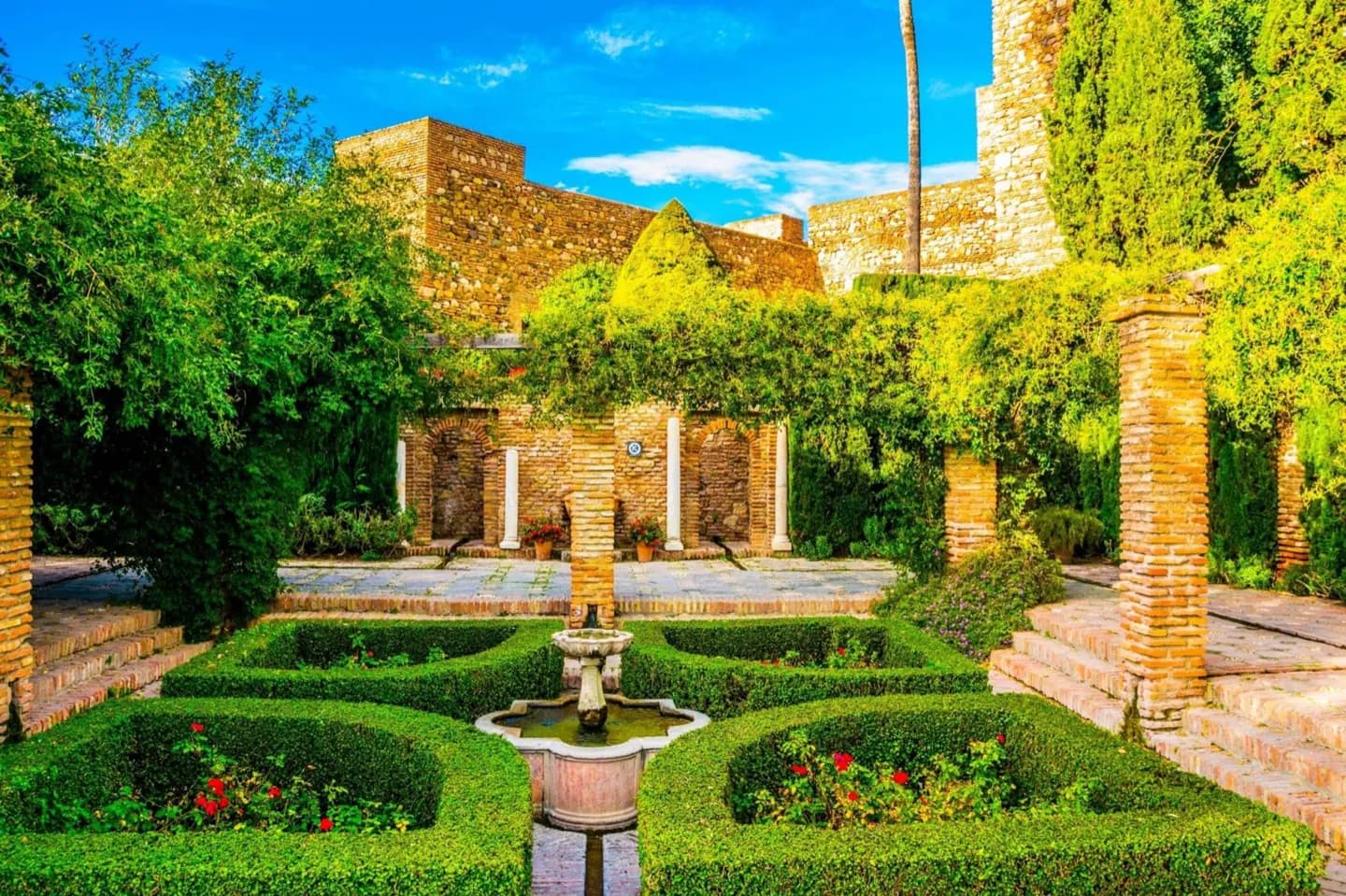
After Muslim armies entered the Iberian Peninsula in the early eighth century, Málaga became Mālaqa within al-Andalus. Its value came from a protected coastal position and access to trade with the interior and across the Mediterranean. The city grew behind walls, with the Alcazaba combining defence and palatial spaces on the lower hill. Gibralfaro crowned the summit, and the walled connection between the two followed the slope. By the fourteenth century, Mālaqa served as an important maritime gateway for the Nasrid kingdom of Granada; Genoese merchants had obtained trading privileges in the port. The surviving fortifications are the most direct way to read this history. The Alcazaba's layered walls, turns and courtyards reflect both security and residence, while Gibralfaro explains the larger defensive setting. Remains of the old city's Jewish quarter and shipyard gate add context, though they are less immediate than the two hilltop landmarks.
Useful to know
- Allow for uphill terrain if you want to connect the Alcazaba's lower terraces with Gibralfaro.
- Look back toward the port from the fortifications to understand the city's medieval trading position.