
Why go
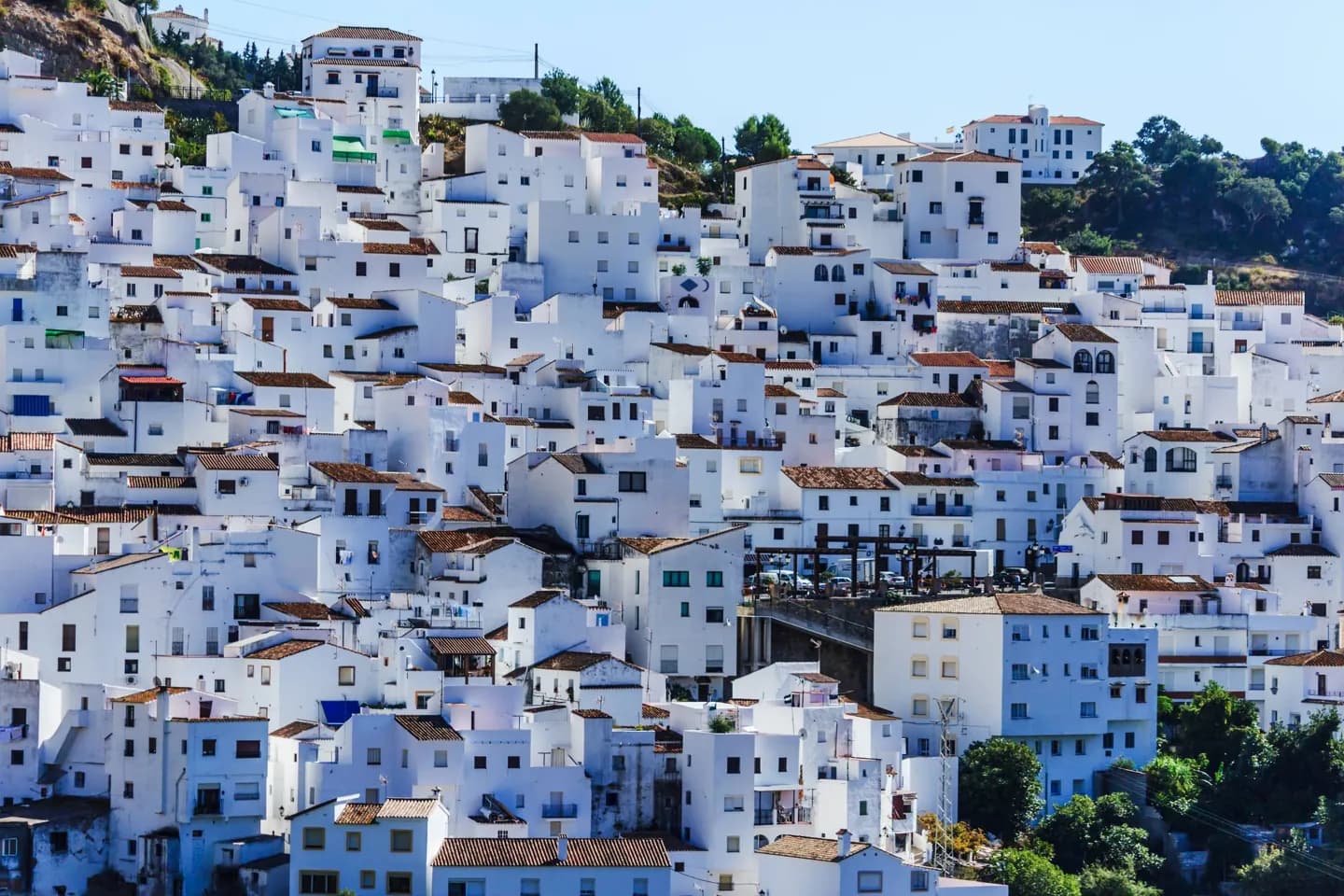
The contrasts visible on today’s coast began in this period. Torremolinos drew international attention, Benalmádena and Fuengirola expanded, and Marbella developed a more exclusive reputation. Rapid building altered old fishing settlements and pushed housing along the shore, so comparing an older centre with its surrounding resort fabric becomes a way to read the boom.
The full story
The postwar tourist industry gathered speed from the late 1950s. Torremolinos became a centre of international holiday travel, and its success helped draw growth toward Benalmádena, Fuengirola and Mijas in the late 1960s and early 1970s. Hotels and housing multiplied as workers also arrived from rural areas. Many former fishing settlements changed quickly: some historic centres remained recognisable, while new apartments, commercial buildings and roads spread around them. Marbella followed its own path, associated with Ricardo Soriano, Alfonso de Hohenlohe and high-profile visitors. The “Costa del Sol” label helped market these different places as one Mediterranean destination. Yet the label hides a real social and physical shift. The coast was not simply discovered for beaches; it was rebuilt to accommodate visitors, employees and later residents. Looking from an older street toward a hotel district makes the speed and uneven character of that transformation easier to understand than a list of famous names does.