Saved in this browser, on this device. Shared across the nine languages.
Loading your Croatia…
From the Croatia World / Itineraries
Croatia's travel regions
From Istria and the Kvarner islands to Dalmatia, Zagreb and Slavonia, Croatia's regions suit very different trips. Use these contrasts to choose a base before adding stops.
Why go
The Adriatic coast is only one part of the country. Istria pairs Roman and Venetian layers with a compact peninsula; Kvarner joins islands to mountain country; Dalmatia follows a long historic coast. Zagreb and Central Croatia turn the focus inland, while Slavonia opens onto the eastern river plains. These are useful combinations, not a single route.
The route, stop by stop
Times are planning estimates. Unknown visit durations start at an editable 30 minutes; access is checked separately.
Croatia's visitor map reaches beyond Adriatic beaches. Coastal towns and islands, Zagreb, and inland parks create different trips with very different travel demands.
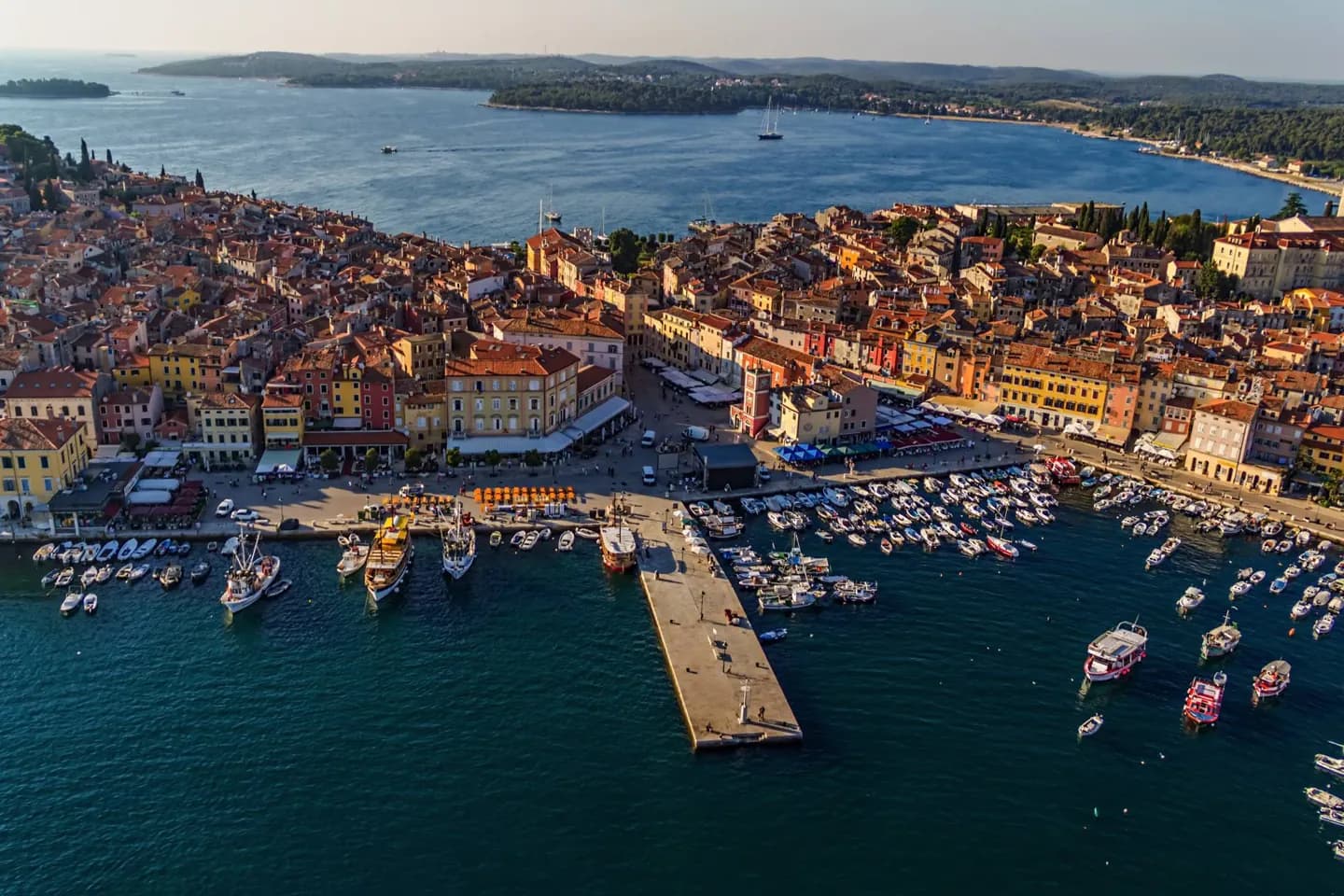
Istria is Croatia's northwestern peninsula, where Roman remains and centuries of Venetian influence meet a distinct coastal and inland setting. Its compact shape rewards a region-based trip.
Kvarner links Adriatic islands and old resort towns to forested inland mountains. It suits travelers who want a coastal base with a clearly different landscape nearby.
Dalmatia follows Croatia's long southern Adriatic coast, with historic cities, parallel islands and rugged hinterland. Pick a city cluster or island area rather than treating it as one stop.
Central Croatia is a broad, loosely defined inland region around Zagreb, river valleys and uplands. It helps frame trips beyond the coast, though its boundaries vary by source.
Slavonia is eastern Croatia's historical region of river plains, the Požega basin and Osijek. It offers an inland trip with a landscape unlike the Adriatic coast.
Croatia's capital spreads from the Sava valley toward the Medvednica foothills. Its historic center and museums make it a worthwhile city stay in its own right.