
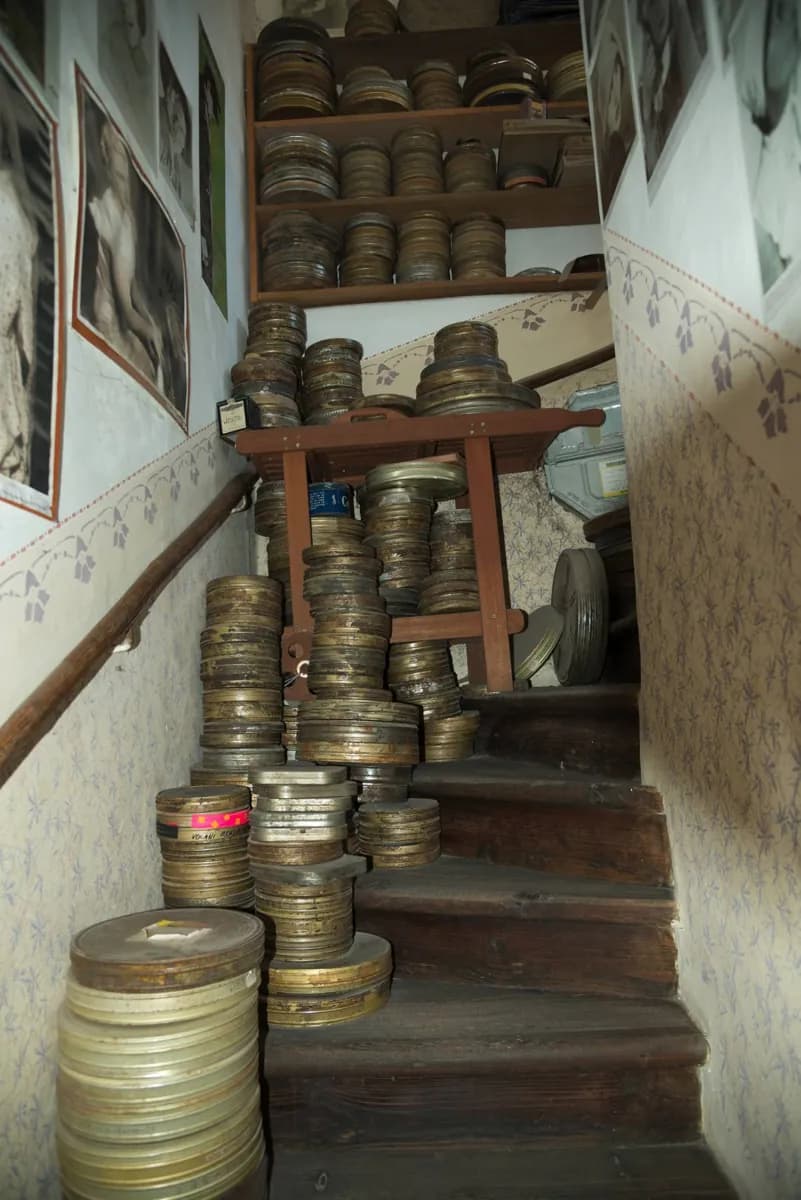
Why go
Barrandov Studios opened in 1933 and became a major production centre. The New Wave of the 1960s included Věra Chytilová, Miloš Forman and Jiří Menzel, with films ranging from formal experiment to dark comedy about ordinary people. Closely Watched Trains is one point of entry; comparing it with later Kolya shows how Czech film changed after the communist period.
The full story
Prague’s early film history includes Jan Kříženecký’s short newsreels in the 1890s and a permanent cinema opened by Viktor Ponrepo in 1907. Barrandov Studios followed in 1933 and became a major production centre. For film choices, the Czechoslovak New Wave of the 1960s is more useful than a simple chronological list: Věra Chytilová, Miloš Forman and Jiří Menzel worked in different styles, but many films used absurd or dark humour to examine ordinary lives under larger pressures. Menzel’s Closely Watched Trains offers one entry point, while Forman’s The Firemen’s Ball shows another kind of social satire. Later, Kolya belongs to the cinema of the post-communist period. Comparing these films makes shifts in tone and political context clearer than treating “Czech cinema” as a single genre.