
Why go
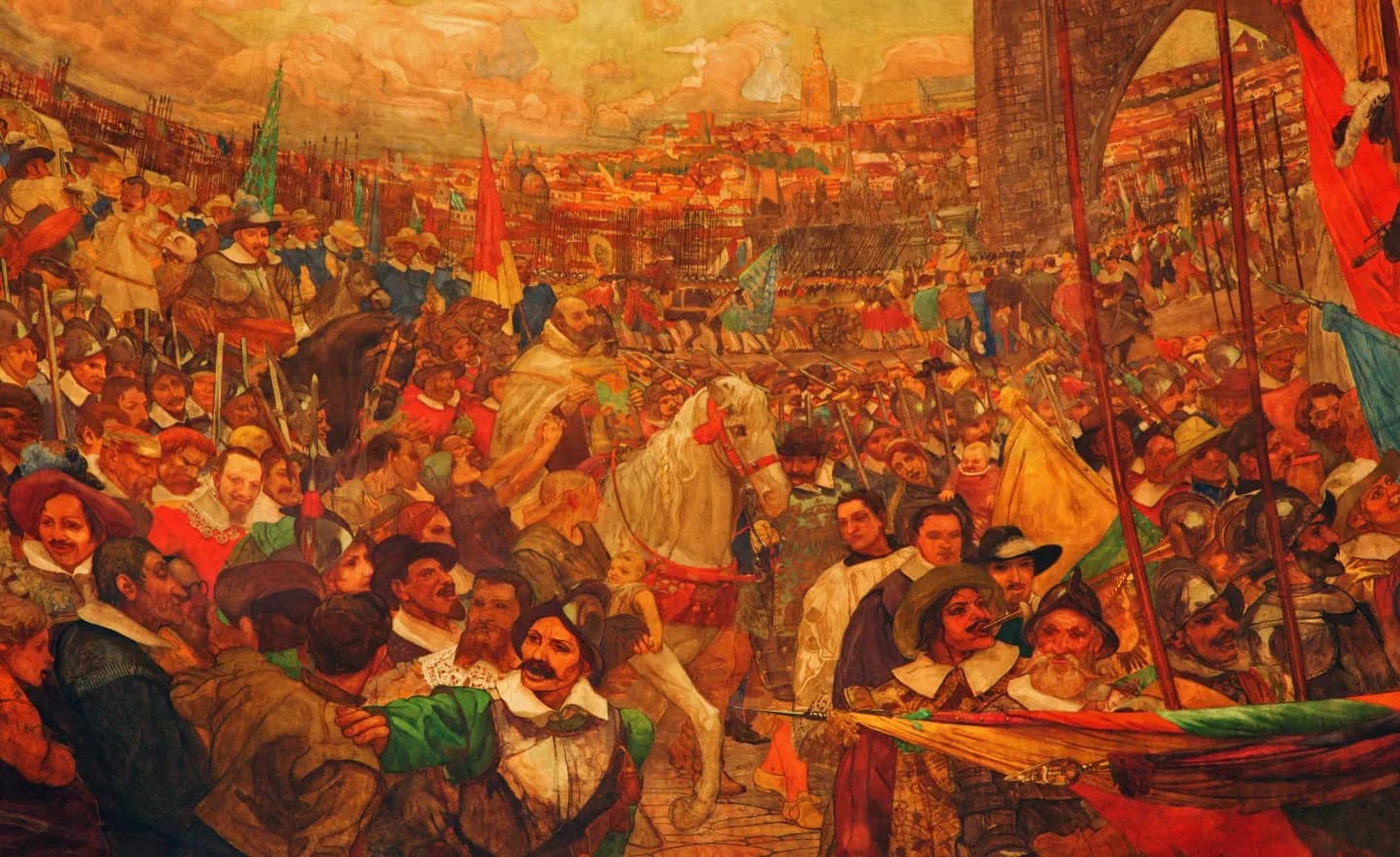
In 1618 Bohemian Protestant representatives threw imperial officials from a Prague Castle window, setting off revolt. Defeat at White Mountain in 1620 was followed by executions on Old Town Square and exile for many Protestants. Later struggles over Czech language and political rights under Habsburg rule give those Prague sites meaning beyond their architecture.
The full story
In 1618 representatives of the predominantly Protestant Bohemian estates entered the chancery at Prague Castle and threw imperial officials from a window. The incident began a revolt that became part of the Thirty Years' War. Two years later, the estates were defeated at White Mountain near Prague. Their short-lived king, Frederick of the Palatinate, fled, and leading participants in the uprising were executed on Old Town Square in 1621. Exile, confiscation and tighter Habsburg control followed for many Protestants. These episodes make the castle, battlefield and square more than architectural stops; they mark successive moments in a political rupture. Over later centuries, Czech language and cultural revival gave renewed importance to the memory of Bohemian autonomy. The national revival was much later than the battle, so it should be understood as a later response to Habsburg rule rather than a direct continuation of the 1618 revolt.