
Why go
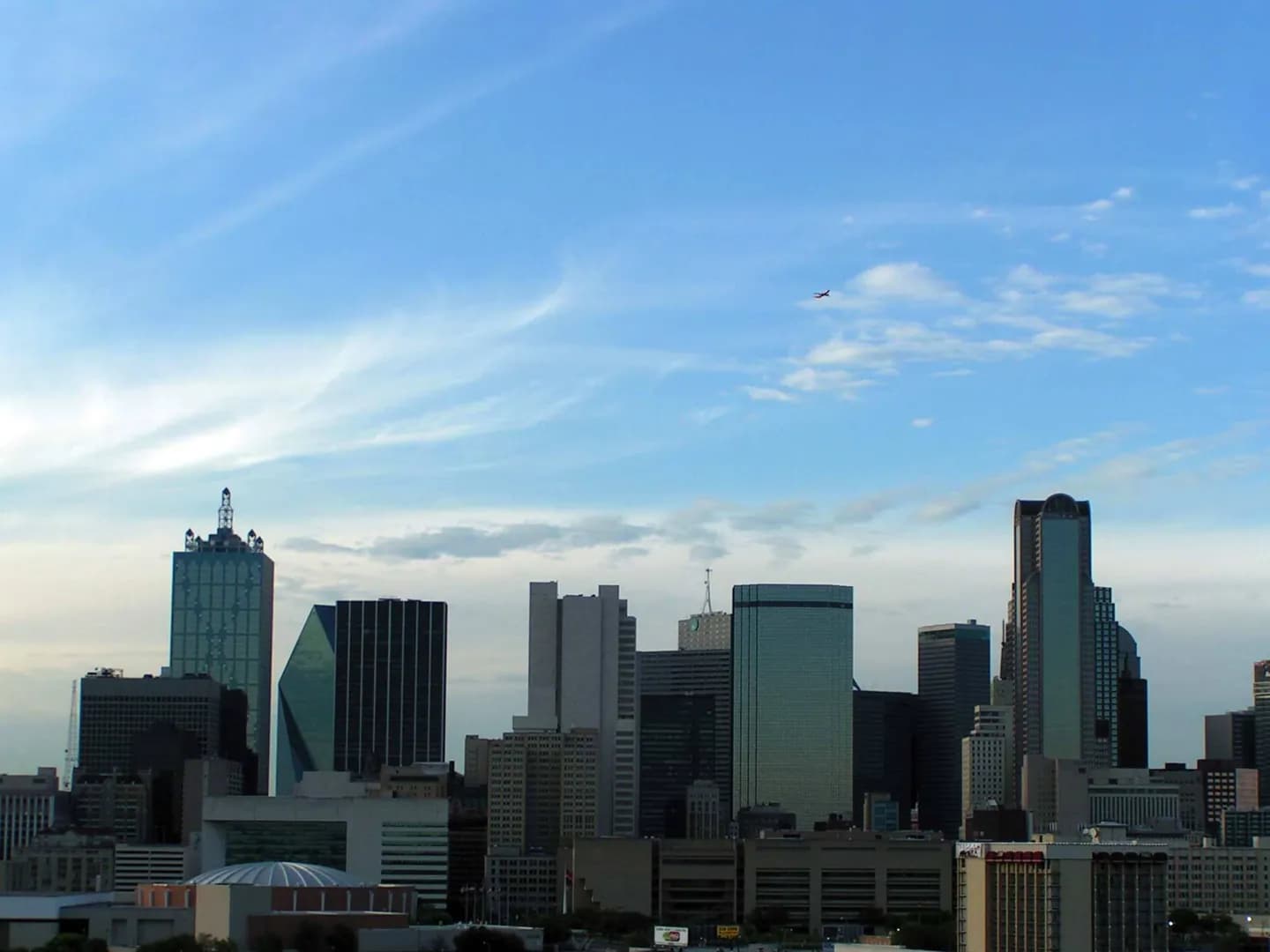
The city makes more sense when you connect its geography to its growth. Cotton, oil, railroads and later air transport helped Dallas become a major inland business center. That history sits behind the contrast between downtown’s commercial skyline, older neighborhood streets and the wider metropolitan area.
The full story
John Neely Bryan established the settlement that became Dallas in 1841, and the city was incorporated in 1856. Its inland location did not prevent it from becoming a commercial hub. Rail links helped move cotton and other goods; oil and a growing financial sector later strengthened the city’s role in North Texas. Air connections added another route into the wider Dallas–Fort Worth region. Those layers are easier to read across several areas than from one lookout: downtown shows the business core, the West End preserves a different urban texture, and older neighborhoods show how Dallas expanded beyond it. Treat the metropolitan area as a broad region, while planning individual sightseeing days around places that are close enough to explore together.