
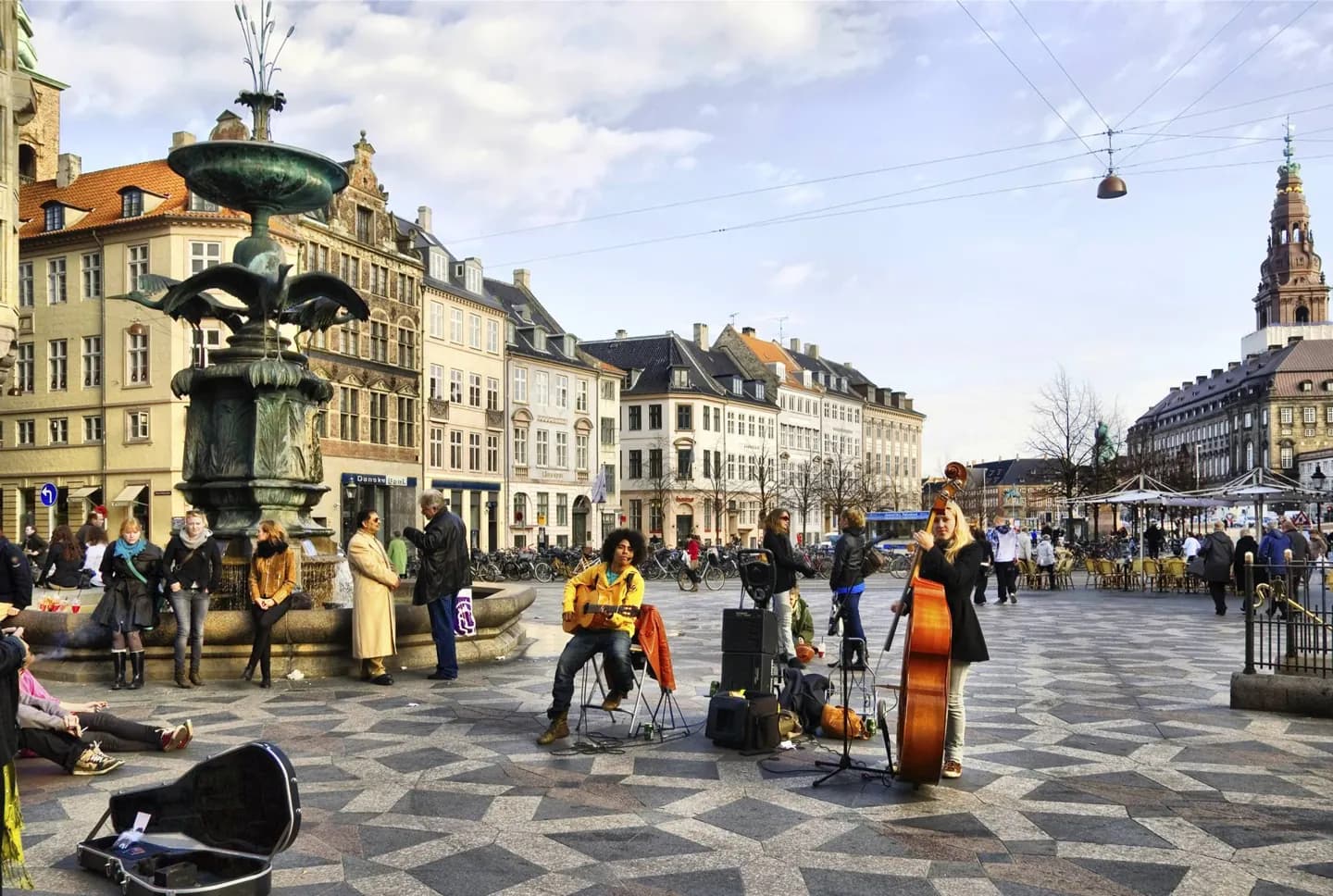
Why go
The bronze lurs found in Denmark and the runic Codex Runicus show that music here has deep roots. Carl Nielsen offers a strong route into classical composition, and Copenhagen's jazz tradition gives a contrasting live-music lens. Check current programmes before shaping an evening around a performance.
The full story
Bronze Age lurs, large curved horns found in Denmark, are among the most striking early evidence of music-making in the region. Medieval records point to sung worship and court performance, and the Codex Runicus preserves a verse with musical notation. Royal patronage later brought trained singers and instrumentalists to Denmark. Mogens Pedersøn, who studied in Venice, wrote church music published in Copenhagen in the seventeenth century. Court ballet and opera grew alongside these traditions. In the modern classical repertory, Carl Nielsen is a central name, especially for his six symphonies. Danish musicians have also developed strong jazz, pop and rock scenes. The Copenhagen Jazz Festival is one expression of that wider culture, though its programme changes. For a visit, distinguish between historic music you can study in a museum or text and live music that needs a current event listing. That makes the old instruments and the evening performance parts of one story without assuming they sound alike.