
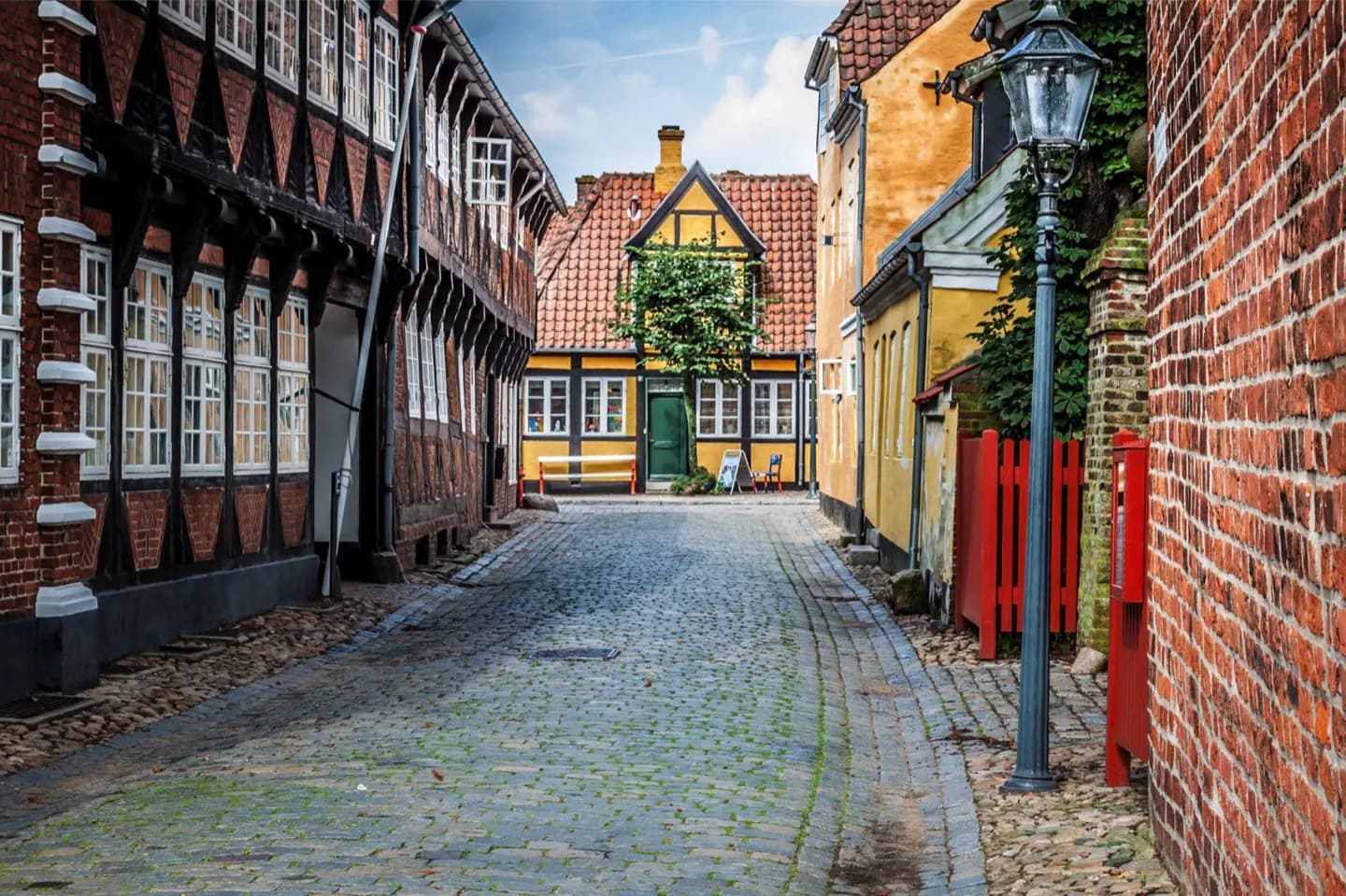
Why go
This short orientation makes sense of a journey from Copenhagen's royal buildings to Roskilde's Viking ships and Jutland's ports. Denmark's constitutional monarchy and its own currency, the krone, are useful context, but the strongest thread for a visitor is the connection between sea routes, power and settlement.
The full story
The Danish kingdom took shape as a seafaring power in the early Middle Ages, with access to the Baltic at the centre of its fortunes. Later, Danish monarchs ruled Norway and, for a time, a union that also included Sweden. That history helps explain why harbour towns and royal buildings appear across a country of islands and narrow waterways. Copenhagen grew into the political centre, while places such as Roskilde preserve earlier layers of royal and religious history. Denmark's 1849 constitution ended absolute monarchy and established the framework for a constitutional monarchy. The country kept its own currency, the krone, when it joined the European economic community. In the late nineteenth and early twentieth centuries, industry, agricultural exports and social reforms helped shape the modern welfare state. On a trip, these broad changes become more tangible through the Viking ships at Roskilde, royal Copenhagen, the fishing and trading ports of Jutland, and the smaller islands where sea crossings still define the journey.