
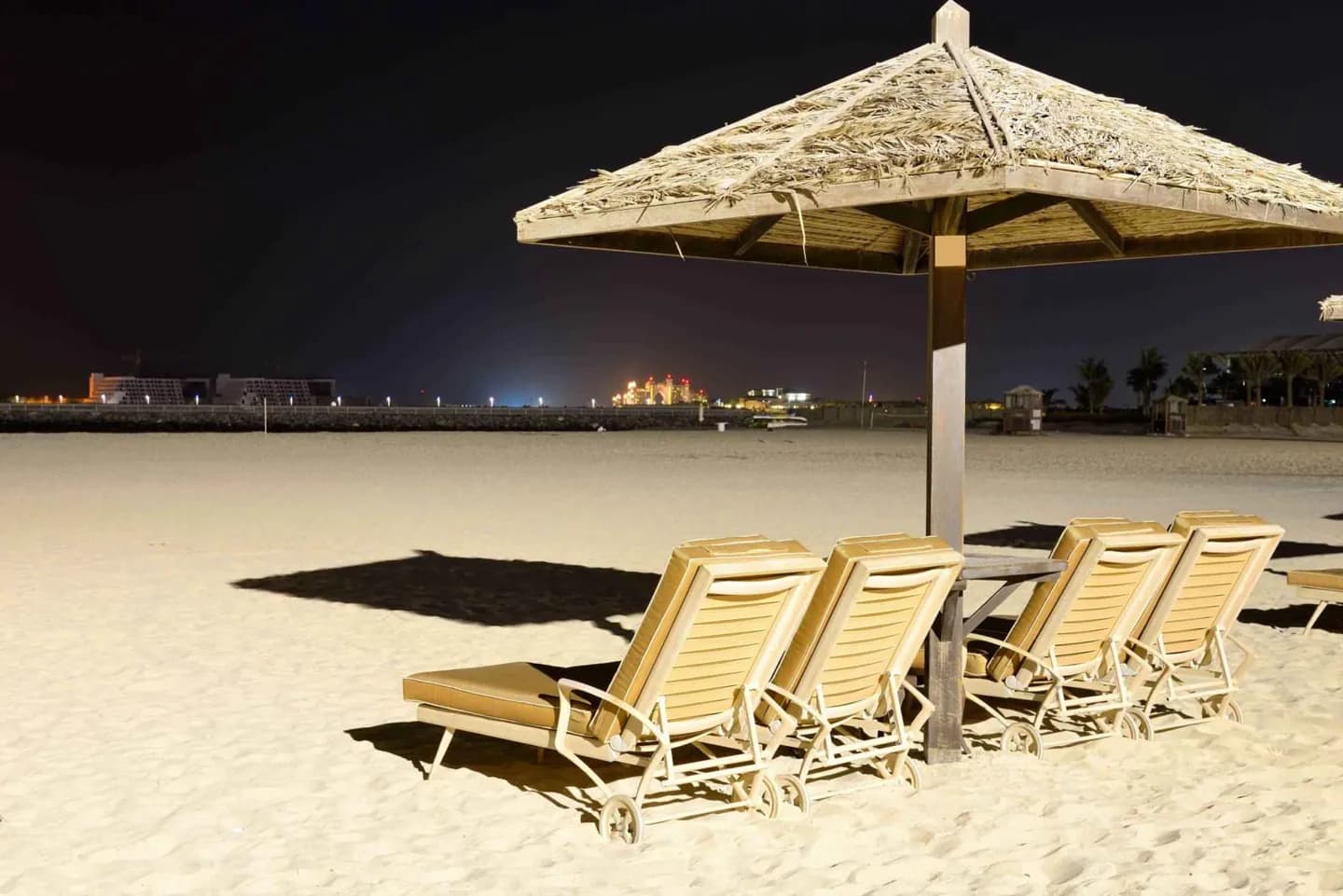
Why go
Jumeirah offers a lower-rise coastal counterpoint to Downtown Dubai and the tower corridor. Its visitor value is spread among beaches, neighborhood streets and specific places such as Jumeirah Mosque, so it works best for travelers who choose two or three anchors instead of trying to cover the whole district.
What to look for
- Beaches and coastal roads shape the neighborhood's long, linear geography.
- Low-rise residential streets contrast with Dubai's central tower districts.
- Jumeirah Mosque provides a clear cultural anchor within the wider area.
The full story
Jumeirah's relationship with the sea predates its modern villas, hotels and beach roads. The coastal settlement was associated with fishing, pearling and trade, livelihoods that tied residents directly to the Gulf. In the later twentieth century, the area became a major residential district as Dubai expanded along the coast. One revealing trace of that change survives in the former name Chicago Beach. It referred to a hotel site near facilities used by the Chicago Bridge & Iron Company, which fabricated large floating oil-storage tanks there. The name remained in use even after the old hotel disappeared in 1997, and the Burj Al Arab project was publicly known as Dubai Chicago Beach Hotel during construction. Reading Jumeirah through that history reveals a coast shaped by maritime work, suburban growth and landmark tourism in succession.
Useful to know
- Choose specific beach and cultural stops before traveling; Jumeirah covers a long stretch of coast.
- Use transport between distant anchors rather than treating the entire neighborhood as one continuous walk.
Your next visit
Estimated · Declared scenario and planning estimates; no live opening, weather, queue or booking service.
Outdoor visit · 30–45 min
World planning estimate; admission, opening, visit duration and access need checking.