
Why go
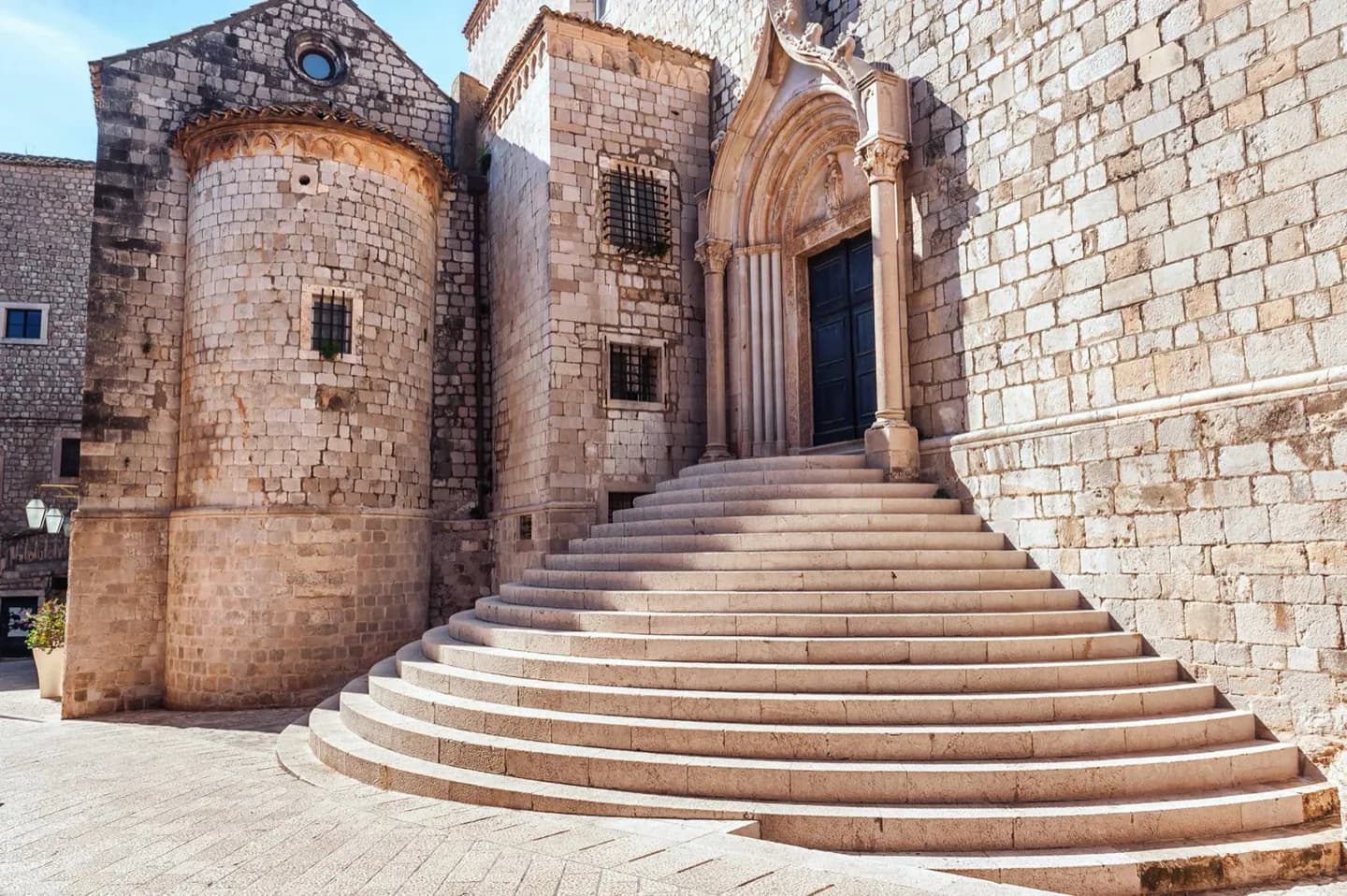
A short walk through the Old Town makes its architectural layers legible. Sponza Palace preserves a Renaissance face, the Rector’s Palace combines Gothic and Renaissance details, and St Blaise’s Church and the cathedral show later Baroque rebuilding. The contrast helps explain the impact of the 1667 earthquake without turning the visit into a checklist of façades.
The full story
Start with Sponza Palace near Luža Square. Its sixteenth-century arcades and carved details belong to the commercial city that prospered before the great earthquake. Close by, the Rector’s Palace mixes Gothic and Renaissance forms. Its capitals and staircase gave the seat of government a public dignity different from Sponza’s trading role. The earthquake of 1667 damaged much of Dubrovnik and is one reason the Old Town does not belong to a single architectural period. St Blaise’s Church, dedicated to the city’s patron saint, and the cathedral present prominent Baroque faces. Older pieces survive nearby: St Saviour’s Church stands close to the Franciscan monastery near Pile Gate. Water and civic symbols complete the walk. Large Onofrio’s Fountain recalls the fifteenth-century supply system, while Orlando’s Column in Luža Square represented the republic’s civic identity. Notice how closely these objects sit to gates, religious buildings and administrative palaces. Dubrovnik’s architecture is easiest to understand as a working urban ensemble, each building answering a different need.
Useful to know
- Compare Sponza Palace and the Rector’s Palace before crossing to the Baroque church fronts.
- Pair Large Onofrio’s Fountain with the eastern civic square to follow the city’s main axis.