
Why go
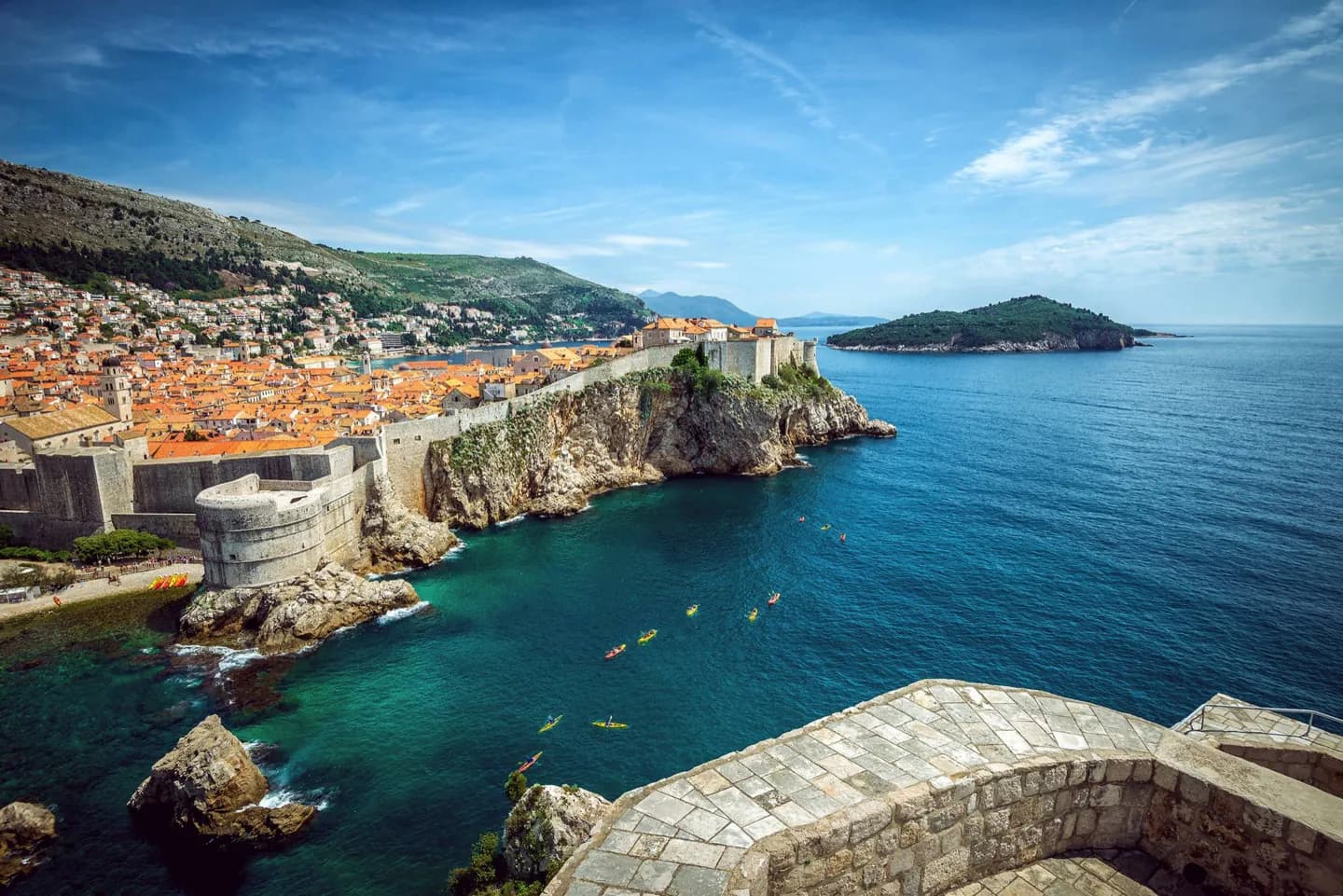
Each position answers a clear threat. Minčeta commands the high landward edge; Bokar watches the western gate; Lovrijenac stands apart beyond it. Revelin guards the eastern approach and St John holds the harbour. Following their positions around the walls gives a sharper picture of how a small maritime republic protected both its citizens and its trade.
The full story
In the fifteenth century, the fall of Constantinople and pressure in the wider region pushed Dubrovnik to improve its defences. The republic brought in engineers and builders to adapt older stoneworks to artillery. Minčeta Tower illustrates that process. A more angular earlier fort became part of a heavier, rounded defensive structure with protected gun positions. Its high position made the northern land approach visible. At the opposite western side, Fort Bokar reinforced the area near Pile Gate. Fort Lovrijenac stands separately outside the wall circuit, covering the exposed western approach from land and sea. To the east, Revelin protected the entrance by Ploče Gate. St John Fortress served the old harbour, where ships, warehouses and access to the sea were central to the city’s life. From a street-level walk, these forts can appear as dramatic silhouettes. Their positions explain more than their size. Together they cover gates, heights and harbour water; each answers a weakness that a simple ring of wall would have left open.