
Why go
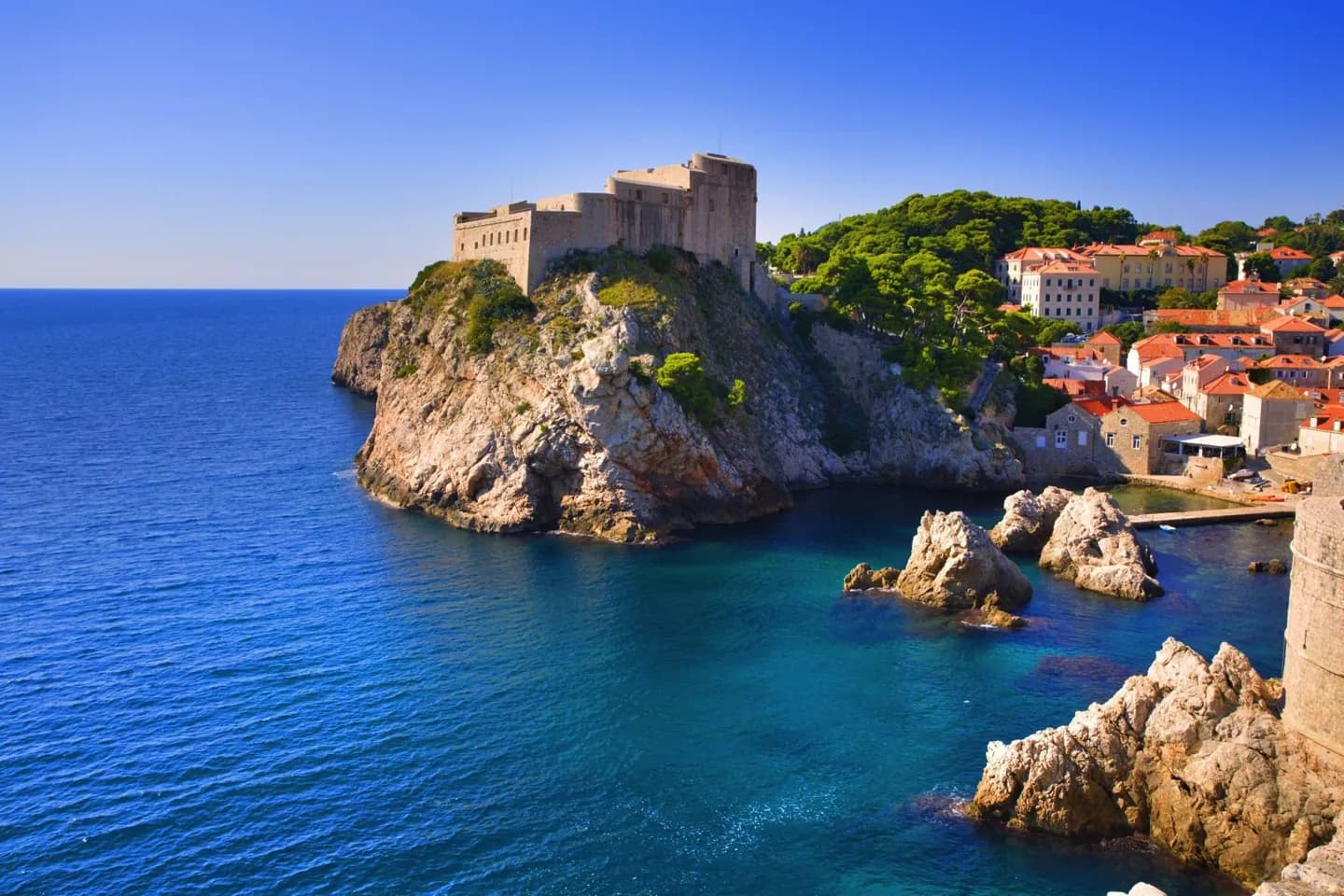
The present circuit lets you compare several kinds of protection in one city. Minčeta faces the land, Fort Bokar guards the western entrance, and St John Fortress watches the harbour. Gate passages bend and narrow rather than opening straight into town. These details reveal the labour and planning behind the walls’ unusually coherent appearance.
The full story
Dubrovnik’s walls took much of their recognisable form from the late medieval period onward. The republic kept strengthening them as artillery changed siege warfare and as rival powers pressed on its borders. Work did not end with a single campaign: repairs and modifications continued across generations. The land walls had to resist attacks from the mainland. Their great thickness, towers and supporting outer defences provided overlapping protection. At Pile Gate and the eastern entrances, a visitor passed through guarded, turning approaches rather than a direct gap in the stone. The harbour required another solution. St John Fortress and the sea walls watched the water, while the Kaše breakwater helped protect the port from waves and made its defensive chain easier to manage. Earthquakes and later political change also shaped what remains. The 1667 earthquake devastated much of the city, yet the fortifications endured and continued to be cared for. Look for the different jobs of each section rather than trying to find one original wall: preservation here is the record of constant use, repair and adaptation.