
Why go
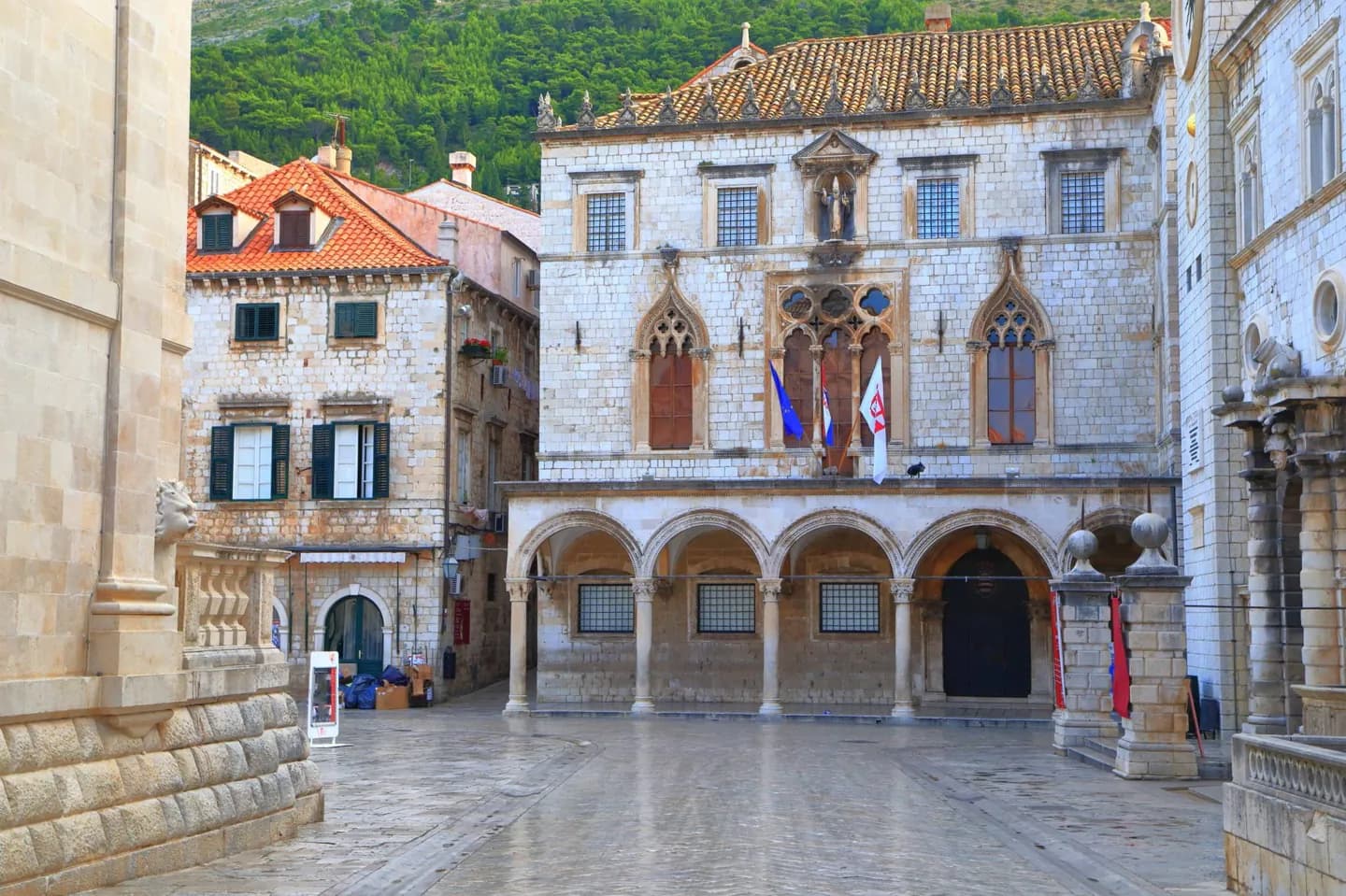
Stand beneath the portico to see how commerce and civic authority shared one building. The merchants' weighing inscription makes the former customs role unusually tangible, while the palace's present use by the State Archives continues its long connection to Dubrovnik's public records.
What to look for
- The Gothic-Renaissance portico frames the entrance to the inner atrium.
- A merchants' weighing inscription recalls the palace's trading function.
- The State Archives now occupy the former customs palace.
The full story
Built between 1516 and 1522, Sponza joined Gothic detail to a Renaissance layout around a courtyard. Its other name, Divona, recalls the customs work that took place here. Merchants used the atrium for business, and the building also served public functions including a warehouse, mint and treasury. That range of uses explains why the palace feels more like a working institution than a private residence. Unlike much of Dubrovnik, it survived the earthquake of 1667 undamaged. It later became home to the State Archives, whose records carry the city's written history back through centuries of trade and government. Look from the street arcade toward the courtyard and then back to Luža Square: the palace stood at the meeting point of commercial exchange and public life.
Useful to know
- See the portico while crossing Luža Square; check current visitor access before planning to enter the atrium.
- Pair it with the Rector's Palace nearby to compare two civic buildings with very different former roles.
Your next visit
Estimated · Declared scenario and planning estimates; no live opening, weather, queue or booking service.
Outdoor visit · 10–15 min
Public-space walk and exterior observation only; no interior, garden, tower or ticketed admission included. Durations and walking are estimates. Check temporary restrictions and park or market opening times.
Outdoor visit · 30–45 min
World planning estimate; admission, opening, visit duration and access need checking.