
Why go
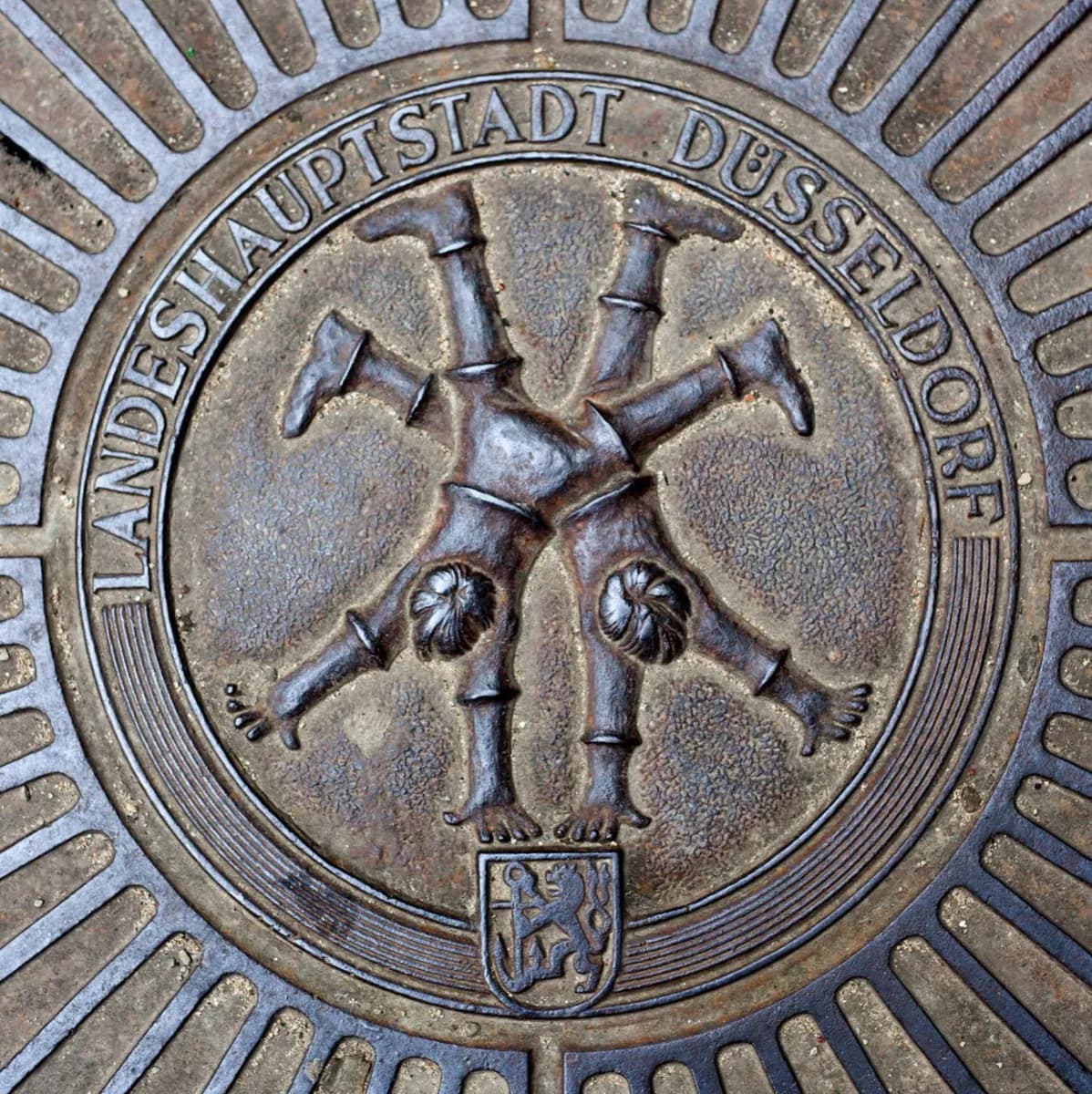
The symbol links the city's 1288 foundation story with later tales of children cartwheeling for coins. Its origin is disputed, which makes the Burgplatz fountain more interesting as a record of local storytelling than as proof of one event or legend.
The full story
Düsseldorf's cartwheeler is called the Radschläger. One popular account connects the children turning cartwheels to the city's gain of town privileges after the Battle of Worringen in 1288. Other accounts place a quick-thinking child beside a wedding carriage whose wheel broke, or describe children entertaining a wedding party. None establishes a single origin. The image became a durable civic symbol in its own right. In the late nineteenth and early twentieth centuries, children could earn coins by performing cartwheels for visitors. On Burgplatz, the Cartwheeler's Fountain gives the tradition a fixed public form; it was erected in 1954. Treat the fountain as a cue to look around the square and think about how a city tells its history through repeated images. Nearby Burgplatz landmarks let you explore the tradition within a wider Old Town walk.