
Why go
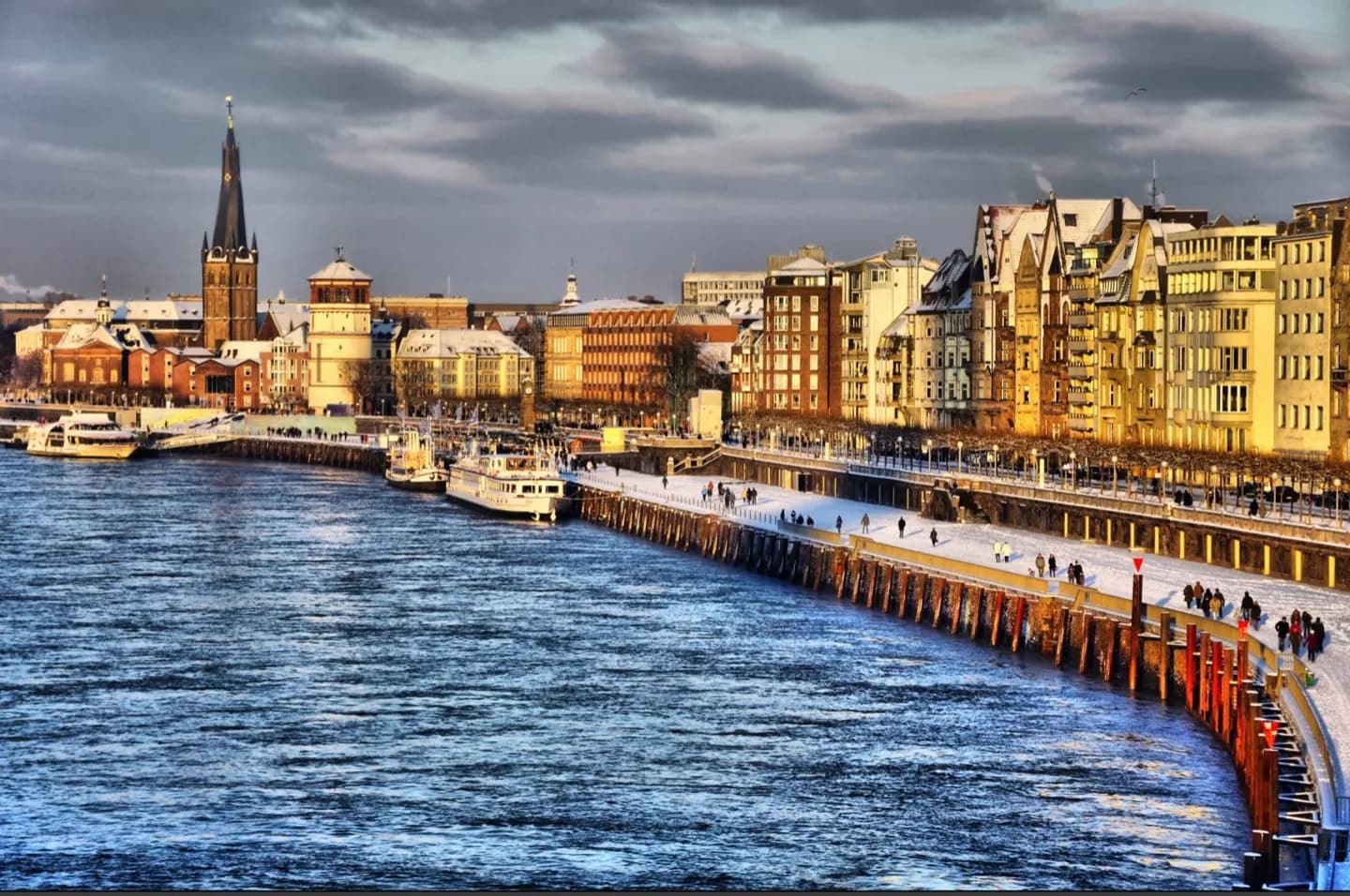
Walk the Old Town with the Battle of Worringen, the Dukes of Berg and later rebuilding in mind. The castle area and church show how the river settlement became a regional centre, while the reconstructed streets remind you that much of today's view is layered.
The full story
Early settlements formed near the mouth of the Düssel, with the Rhine providing both a route and a strategic edge. Düsseldorf appears in written records by 1135. In 1288, after the Battle of Worringen, Count Adolf VIII of Berg granted the settlement town privileges; a monument at Burgplatz recalls that turning point. The Dukes of Berg later made Düsseldorf a regional seat, and landmarks such as St. Lambertus developed as the town grew. Burgplatz is therefore more than a pleasant square: it marks the area where civic and river history meet. The city's later story includes major wartime destruction. Much of the Altstadt was rebuilt after the Second World War, often on earlier foundations and street lines. That makes a walk here an exercise in reading layers rather than searching for an untouched medieval quarter. Pair Burgplatz with the church and riverbank to keep the historical sequence grounded in places you can actually see.