
Why go
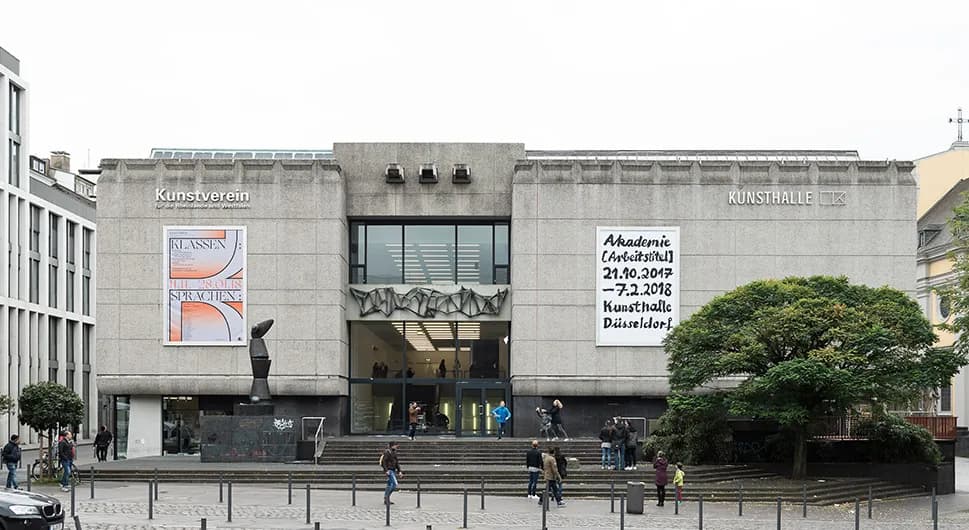
The concrete building is worth noticing on an Altstadt arts walk, while the exhibition hall rewards visitors who want a focused encounter with current art. It also shares the building with the Kunstverein, making Grabbeplatz a concentrated art stop. The building and exhibition are two distinct rewards.
What to look for
- The Brutalist concrete exterior faces Grabbeplatz.
- Changing exhibitions replace a permanent collection.
- The Kunstverein is a separate institution in the same building.
The full story
The present Kunsthalle opened on Grabbeplatz in 1967. Its exposed, precast-concrete architecture made the building visibly different from Düsseldorf’s older museums, and its programme followed the same break: the Kunsthalle was built to show changing art rather than to accumulate its own permanent collection. From the start, it shared the building with the independent Kunstverein für die Rheinlande und Westfalen. The Prospect exhibitions of the late 1960s and 1970s gave the hall a place in the international contemporary art conversation. Those details are useful on site because the building’s blunt exterior and the temporary exhibition inside are part of one idea. Look at the concrete form from the square, then decide whether the exhibition currently on view warrants going in. A previous show is no promise of what will be displayed on your visit.
Useful to know
- Check the official exhibition notice before planning entry.
- For an exterior look, combine Grabbeplatz with the nearby Altstadt.
Your next visit
Estimated · Declared scenario and planning estimates; no live opening, weather, queue or booking service.
Outdoor visit · 30–45 min
World planning estimate; admission, opening, visit duration and access need checking.