
Why go
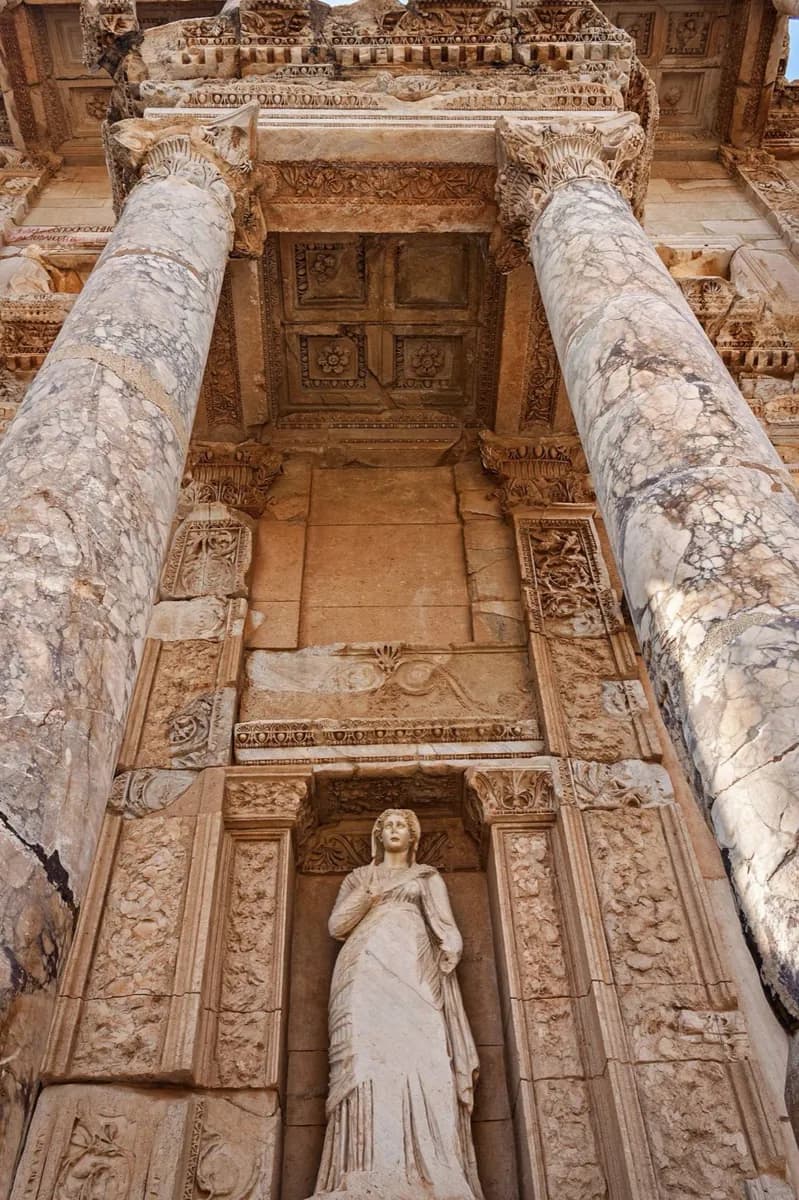
The Library of Celsus, theatre, public squares and long streets make most sense as parts of a provincial capital. They speak to government, commerce and public display; the harbor route shows how the city connected inland power with Aegean trade.
The full story
Ephesus came under Roman rule after the kingdom of Pergamon passed to Rome. The city was drawn into the wars involving Mithridates of Pontus and then returned to Roman control. Under Augustus it became the capital of the Roman province of Asia, a position that helped finance the public buildings seen across the ruins. The Great Theatre, civic quarter and later Library of Celsus show different sides of a wealthy provincial city. The route toward the harbor recalls its commercial reach even though the sea is now distant. Exact ancient population figures vary sharply because scholars disagree about inhabited area and density; the visible buildings convey its importance more securely than a single large number. A Gothic raid in the third century AD damaged Ephesus, but the city’s later life continued under Byzantine rule. On site, look beyond isolated façades: the urban connections between political spaces, cultural buildings and the port explain the Roman city’s scale.