
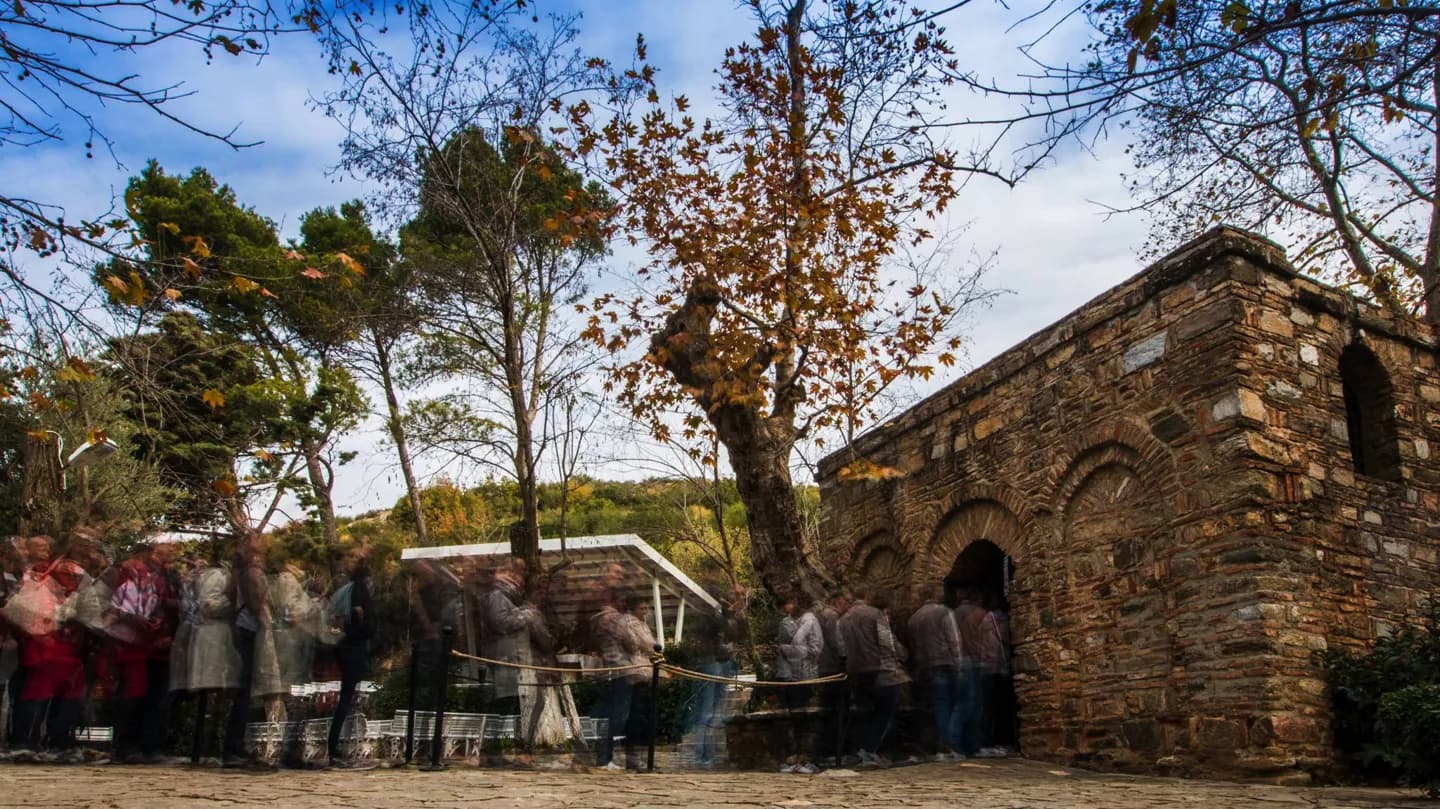
Why go
The story explains why this hillside chapel draws visitors despite the uncertainty around its first-century identity. Reported visions prompted searches, while a local practice of veneration gave the building religious meaning on the ground. Its story is visible in the shrine’s present-day role.
The full story
In 1881 the French priest Julien Gouyet found a small stone building near Ephesus after following a published account of visions attributed to Anne Catherine Emmerich. He believed it matched the place described in that account. In 1891 two missionaries from Smyrna, encouraged by Sister Marie de Mandat-Grancey, came to the same ruin. They reported that local Christians already knew and venerated the place, called Panaya Kapulu. The nineteenth-century searches revived interest in a tradition linking Mary’s final years with Ephesus. They did not establish that she lived in this particular house. That distinction matters on a visit: the site has a documented modern history of pilgrimage and restoration, while the claimed connection to Mary remains a matter of faith and historical debate. The building and the practices around it are best understood together, without forcing the two kinds of evidence into a single certainty.