
Why go
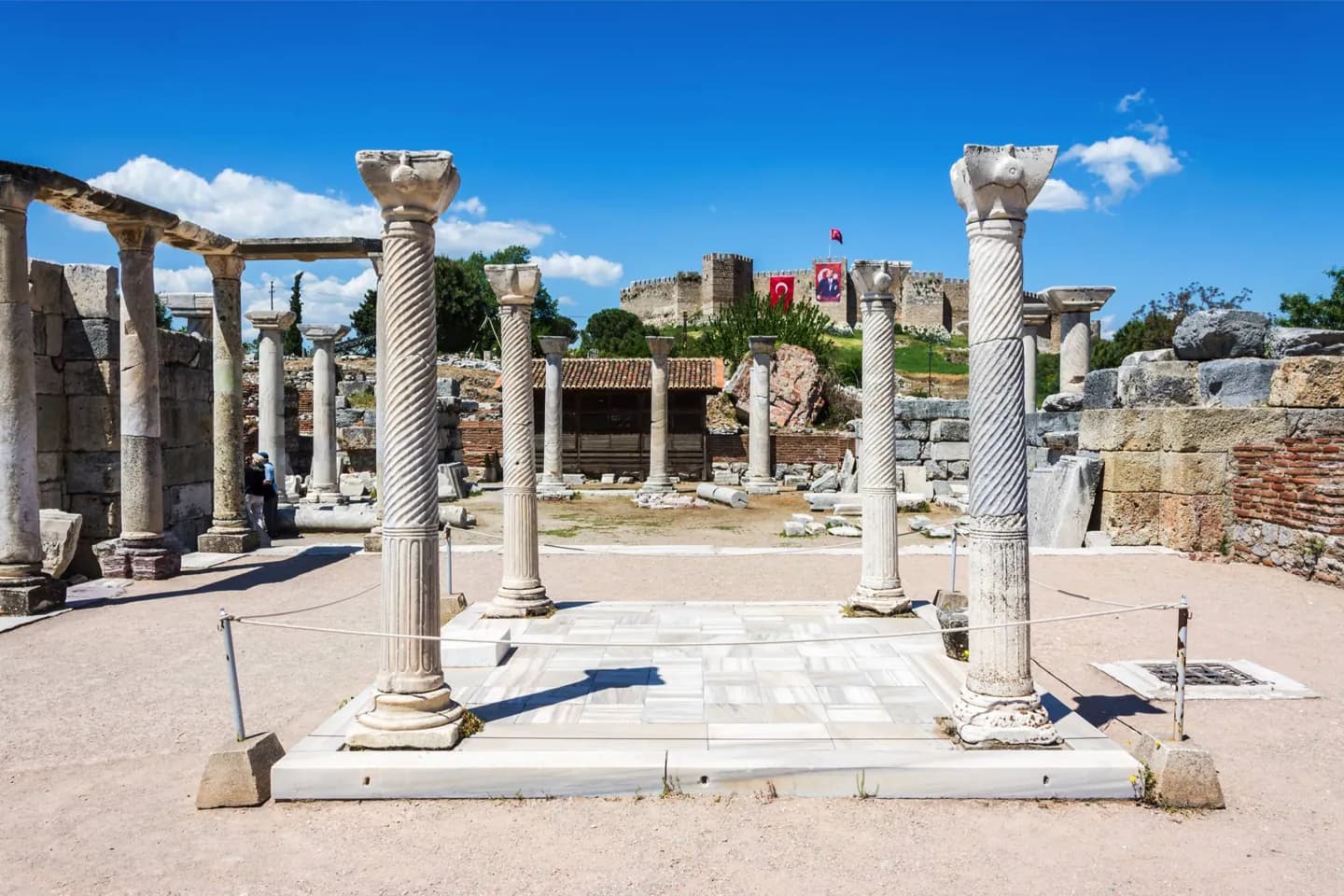
The chronology helps make sense of the ruins on Ayasuluk Hill. What survives is chiefly the grand church commissioned under Justinian, rather than the small memorial that first drew worshippers to the traditional burial place. The tomb gives that ambitious project its reason for being here.
The full story
The place associated with John’s tomb had a memorial and then an earlier basilica before the much larger church built in Justinian’s reign. Construction of the new basilica began by AD 548 and was complete by 565, according to the historical account preserved in the source tradition. Hypatius, bishop of Ephesus, is linked with the project, although the extent of his role and influence at court is less clear. The sixth-century historian Procopius described Justinian’s building works, giving the church a place in the record of imperial construction. Its scale says more than an isolated date: a shrine rooted in the Ephesian tradition became a major monument on Ayasuluk Hill. As you move among the surviving walls and supports, distinguish the older reason for pilgrimage—the tomb traditionally identified as John’s—from the later architectural statement built around it.