
Why go
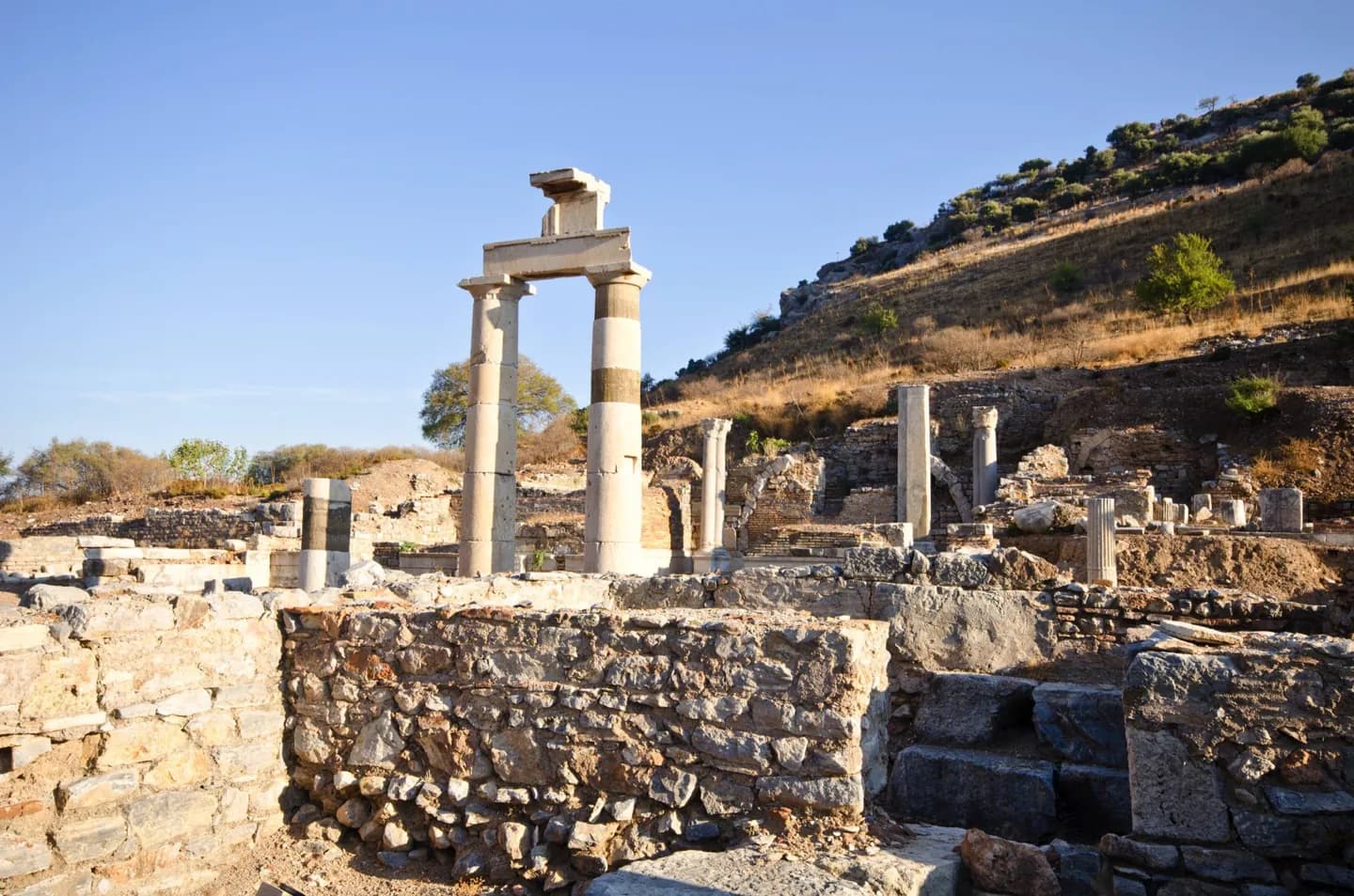
This chapter makes the city’s origin stories useful on the ground. The Androklos legend appears in later art, while the Artemis sanctuary shows how a local cult could remain central through major changes in language, rulers and urban location. It also clarifies why the sanctuary lies apart from the excavated Roman streets.
The full story
Ancient accounts placed an Ionian settlement on Ayasuluk Hill and named the Athenian prince Androklos as its founder. In one legend an oracle’s clue involving a fish and a boar led him to the site. These stories express how later Greeks understood their beginnings; they do not erase the people already living in the region. Ancient writers also connected the sanctuary of Artemis with Amazons, another foundation tradition that archaeology cannot verify as an event. What survives as a stronger historical thread is the sanctuary’s long life. Its sacred area preceded the vast marble temple and continued to define Ephesus after the urban center moved. The cult image of Artemis of Ephesus differed from the familiar Greek huntress, reflecting a local religious tradition with Anatolian roots. When visiting the Temple of Artemis site, think of it as a place that outlasted successive versions of the city, not as a single building from the moment of Greek settlement.