
Why go
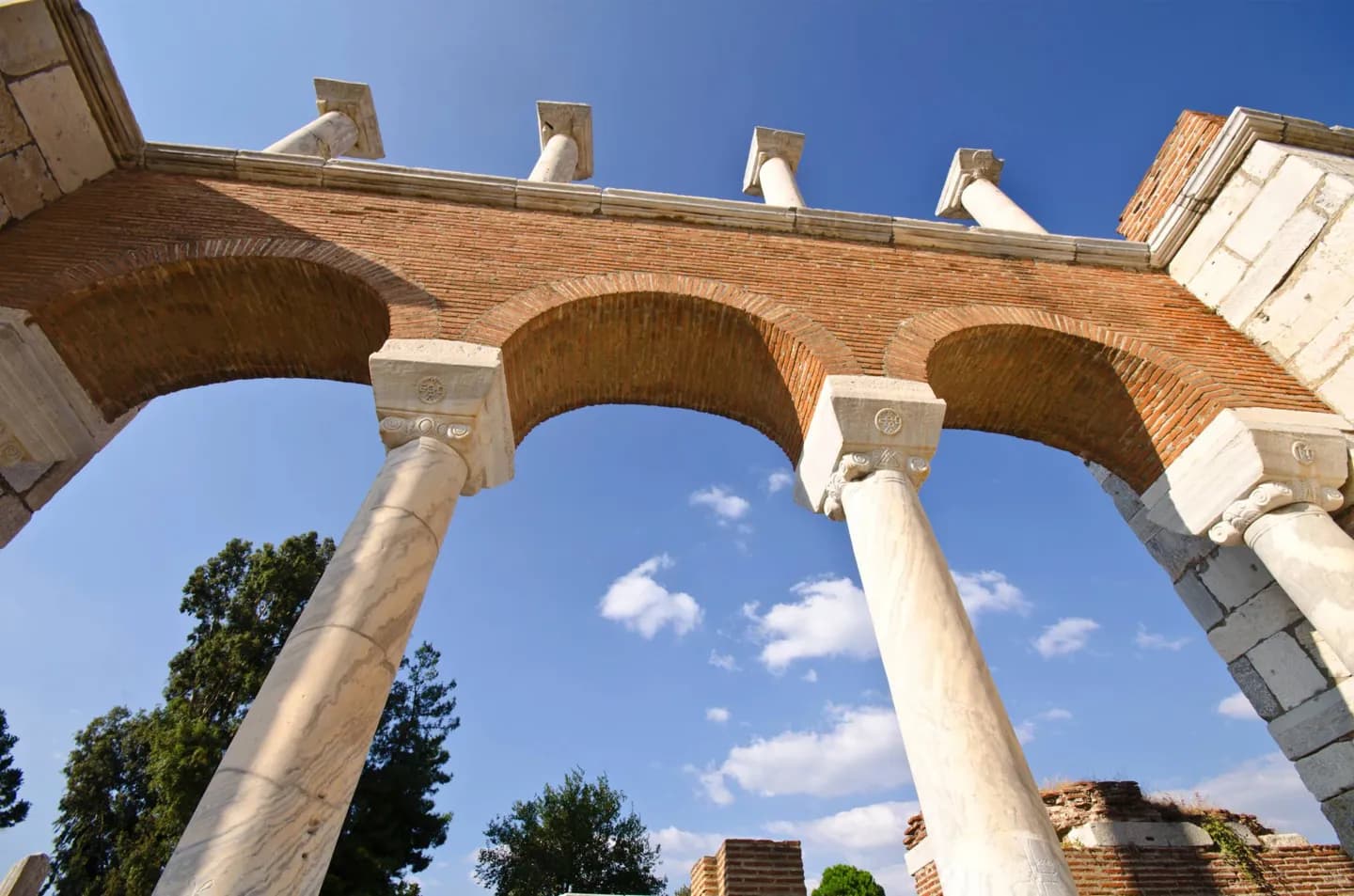
Knowing the tradition changes how the tomb area reads. It was not only a burial marker: medieval visitors came seeking a connection to John, and accounts of healing dust spread the shrine’s reputation far beyond Ephesus. The distinction makes the monument’s purpose clearer.
The full story
Christian tradition holds that John came to Ephesus and spent his final years there, with an exile on Patmos placed within the story of his life. The details are matters of tradition, not a verified biography. Later accounts tell of his disappearance at death and of dust, called manna, rising near the tomb. Pilgrims regarded that dust as a source of healing, and small flasks were made to carry it away. These stories help explain why successive churches were built around the place identified as his tomb on Ayasuluk Hill. They also explain why a visitor encounters a monumental basilica rather than a simple grave. The traditional tomb is the focus; the tales of light, disappearance and miraculous dust belong to the devotional history that gathered around it. Seeing those layers separately makes the basilica’s scale and the medieval pilgrimage practice easier to understand.