
Why go
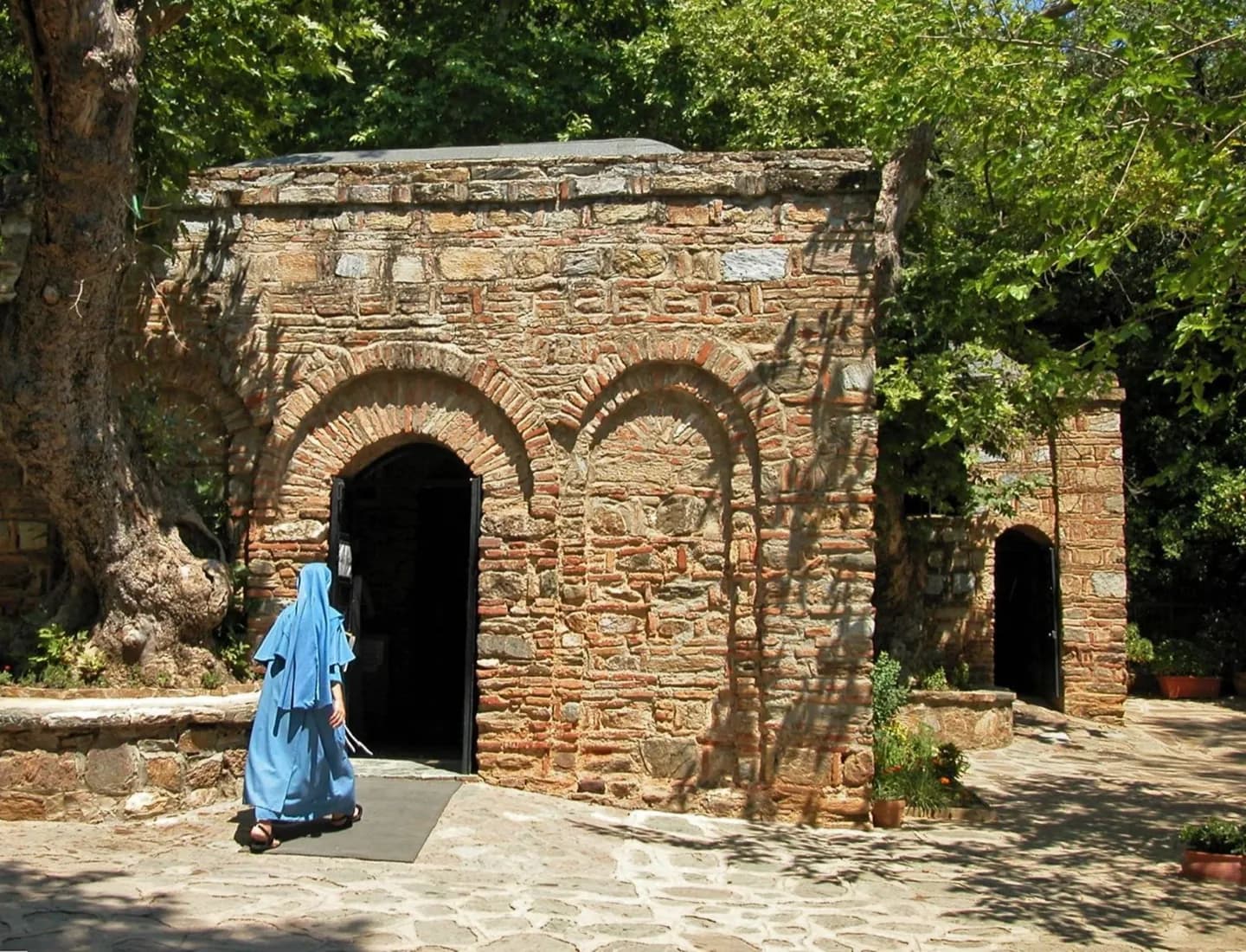
This account helps visitors understand the site as an active place of prayer. The main room, side room and outdoor practices carry different meanings, and none requires treating the building as a proven first-century home. It is a compact visit, shaped by people’s devotional practices.
The full story
The House of the Virgin Mary is smaller than the surrounding archaeological monuments might lead you to expect. Inside, the principal room holds an altar and a prominent statue of Mary. A smaller room to the side is traditionally linked to the place where she rested. That association belongs to Marian belief; the surviving masonry alone cannot establish who lived here in the first century. Outside, visitors leave written intentions on a devotional wall. A nearby spring is also part of the pilgrimage experience, and some visitors believe its water has healing power. The value of moving slowly through these spaces is to notice how a compact building supports several kinds of devotion: quiet prayer inside, personal petitions at the wall and attention to the spring beyond it. Give worshippers room to pray rather than treating each space only as an exhibit.