
Why go
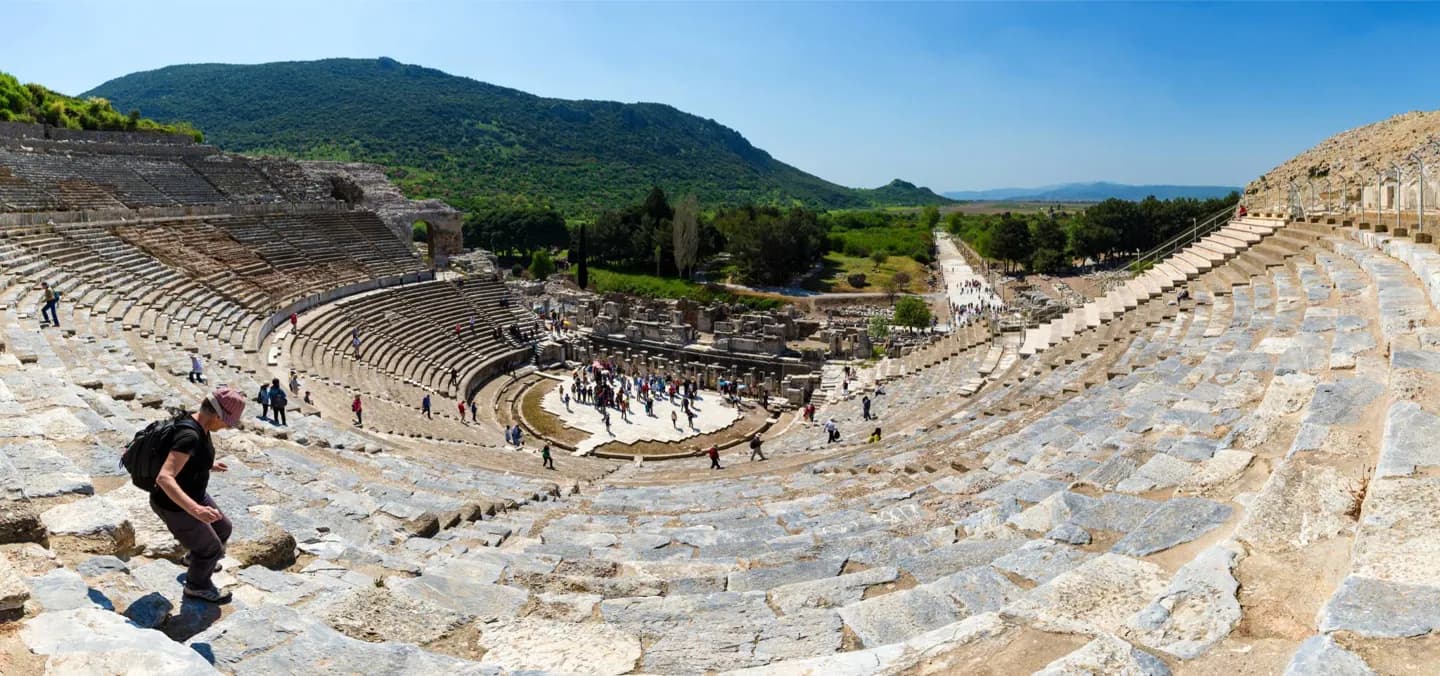
The old harbor explains the placement of Harbour Street and the Great Theatre, while the hills explain why settlement later concentrated around Ayasuluk. Reading the terrain makes the separation between Selçuk, the Artemis sanctuary and the Roman ruins feel coherent.
The full story
Ephesus occupied a changing coastal plain framed by Panayır Dağ, Bülbül Dağı and Ayasuluk Hill. In antiquity the Cayster River entered a gulf near these rises. Over many centuries its sediment accumulated, pushing the shoreline away from the city and making the harbor harder to maintain. This was a gradual process, not one sudden event that emptied Ephesus. The theater and broad route toward the former port still show how closely the Roman city was planned around maritime movement. The hills offered defensible ground, but they also shaped routes and limited where people could build. As the lowland harbor lost value, Ayasuluk Hill became a more important focus. Today the main archaeological site, the Temple of Artemis and Selçuk feel separated; their spacing reflects both changing urban choices and a coastline that moved. Stand near the theatre and follow the line of Harbour Street to picture the former connection without expecting to see water at its end.